- Only platforms registered as VASPs will remain available on the Play Store.
- Local exchanges such as Upbit and Bithumb may gain additional market share.
- Some traders may move to DeFi tools and non-custodial wallets.
The South Korean crypto market is undergoing a major shift in how traders access foreign centralized exchanges.
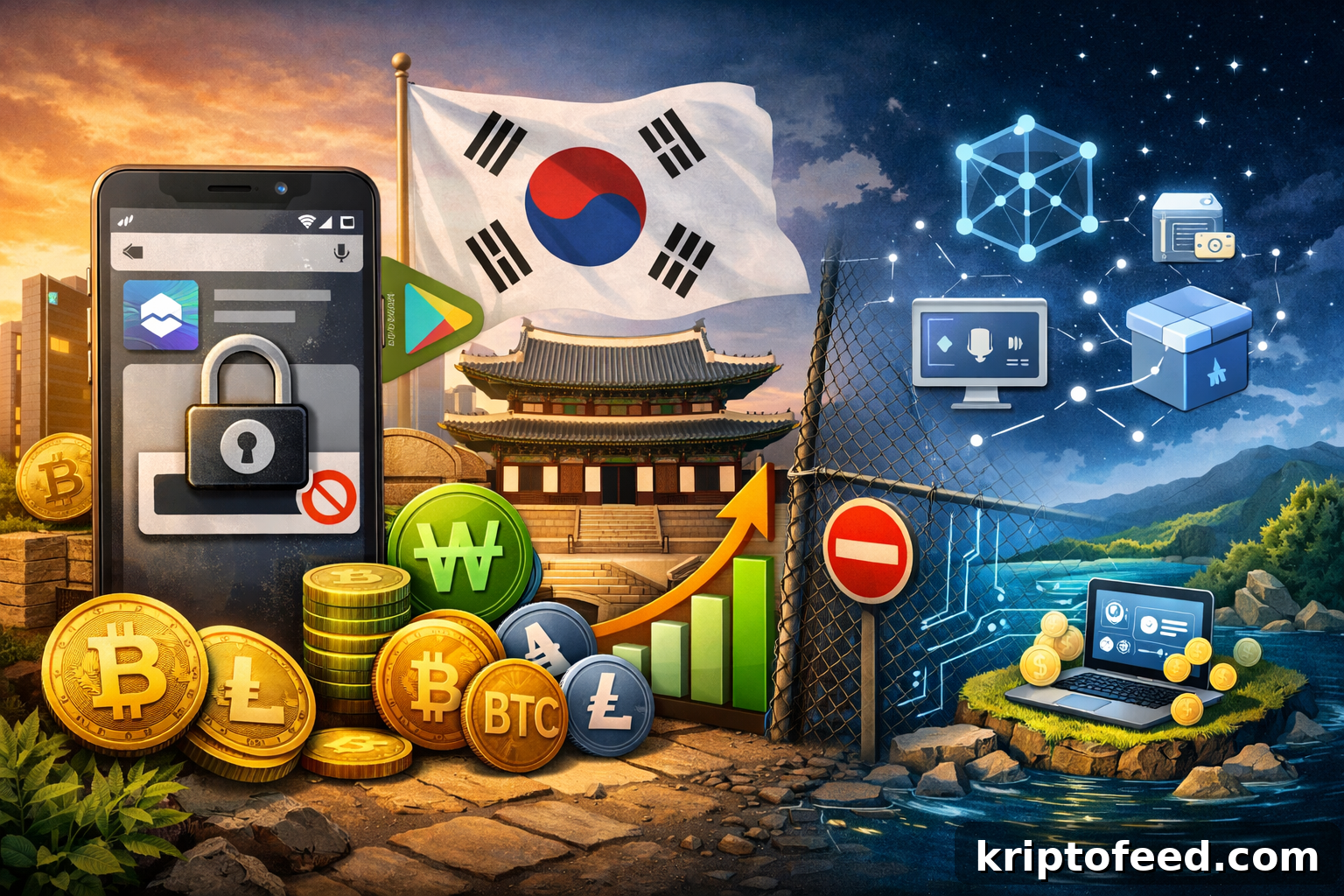
Many foreign cryptocurrency exchange apps (CEX) are expected to become unavailable for download or unable to receive updates via the Google Play Store in South Korea.
This change stems from an update to Google’s policies that ties app availability to local licensing requirements.
As a result, only platforms that meet South Korea’s regulatory standards will remain listed.
While the move does not fully block international trading services, it introduces new hurdles for users who rely on global exchanges through mobile apps.
Google Play tightens compliance rules for crypto apps
Google’s updated policy links distribution of crypto apps to regulatory approval in each jurisdiction.
In South Korea, that means crypto exchanges and wallet providers must hold valid local registration and comply with strict compliance rules.
Only exchanges registered as Virtual Asset Service Providers (VASP) in South Korea will be able to continue operating normally on Google Play.
This includes meeting stringent anti-money laundering (AML) measures and security obligations required by Korean financial authorities.
Because only a limited number of foreign platforms have secured VASP status in the country, most overseas exchanges will be blocked from new downloads and future app updates on the Play Store.
This approach effectively makes Android app access dependent on domestic licensing, even if the exchanges continue to offer services elsewhere.
Foreign platforms remain reachable but less convenient
South Korean users are not completely cut off from foreign services.
They can still access overseas platforms via mobile web browsers or by manually installing apps using APK files.
However, browser-based trading tends to be less smooth for active traders, often delivering weaker performance and fewer app-level features.
Sideloading APKs also introduces additional risks by bypassing Google Play’s built-in security checks.
Users who install crypto apps outside official channels may face increased exposure to malware, phishing attacks, and compromised applications.
This adds pressure on traders who want mobile access while also needing a secure environment to manage funds.
Domestic exchanges could gain more market control
The policy change may reshape South Korea’s crypto market structure by limiting competition from global platforms.
With fewer foreign apps available on Google Play, local exchanges such as Upbit and Bithumb could strengthen their positions.
A larger share of trading activity may shift to domestic platforms simply because they remain easier to download, update, and use on Android devices.
That could give local exchanges more influence over trading volume, token listings, and fee structures.
Over time, reduced international competition may also slow how quickly new features and products reach Korean users—especially if offshore platforms become less practical for everyday trading.
DeFi alternatives could grow, but regulation still matters
With restricted access to centralized mobile apps, some traders may turn to decentralized finance tools.
Decentralized exchanges and non-custodial wallets are not subject to the same Google Play licensing requirements, making them more attractive to users seeking broader access to digital assets.
However, that does not eliminate regulatory and tax compliance risks.
Korean authorities continue to tighten reporting requirements and enforcement across the crypto sector.
Users moving into DeFi will still face uncertainty, particularly as policymakers focus on transparency and monitoring.
How global crypto exchanges might adapt
Foreign exchanges are unlikely to abandon the South Korean market entirely.
Instead, some may seek ways to remain present by partnering with, or acquiring equity in, Korean companies that already hold VASP licenses.
Past examples show how global platforms can use local relationships to maintain a footprint in tightly regulated markets.
Even so, compliant exchanges will still face limits on what they can offer.
Products such as crypto derivatives remain banned under South Korean rules, restricting the range of services even for licensed operators.
For South Korean users, the likely outcome is a market where mobile access becomes increasingly governed by domestic rules, pushing trading activity toward locally approved platforms.