- Bybit and Circle deepen USDC integration to boost liquidity, fiat access, and cross-chain support.
- USDC approaches a $80 billion market capitalization in 2025 as regulated stablecoins gain global momentum.
- The partnership comes amid intense stablecoin competition, with both Tether and USDC growing rapidly.
Circle and cryptocurrency exchange Bybit have entered a new phase of collaboration designed to broaden how USDC functions across global markets.
The announcement was made on Monday and reflects a growing emphasis on regulated stablecoins as users demand clearer liquidity pathways, stronger compliance standards, and faster settlement.
The partnership arrives at a time when USDC is approaching a market capitalization near $80 billion, marking one of the fastest expansions in the stablecoin sector this year.
Broader USDC access across the Bybit ecosystem
Bybit has partnered with a Circle affiliate to expand USDC’s presence across its trading and payment infrastructure.
The exchange plans to strengthen the ways users can access the stablecoin across spot markets, derivatives platforms, and payment channels.
This move continues Bybit’s long-term efforts to embed USDC into its core systems, supporting more predictable liquidity and delivering a consistent experience across different products.
The goal is to refine the underlying rails that enable users to trade, hold, and transfer USDC with greater stability.
Improving liquidity, fiat connectivity, and cross-chain support
A major focus of the collaboration is streamlining how users convert between fiat currencies and USDC.
Bybit and Circle are working to expand on-ramps and off-ramps so customers can move funds more efficiently.
The partnership also aims to raise overall liquidity quality, which is increasingly important as stablecoins become embedded in daily trading activity.
In parallel, the companies plan to broaden cross-chain support for USDC, enabling the stablecoin to operate on additional networks with higher reliability.
These enhancements align with Circle’s regulatory framework in the EEA under MiCA, strengthening the company’s position in a region that prioritizes compliance.
Deepening integration after years of stablecoin expansion
USDC has been part of Bybit’s trading infrastructure for several years.
The exchange first introduced the stablecoin through spot and perpetual trading pairs, then expanded use to savings products, institutional settlement features, conversion channels, and fiat payment tools.
This new partnership builds on that foundation by increasing liquidity provisioning and reinforcing systems that support settlement and use cases.
With USDC now operating across multiple services on the platform, additional infrastructure is being developed to support growing retail and institutional demand.
USDC posts rapid market cap growth in 2025
The timing of the partnership coincides with a strong growth year for USDC.
The stablecoin’s market capitalization has risen about 77% since January 1, 2025, climbing from roughly $44 billion to $78 billion.
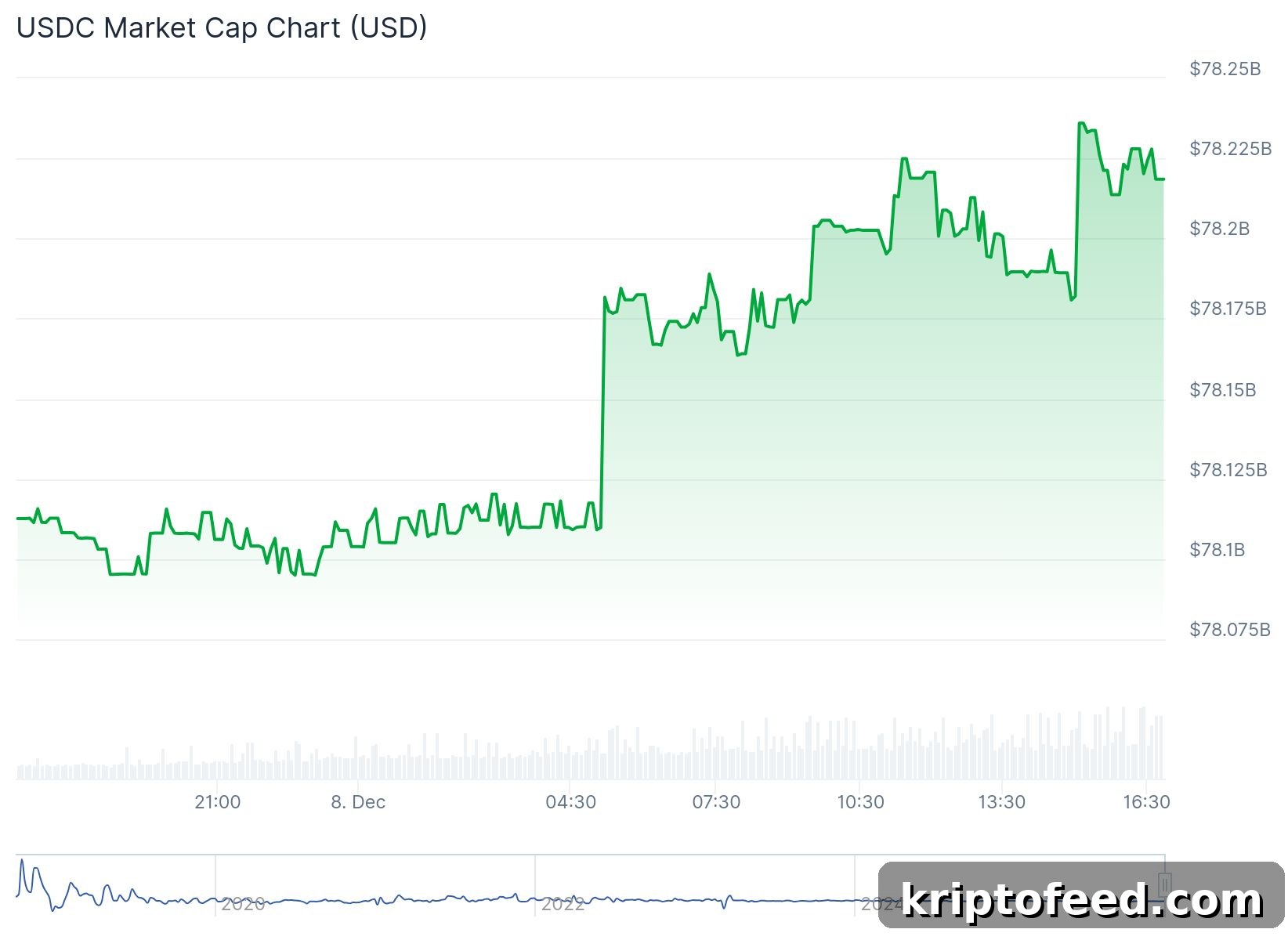
This surge has been supported by Circle’s engagement with traditional finance through collaborations with organizations such as Deutsche Börse and Mastercard.
The trend highlights the expanding role of regulated stablecoins across both decentralized and institutional environments, as market participants seek predictable and transparent digital dollar instruments.
Stablecoin competition heats up as Tether also grows
The Bybit–Circle partnership emerges within a competitive stablecoin landscape.
Tether, the largest stablecoin by market cap, has seen its supply grow from $137 billion to about $185.6 billion since the start of the year, an increase of roughly 36%.
The sector’s rapid expansion is prompting exchanges to refine their stablecoin strategies and strengthen the systems that support them.
Bybit continues to support multiple stablecoins and emphasizes user choice as it updates its architecture for the global market.