- The new legislation builds on the Digital Asset Basic Act by adding detailed rules for supervising stablecoins.
- The framework outlines how global stablecoins such as USDT and USDC will be treated in Korea.
- Officials warn that delays could leave Korea behind other regions that tightened rules in 2025.
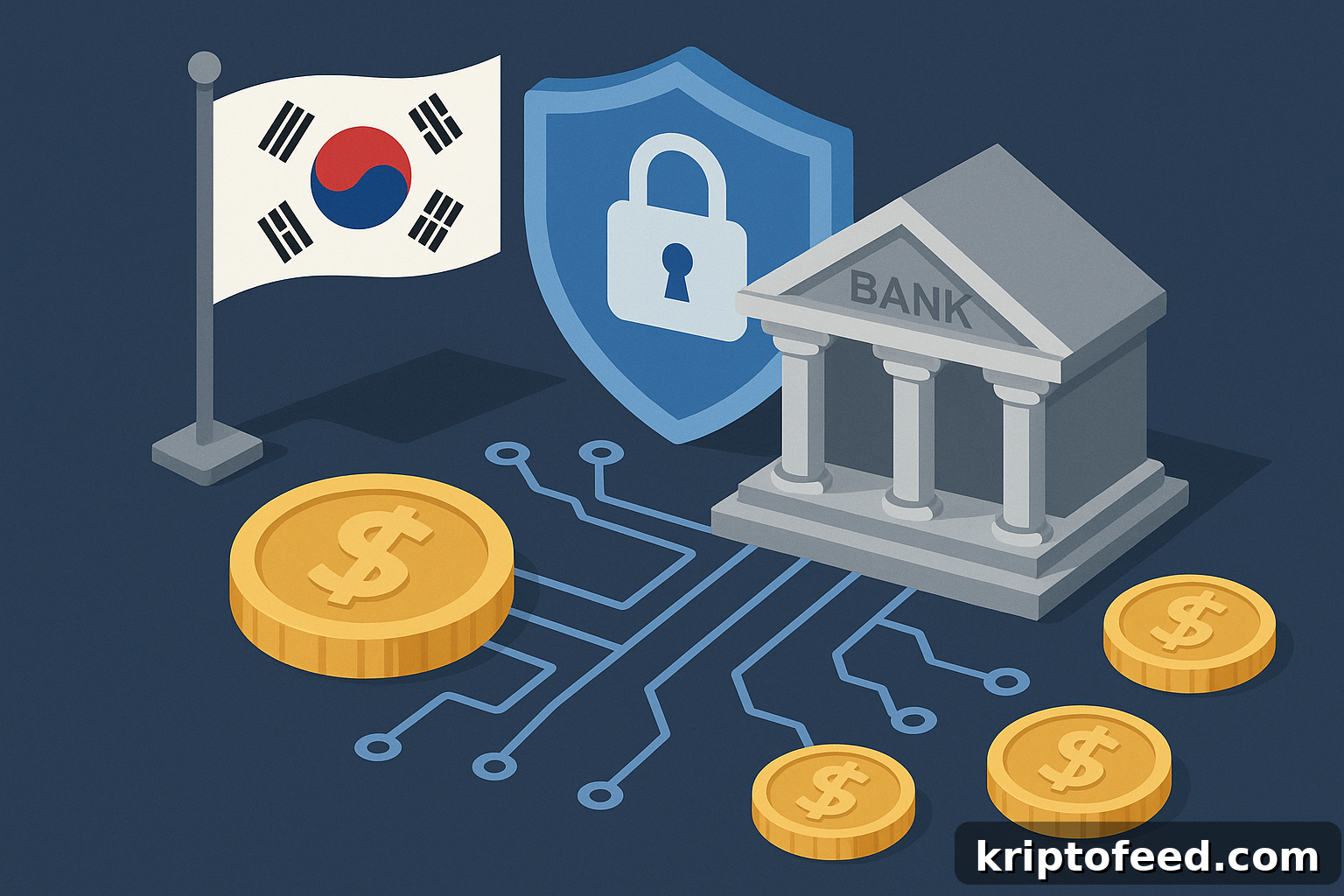
South Korea has taken a major step toward formalizing how won-backed stablecoins will be issued and overseen, after lawmakers resolved a long-running dispute over which authority should control the process.
A closed-door meeting clarified the central question of authority, with policymakers agreeing that banks should lead the effort while allowing technology firms to participate.
The decision comes as crypto adoption rises among people aged 20 to 50 and as global players continue to dominate the stablecoin market.
With an approaching deadline in December, officials aim to finalize a structure that supports innovation while keeping monetary stability at the core of regulation.
Consortium model defines roles for banks and tech firms
A December 1 report in the Maeil Business Newspaper indicated that lawmakers agreed on a consortium model in which banks retain majority control of entities that issue stablecoins.
Technology companies will still be able to participate, but financial institutions will take the lead to limit systemic risks.
The goal is to create a Korean-style stablecoin framework that reflects the safeguards of traditional finance, with clear rules governing reserves, issuance, and supervision.
The model was designed to address concerns from the Bank of Korea about protecting the money supply.
It also provides a common structure for private firms, reducing the risk that fragmented market entrants will produce products without consistent stability mechanisms.
By setting shared standards early, policymakers hope to shape a national stablecoin ecosystem that can support innovation without compromising financial safety.
Government given until December 10 to submit proposal
Democratic lawmaker Kang Joon-hyun said the government must submit its proposal by December 10. If the deadline is missed, lawmakers will move forward with their own version of the bill.
The aim is to pass the legislation during a special session of the National Assembly in January, following consultations with the ruling People Power Party and the presidential office.
This new law expands on the digital asset law adopted earlier this year.
The earlier law established licensing rules for issuers, reserve protection requirements, and compliance obligations for virtual asset service providers.
The upcoming bill fills remaining regulatory gaps by specifying how stablecoins should be managed when they function like traditional financial instruments.
It also provides clearer guidance for U.S.-based stablecoins such as USDT and USDC, which have grown increasingly influential in Korea’s expanding digital asset market.
Push to keep pace with global market developments
Officials warn that delays could leave Korean firms trailing their global competitors.
The United States, the EU, and Japan tightened their stablecoin rules in 2025, creating a more defined landscape for exchanges and financial institutions.
Korean regulators want to avoid losing momentum, especially as domestic interest in crypto continues to grow.
The updated framework aims to reduce uncertainty for issuers, financial firms, and exchanges.
By aligning digital assets with traditional financial oversight, authorities hope to support responsible growth and give consumers access to well-regulated products.
The emphasis is on keeping the domestic market consistent with international standards while preserving space for private-sector innovation.
Lawmakers discuss broader reforms to security and markets
The meeting also covered planned updates to financial security and capital markets rules.
After recent hacking incidents at major financial firms, officials intend to amend the Electronic Financial Transactions Act.
Proposed changes include tougher penalties and stricter enforcement following cybersecurity breaches.
Lawmakers are also working with opposition parties on a package of capital market reforms.
These measures include rules that would require mandatory tender offers in certain corporate situations.
They also plan to update share allocation standards so ordinary investors have fairer access to offerings.
The goal is to improve transparency and strengthen market integrity as Korea reshapes its financial regulatory environment.