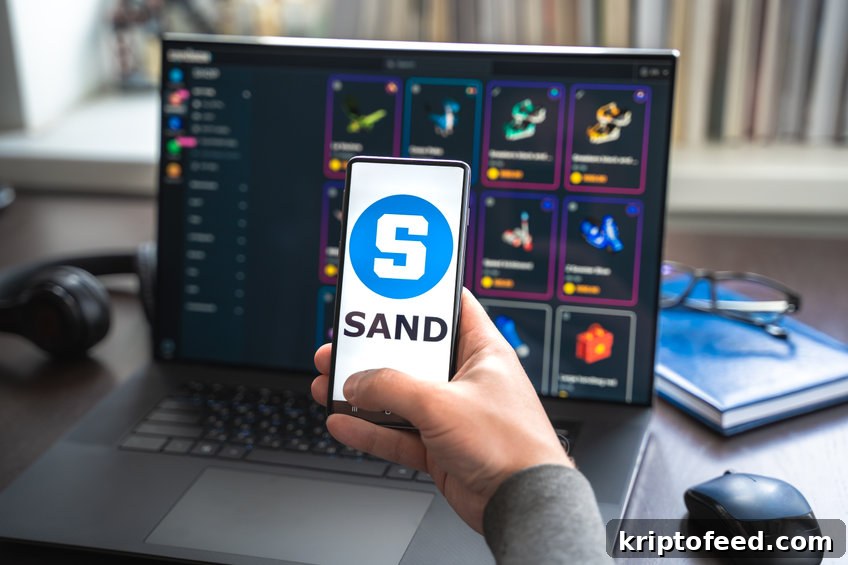
Following the recent hack of Axie Infinity’s sidechain, capital may flow more strongly into SAND
-
The Sandbox is among the fastest-growing play-to-earn gaming platforms, attracting rising user adoption.
-
Axie Infinity is a major play-to-earn platform with one of the most valuable NFT collections in crypto.
-
While both projects represent strong long-term plays, AXS may underperform SAND in the short term after the Ronin network attack.
The Sandbox (SAND/USD) is one of the most recognized play-to-earn platforms in the crypto gaming space today. The platform’s popularity and steadily growing user base have helped lift SAND’s valuation since 2021. Beyond play-to-earn mechanics, Sandbox has pursued additional strategic initiatives that could spur further price appreciation for SAND. For example, Sandbox announced a partnership with Warner Music to host virtual concerts inside the Sandbox metaverse. Combined with broader interest in metaverse experiences and digital ownership, these developments position SAND as an attractive crypto asset for investors considering the 2022 landscape and beyond.
Axie Infinity (AXS/USD) is likewise a well-established play-to-earn platform. It has been one of the largest global platforms in this category and is known for an exceptionally high-value NFT ecosystem tied to its in-game assets. As a market leader, Axie Infinity benefits from strong brand recognition and network effects, and it stands to gain as play-to-earn mechanics become more prominent within the gaming industry.
Why SAND may be a step ahead of AXS
Although both SAND and AXS have solid long-term fundamentals, SAND could outperform in the near term. The key factor is negative sentiment surrounding Axie Infinity after a well-publicized security breach. Recently, the Ronin Network—Axie Infinity’s sidechain—suffered an attack that resulted in the theft of roughly $600 million worth of Ethereum. Security incidents of this scale often trigger market-wide concern and short-term selling pressure for assets associated with the affected ecosystem. As a result, AXS may lag behind SAND even when bullish momentum returns to crypto markets.
Investors tend to react quickly to perceived risk, and hacks damage confidence in both the protocol and the token. Even if Axie Infinity implements remediation steps and strengthens its security posture, the immediate market response typically favors alternatives perceived as less exposed to such incidents. Sandbox’s recent partnerships and continued emphasis on content, events, and creator-driven experiences may therefore draw more capital while Axie addresses fallout from the Ronin breach.
Key considerations for investors
When comparing SAND and AXS, it’s important to weigh both short-term market dynamics and long-term prospects:
- Short-term sentiment: Security incidents and negative news flow can depress token prices quickly. The Ronin hack is a near-term headwind for AXS.
- Fundamentals and partnerships: Sandbox’s collaborations—for instance, with entertainment and music partners—support on-chain activity and growth in the metaverse, which can translate into stronger demand for SAND.
- Market positioning: Axie Infinity remains a prominent player with a highly valuable NFT economy. Its long-term trajectory depends on user retention, game development, and effective security upgrades.
- Risk tolerance: Investors sensitive to event-driven volatility might prefer projects currently demonstrating lower operational risk, while those focused on long-term adoption may view dips in AXS as buying opportunities.
Summary
Sandbox is a fast-growing play-to-earn platform within the metaverse ecosystem, supported by rising user engagement and strategic partnerships. Axie Infinity is one of the biggest play-to-earn platforms and boasts one of the most valuable NFT collections in crypto. While both projects hold promise over the long term, the recent Ronin network attack introduces a near-term negative catalyst for AXS. That incident may cause AXS to underperform SAND in the short run as market participants reassess risk and reallocate capital toward projects perceived as less exposed to similar security vulnerabilities.