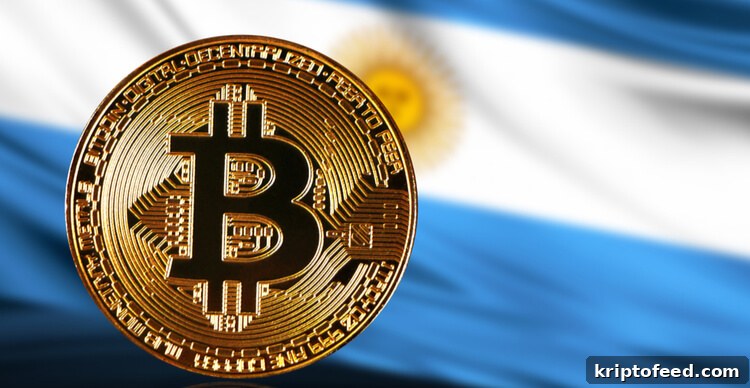
Many Argentinians Have Shifted Their Investments to Cryptocurrencies as the Economy Worsens
Over the past year, the number of crypto users in Argentina has grown significantly, according to AFP. As the national economy weakens, an increasing number of people are turning to cryptocurrencies—most notably Bitcoin—as an alternative store of value and means of transaction.
Maximiliano Hinz, head of Binance in Latin America, says active crypto trading accounts in the region have increased roughly tenfold. This surge reflects a broader trend as Argentinians seek ways to protect their savings from rapid currency depreciation and high inflation.
AFP’s report highlights that the country’s sovereign currency has been steadily losing purchasing power. Inflation over the last three years is estimated at around 45%, and Argentina’s GDP contracted by 9.9% last year. Historically, many residents relied on the US dollar to shield against local inflation, but access to dollars is now constrained by a government-imposed monthly purchase limit of $200.
With few reliable alternatives available, many Argentinians have moved funds into cryptocurrencies such as Bitcoin, Ethereum, Tether, and Dai. Hinz estimates there are roughly two million registered crypto trading accounts in the country—meaning a notable share of the population is engaging with digital assets, given Argentina’s estimated population of about 46 million in 2021.
Beyond trading and savings, digital assets are increasingly used for everyday transactions. There are few restrictions on which goods or services can be bought with crypto, and businesses across sectors are adapting. Even industries that traditionally relied on dollars—such as real estate—are now accepting cryptocurrency payments. Mercado Libre, a leading local e-commerce platform, has confirmed support for Bitcoin payments in real estate transactions in Argentina.
The shift toward cryptocurrencies in Argentina reflects a practical response to economic instability: individuals and businesses are seeking accessible alternatives that preserve value and enable commerce despite currency controls and high inflation. As adoption grows, both local marketplaces and global crypto platforms continue to expand services to meet rising demand.