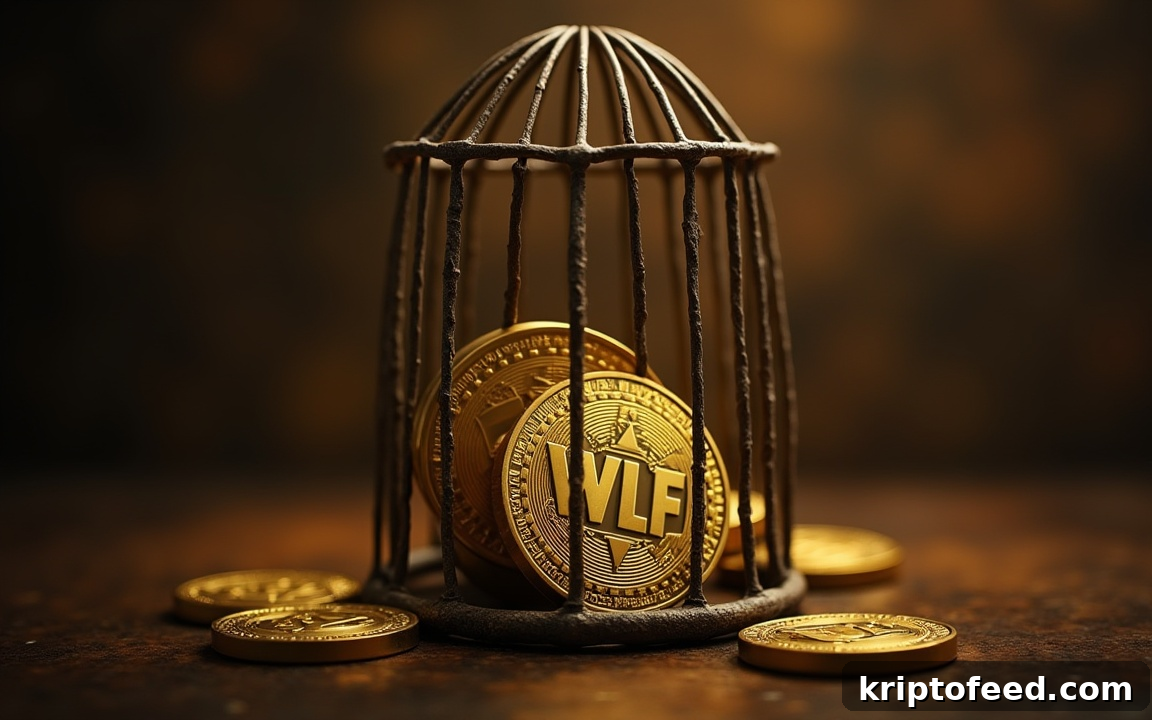
- World Liberty Financial (WLFI) froze 540 million tokens linked to Justin Sun’s wallet.
- Sun insists the freeze violates investors’ rights and undermines trust.
- The WLFI price fell from $0.46 at launch to around $0.18.
Justin Sun has publicly urged World Liberty Financial (WLFI) to release tokens after the project restricted access to 540 million unlocked WLFI tokens associated with his wallet.
The Tron founder, who joined WLFI as an advisor and early investor, says the freeze contradicts the fairness and transparency that should guide blockchain projects.
WLFI leadership blacklisted Justin Sun’s address
The freeze followed a series of transactions from a wallet linked to Sun on the Ethereum blockchain.
WLFI’s team placed his address on a blacklist, preventing him from transferring tokens he maintains were lawfully acquired.
Sun says the transactions were merely small tests of exchange deposits and not purchases or sales that could have materially influenced the market.
He demanded that the WLFI team immediately unfreeze his tokens and respect the rights of all investors.
Sun warned that unilateral freezing could undermine the project’s credibility and erode trust across the broader community.
Sun’s public appeal
Via X, Sun delivered a direct message to the WLFI team and the global community.
He reminded followers that he had been invested in the project not only financially but also emotionally and strategically from the start.
Sun said he initially purchased WLFI tokens worth $30 million at the end of 2024, aligning his interests with other early backers.
“My tokens were unjustly frozen,” he wrote. “As one of the first investors, I bought in the same way as everyone else — we all deserve the same rights.”
He argued tokens should be viewed as “sacrosanct and untouchable,” highlighting a key distinction between blockchain systems and traditional finance, where unilateral freezes are more common.
The Tron founder urged WLFI to change course, stressing that legitimate financial brands grow only through fairness, transparency, and trust. He cautioned that anything less would damage the project’s reputation and alienate its community.
Market jitters and governance concerns
WLFI’s price action since launch has been volatile. The token debuted at $0.46 on September 1 but plunged to $0.25 within two hours amid heavy selling pressure on major exchanges such as Binance, OKX, and Gate.
It has continued to slide and was trading just above $0.18 at the time of writing, a decline of nearly 60% from its debut price.
The controversy surrounding Sun’s wallet has intensified concerns about WLFI’s governance structure.
Although the platform presents itself as decentralized, project leaders’ ability to blacklist wallets and freeze investor tokens has raised pointed questions.
Critics argue that such unilateral measures undermine the decentralization principles that projects like WLFI claim to uphold.
The WLFI team has not yet issued a direct response to Sun’s appeals, leaving the project in a state of uncertainty during its crucial early days.
As the token struggles to regain stability and investors remain wary of governance risks, how WLFI handles this dispute may determine whether it can restore confidence and build a lasting reputation in the competitive digital-asset market.