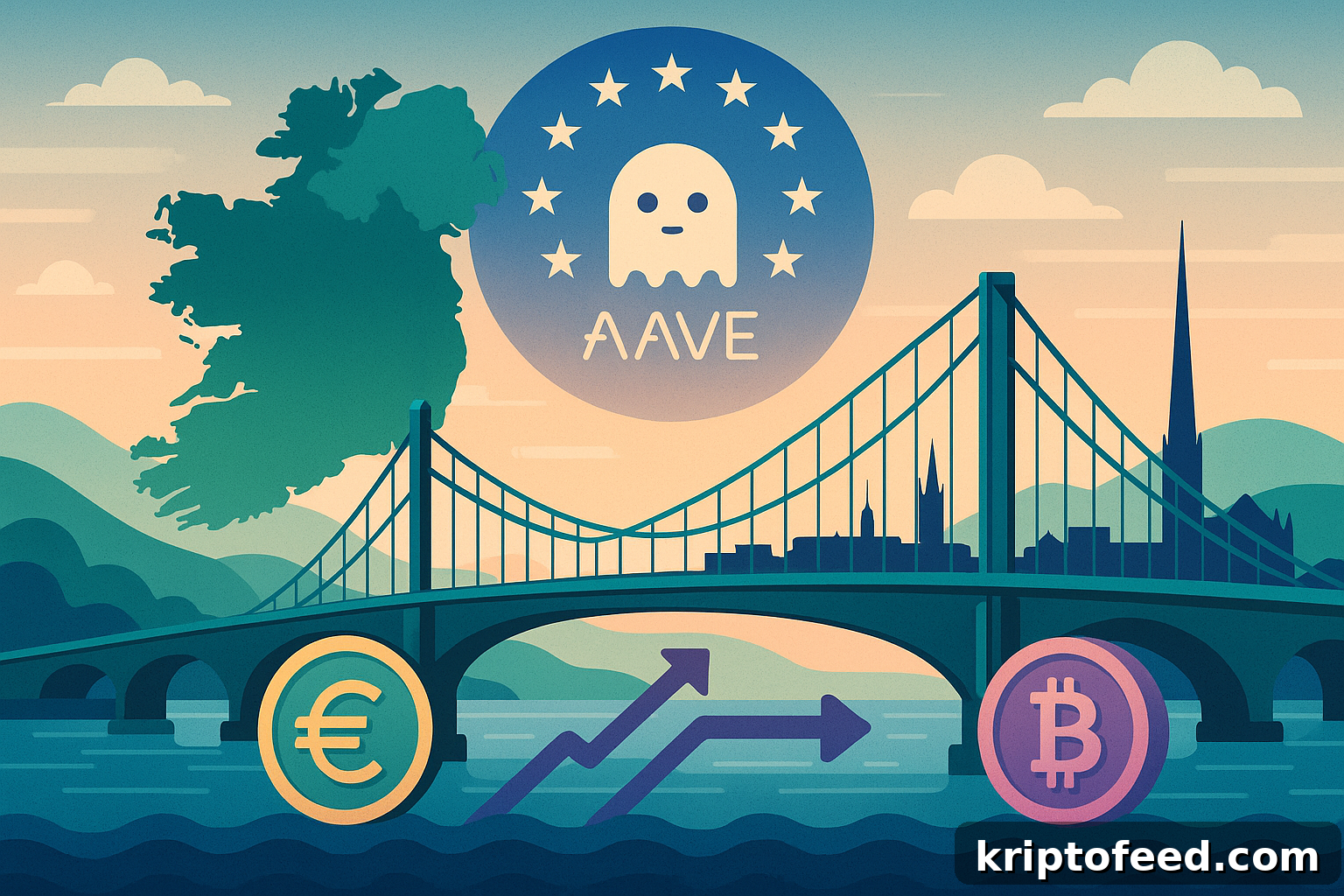
- The Central Bank of Ireland granted a license through Aave’s local subsidiary.
- Push enables users to convert euros to crypto assets, including GHO, with no fees.
- Ireland emerges as a regulated hub for decentralized finance in Europe.
Decentralized finance infrastructure has taken a decisive step into Europe’s regulated fintech landscape as Aave Labs secured authorization under the Markets in Crypto‑Assets (MiCA) framework.
The regulatory approval, issued by the Central Bank of Ireland, allows Aave Labs’ fiat‑to‑crypto platform, Push, to operate across the European Economic Area (EEA).
This authorization means European users can now convert euros into digital assets — including Aave’s native stablecoin GHO — without relying on centralized exchanges.
The approval positions Push among the first native DeFi platforms legally permitted to provide a regulated stablecoin gateway in Europe.
Operated through Push Virtual Assets Ireland Limited, a wholly owned subsidiary, the platform introduces fee‑free euro‑to‑crypto conversion, offering price advantages versus traditional financial providers and exchanges.
Aave Labs has not specified whether this fee model will be permanent.
Launching Push from Ireland reinforces the country’s growing role as a regulatory center for digital assets in Europe.
Push aims to reduce centralized exchange reliance for stablecoin access
Push is designed to remove the friction around fiat on‑ramp processes by creating a direct, regulated bridge between the euro and crypto assets within the Aave ecosystem.
The platform’s emphasis on euro liquidity and integration of GHO supports a broader goal: decreasing DeFi’s dependence on centralized exchanges for stablecoin access.
Aave Labs describes a regulated infrastructure as essential to onboarding the next wave of mainstream DeFi users.
Through Push, the protocol builds a gateway that lets users and developers interact with stablecoins under a framework aligned with MiCA’s legal and audit requirements.
That regulatory transparency is particularly relevant as stablecoin usage expands across lending, borrowing, and yield‑farming protocols.
Stablecoin regulation drives integration of Europe’s crypto markets
MiCA’s stablecoin framework plays a central role in enabling services like Push to develop.
The regulation, due to take effect in early 2025, establishes clear rules for stablecoin issuance and crypto‑asset service providers (CASPs) in the EU.
Aave’s authorization under MiCA signals regulators are increasingly receptive to native DeFi firms participating in the financial system, provided compliance benchmarks are met.
As one of the first DeFi platforms to offer institutional‑level liquidity, Aave’s move to operate within MiCA guidelines marks a turning point in how decentralized services integrate with traditional financial structures.
Push’s rollout is likely to be closely watched by peers and competitors, especially as the stablecoin sector continues rapid growth.
While Push currently focuses on euro‑to‑GHO conversion, the Ireland‑based foundation could support a broader expansion of services as MiCA shapes Europe’s crypto infrastructure.
Aave’s success may encourage other DeFi protocols to follow suit, potentially transforming the EEA into a regulated innovation hub for stablecoins and related services.