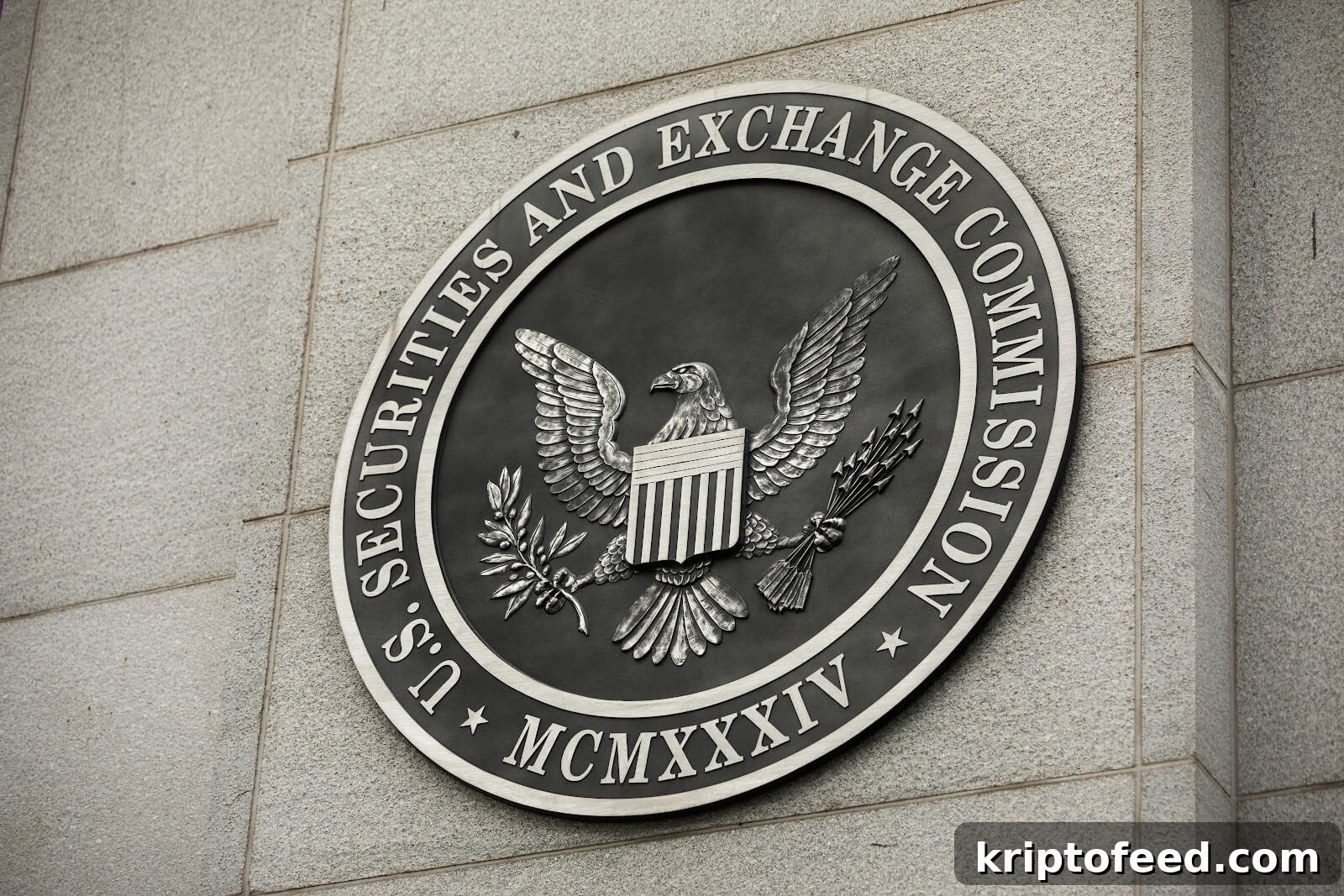
- SEC clears the FUSE token as not a security, providing regulatory clarity.
- The FUSE token rewards network participation and green-energy actions rather than profit-seeking.
- The market shows renewed momentum, improving price outlooks for FUSE tokens.
The U.S. Securities and Exchange Commission (SEC) issued a no‑action letter to Fuse, a Solana-based project focused on decentralized physical infrastructure networks (DePIN), giving the FUSE token a rare measure of regulatory clarity.
This development has generated optimism about the token’s potential, highlighting its utility-driven design and positioning it as a notable example of how blockchain projects can align with U.S. securities rules.
SEC clears Fuse
Fuse Crypto submitted a formal request to the SEC’s Division of Corporation Finance on November 19, asking for confirmation that it could continue offering the FUSE token without triggering enforcement actions.
In response, the SEC confirmed that it would not recommend enforcement action based on the specific facts and circumstances presented by Fuse.
Although conditional, this no‑action letter represents an important milestone for the project, since such regulatory guidance is uncommon in the crypto industry.
Importantly, the SEC’s decision reflects a shift under the current leadership toward a more pragmatic and balanced approach to token oversight, emphasizing practical evaluation over blanket enforcement policies.
Unlike speculative tokens, FUSE was designed primarily for network participation and real‑world utility.
It serves as a reward for users who support Fuse’s distributed infrastructure rather than as an investment instrument.
Holders earn tokens through active engagement—supporting Solana‑based network operations, installing solar panels, or using electric-vehicle chargers, for example.
By tying token rewards to tangible energy actions, Fuse structured FUSE as a consumer utility asset aligned with regulatory expectations, reducing the risk of it being classified as a security under U.S. law.
Work‑utility token model
The SEC emphasized that FUSE token holders do not reasonably expect profits from Fuse’s managerial efforts, and that the token does not confer ownership, dividends, or voting rights.
This enterprise‑oriented system lets participants redeem tokens for benefits such as discounts on energy bills, priority access to home electrification upgrades, or carbon offset programs.
Emphasizing real-world use cases and participation in sustainable energy, Fuse built a model where blockchain directly incentivizes environmentally responsible behavior.
The token’s scalability allows its supply and use to grow alongside the project’s broader green‑energy initiatives, reinforcing its role as a functional, consumable asset rather than a speculative instrument.
The approval reverberated throughout the DePIN sector—an area valued at more than $24 billion—because it provides a regulatory blueprint for other infrastructure-focused blockchain projects.
Fuse’s approach demonstrates how decentralized networks can effectively integrate tokenized rewards with practical utility, offering participants both financial and environmental value.
Market impact and FUSE price outlook
Following the announcement, the FUSE token began showing signs of renewed momentum in trading markets.
Current data indicate the token trades near $0.0077, with a market capitalization around $2.4 million and over $68 million in value locked.
Over the past year FUSE has declined substantially from its all‑time high of $2.13 in January 2022, yet the SEC’s no‑action letter has bolstered investor confidence.
Looking ahead, Fuse’s strengthened regulatory standing combined with its energy‑utility focused model may favorably influence medium‑term price forecasts for FUSE tokens, particularly if adoption of its green‑energy initiatives continues to expand.