- Stablecoin secures its first U.S. exchange listing amid a surge in adoption.
- USDe gains traction as it differs from established fiat-backed tokens like USDT and USDC.
- A U.S. listing could increase liquidity and boost trader confidence in the Ethena ecosystem.
Ethena Labs’ synthetic dollar stablecoin, USDe, is drawing notable attention across the crypto market.
Less than a day after Binance launched a rewards program for the token, USDe made its official entrance into the United States via Kraken.
USDe is coming to @krakenfx, the first USDe listing on a US exchange https://t.co/CsAdZTDPnu pic.twitter.com/rwcAwUZkdj
— Ethena Labs (@ethena_labs) September 23, 2025
This move is a meaningful step toward taking Ethena’s stablecoin to international markets.
Kraken confirmed it will soon open trading, giving U.S. investors access to an innovative stablecoin that operates differently from traditional fiat-backed alternatives such as Circle’s USDC or Tether’s USDT.
How does Ethena’s USDe work?
Unlike USDT and USDC, which rely on fiat reserves held by banks, USDe maintains its dollar peg through delta-neutral hedging using BTC and ETH derivatives. This approach aims to create an on-chain, censorship-resistant stable token that minimizes reliance on third parties and centralized custodians.
Proponents argue this design represents the next wave of stablecoin innovation, promising reliability and efficiency better aligned with blockchain decentralization principles.
USDe has also gained popularity for its yield-generating features, allowing holders to earn passive returns on otherwise idle stablecoin balances. Users can stake USDe to receive sUSDe, which accumulates over time.
Regulatory significance
Beyond boosting adoption, Kraken’s listing places USDe in a more compliance-focused position. Approval to list on a licensed U.S. exchange typically involves thorough regulatory and legal due diligence—processes Ethena likely underwent—adding a layer of credibility to the synthetic dollar protocol.
Responding to the U.S. debut, one user on X remarked:
The dollar’s entry onto an American exchange signals more than growth. It’s validation. The synthetic dollar is no longer niche.
Regulatory compliance is critical because it can provide greater assurance to investors and traders about the safety and legitimacy of the asset.
Intensifying competition among stablecoins
While USDT and USDC continue to dominate the stablecoin landscape, USDe is emerging as a serious challenger. Ethena’s stablecoin has experienced rapid growth as participants look for more decentralized alternatives.
USDe currently ranks third by market capitalization at $14.43 billion, well behind USDT ($172.83 billion) and USDC ($74.03 billion). Competition among stablecoin projects is likely to intensify, pushing established players to adapt and consider alternative models.
ENA price outlook
Ethena’s native token, ENA, traded higher following the Kraken announcement. ENA rose more than 4% on the daily chart to $0.6156.
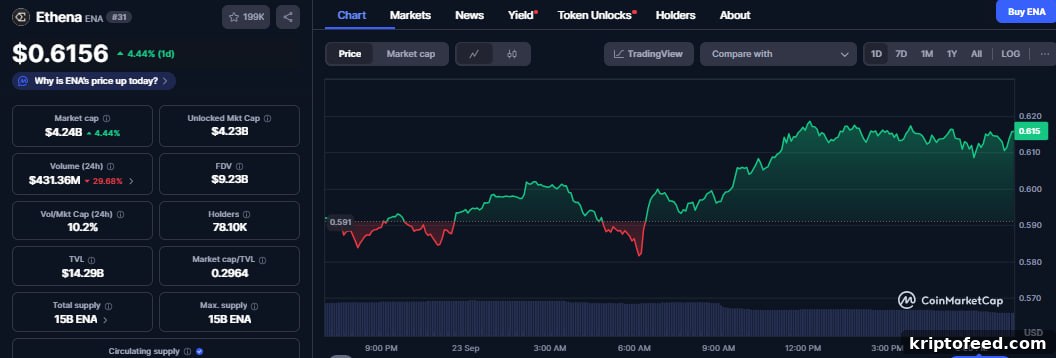
The altcoin appears positioned for further gains as USDe strengthens Ethena’s ecosystem. Bulls should defend the $0.60 support level to maintain upward momentum in the near term. Conversely, a breakdown below the $0.50 support zone would invalidate the bullish trajectory and could lead to notable price declines or an extended sideways trend.