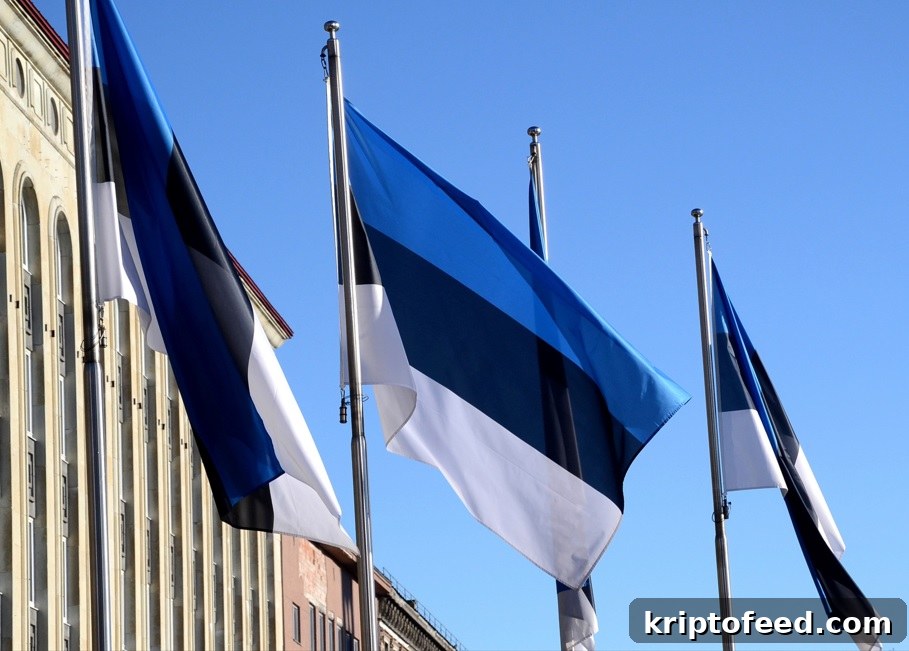
The clarification provides relief to Estonia’s crypto community, which had feared a broad ban on digital assets
The Estonian Ministry of Finance has clarified in an official statement that it does not intend to launch a crackdown on cryptocurrencies. The announcement responds to a draft law that aims to regulate the activities of virtual asset service providers (VASPs) as part of efforts to prevent financial crime.
The draft legislation will be debated in parliament before any decision is taken. Individuals who buy, hold, or trade cryptocurrencies in private wallets will not be affected by the proposed rules, contrary to earlier reports suggesting otherwise.
“The legislation does not contain any measures to ban customers from owning and trading virtual assets and does not in any way require customers to share their private keys to wallets,” the ministry said.
To address public concerns, the ministry published a FAQ that explains how the draft bill translates international guidance into Estonian law. The measures are presented as Estonia’s implementation of recommendations from the Financial Action Task Force (FATF) concerning regulation of virtual assets and VASPs.
Tightening anti-money laundering rules
Although Estonia’s crypto sector experienced rapid growth initially, it has faced setbacks in recent years. Many licenses previously issued to crypto businesses were revoked. According to the Financial Intelligence Unit (FIU), over 1,000 crypto firms lost their licenses last year due to weak links with Estonia.
These actions followed revelations about widespread money laundering through other institutions, which prompted tighter scrutiny. At one point, the FIU director indicated that licenses would be revoked and affected firms would need to reapply. The FIU later clarified that initial statements did not represent the European Union’s position in full.
The draft anti-money laundering rules would require VASPs that hold Estonian licenses to have a real presence in the country or a strong, demonstrable connection to it. They also introduce significantly higher minimum capital requirements for providers, likely intended to limit the number of licensees and raise operational standards. Under the proposal, required share capital would range from €125,000 (approximately $142,000) to €350,000 (approximately $396,000), depending on the services offered. That compares with the current minimum share capital of €12,000 (about $13,500).
The ministry emphasized that decentralized finance (DeFi) applications are not automatically classified as VASPs. However, it noted that “developers, owners or other persons who benefit monetarily from such applications” could face obligations similar to those applied to VASPs if their activities fall within the defined scope.
If approved, the new rules would also require VASPs to collect and retain identity information for users who open accounts or wallets, reinforcing know-your-customer (KYC) obligations. This KYC requirement would build on existing Estonian legislation that already prohibits anonymous virtual accounts.
“Accounts opened with Estonian VASPs cannot be anonymous and Estonian VASPs cannot offer anonymous accounts or wallets,” the ministry reiterated.