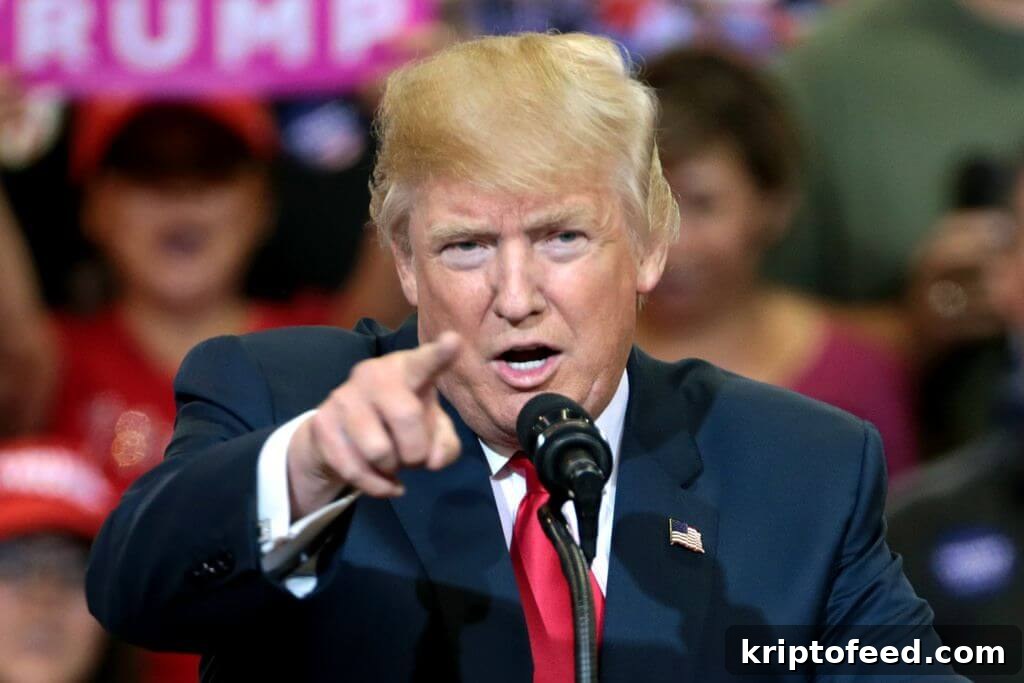
- Trump’s WLFI plans to launch a dollar-pegged stablecoin after raising $14 million
- The project faces challenges, having achieved only 4.7% of its $300 million token sale target
- Trump opposes a U.S. CBDC and has said he would outlaw government-issued stablecoins if re‑elected
World Liberty Financial (WLFI), a venture associated with Donald Trump, is preparing to enter the cryptocurrency market with a dollar-pegged stablecoin. The project recently closed an initial fundraising round of $14 million. WLFI aims to capitalize on growing demand for stablecoins, which provide traders and investors with a relatively stable on‑ramp and store of value amid the volatility of broader crypto markets.
WLFI raises $14 million and moves forward with a dollar‑pegged stablecoin
WLFI’s team continues to develop the stablecoin and implement security protocols. Observers caution that bringing the project to market will take time. If Trump returns to the presidency, his influence could reshape the regulatory environment that governs stablecoins, potentially altering the operating landscape for his financial ventures.
Beyond WLFI, Trump has articulated a broader financial and regulatory agenda that opposes a U.S. central bank digital currency (CBDC). He has pledged that, if re‑elected, he would make government‑issued stablecoins illegal. That stance sits alongside his economic priorities, including preserving components of the 2017 Tax Cuts and Jobs Act set to expire in 2025, cutting the corporate tax rate toward 15 percent, and expanding immediate deductions for equipment and research investments — measures he frames as pro‑growth policies.
Despite WLFI’s ambitious goals, the project faces significant market challenges. Its initial public token sale aimed to raise $300 million but met with limited success, reportedly bringing in just $14.24 million — about 4.7% of the public sale target. During the token launch the project’s website experienced outages, underscoring strong demand at launch but also technical and operational strain. Reports from early sales indicated a small fraction of the planned tokens sold in the initial hours, highlighting the gap between WLFI’s objectives and market uptake.
WLFI’s progress comes at a time when regulators, investors, and incumbents are all weighing the role of stablecoins within the broader financial system. Key issues include transparency of reserves backing the peg, custody arrangements, auditing practices, and compliance with anti‑money‑laundering and securities rules. How WLFI addresses these concerns will be central to its credibility and long‑term viability.
Public sentiment and political considerations will also shape the project’s path. Trump’s vocal opposition to a federal CBDC and his promise to prohibit government‑issued stablecoins if elected could attract supporters who favor privately issued stablecoins, while simultaneously drawing scrutiny from regulators and policymakers worried about systemic risks and consumer protection.
The WLFI initiative illustrates the intersection of politics and crypto innovation: a high‑profile effort that seeks to leverage a recognizable brand and a politically aligned narrative to gain traction in a competitive market. Whether WLFI can convert initial fundraising and media attention into a secure, widely accepted stablecoin remains uncertain and will depend on execution, regulatory clarity, and market confidence.
As WLFI advances through development and regulatory engagement, the wider impact of Trump’s political and financial strategy on the crypto industry will be watched closely by investors, policymakers, and competing projects. The outcome will help determine how prominent politically connected ventures can become in shaping the future of digital finance.