- Algorand (ALGO) jumped 5% after Robinhood listed it for US users.
- Algorand’s price has stayed between $0.1092 and $0.1173 with no breakout.
- Weekly trend is still down 6.8% despite the short-term rally.
Algorand experienced a surge in activity after its token was added to Robinhood’s crypto trading platform, including availability for users in New York. The listing quickly drew retail attention and a rise in trading volume.
At the time of writing, ALGO was trading near $0.1149, reflecting a roughly 5% gain over the prior 24 hours.
Robinhood listing triggers short-term momentum
Being listed on Robinhood represents a meaningful expansion of distribution for Algorand. Access through a major retail brokerage tends to attract immediate interest, and this listing followed a period of market speculation about the token’s potential addition.
During the run-up and after confirmation, intraday gains ranged from about 5% to more than 7% on different trackers. Once the listing was announced, daily trading volume rose sharply — CoinGecko data showed roughly $58.9 million in 24-hour volume — reflecting heightened participation from retail traders responding to the increased accessibility.
The listing’s impact was driven primarily by a larger audience suddenly able to trade ALGO, which created short-term buying pressure rather than a sustained structural shift.
Price structure still shows resistance to a sustained breakout
Despite the rally tied to Robinhood, Algorand remains far below its long-term highs. The token is roughly 96.8% below its all-time peak of $3.56 set in June 2019, underscoring the depth of its long-term drawdown.
Over the past seven days ALGO is still down around 6.8%, indicating that the short-term lift has not yet erased earlier weakness. On a monthly basis, the token is up about 12.1%, which points to recovery in spurts rather than a steady, uninterrupted uptrend.
Price action recently has been confined to a narrow trading band. The 24-hour range between $0.1092 and $0.1173 shows that most movement has occurred inside established short-term volatility limits, rather than breaking higher into a new regime. Notably, attempts to push past resistance in the $0.117–$0.122 area have stalled, suggesting buyers have not yet secured control of the trend.
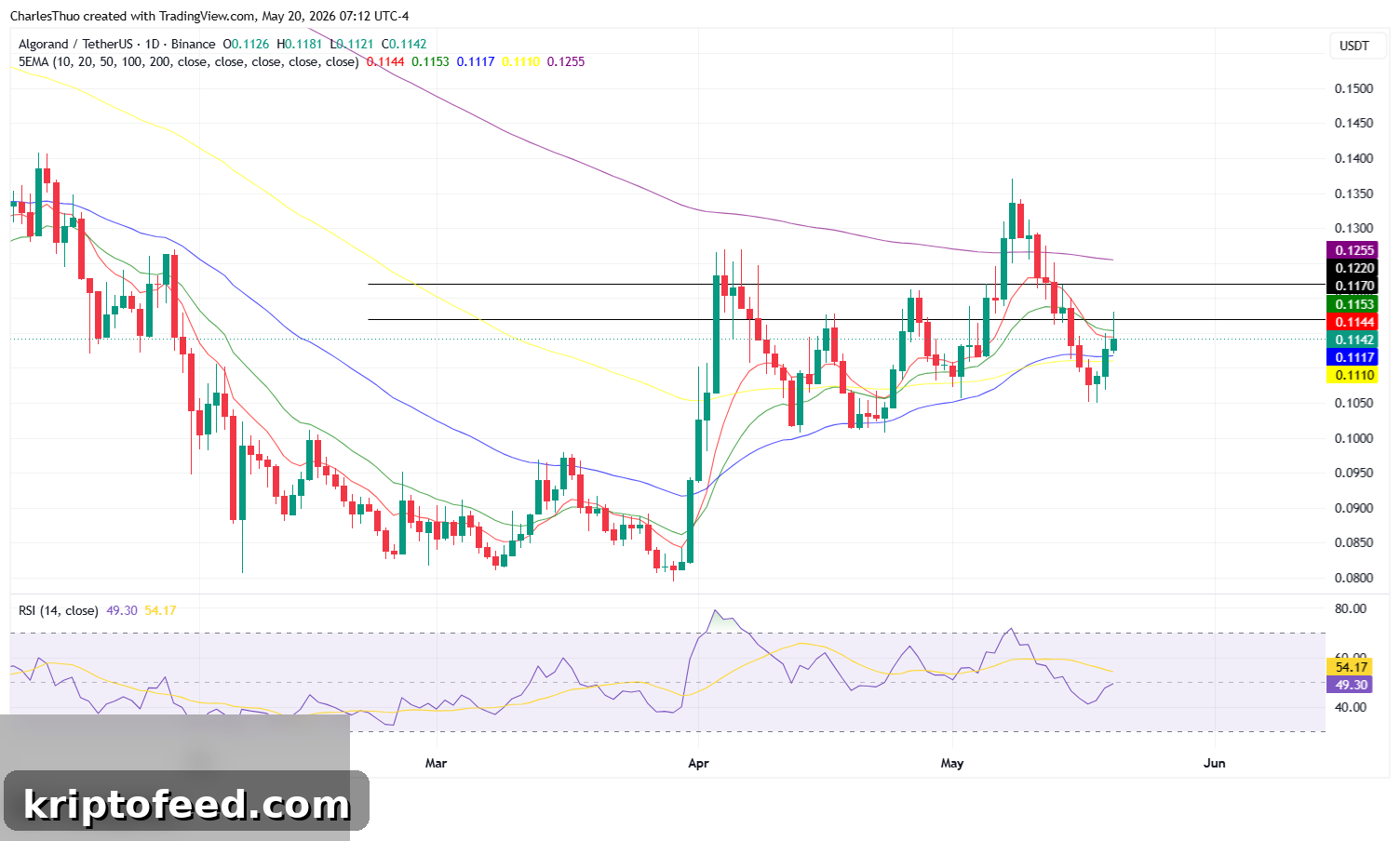
That repeated stalling at resistance implies the recent bounce remains limited and short-term rather than proof of a new upward trajectory.
Market reaction points to a liquidity-driven move rather than a trend shift
The current pattern looks more like a liquidity-driven reaction tied to increased retail access than a structural reversal. A confirmed Robinhood listing often triggers rapid inflows as new users allocate capital, producing a pronounced but not always durable price spike.
Volume near $59 million in 24 hours signals elevated participation, but the absence of follow-through beyond the immediate surge suggests the move is still sentiment-led. The fact ALGO remains negative on the weekly timeframe reinforces the view that gains are offsetting prior losses rather than establishing a fresh bullish trend.
Outlook: bounce or reversal still unresolved
Robinhood’s addition of Algorand — including access for New York users — expands the pool of potential traders and elevates the token’s profile. Distribution events like this commonly unfold in two phases: an initial attention-driven reaction and a subsequent phase where sustained demand either materializes or dissipates.
Given ALGO’s distance from historical highs and its negative weekly performance, the recent move appears to be part of a corrective recovery rather than a confirmed breakout. Whether this develops into a lasting trend reversal will depend on whether trading activity and demand persist beyond the short-lived listing impact or whether momentum fades and price returns to the prior range.