
Key takeaways
- Bitcoin slipped below $80,000 after being rejected at the 200-day EMA supply zone.
- US-listed spot ETFs saw a combined outflow of $635 million on Wednesday, signaling weaker institutional demand.
Bitcoin (BTC) fell under $80,000 on Thursday following a rejection from a key overhead supply area earlier in the week. The pullback is largely driven by reduced institutional appetite—evidenced by significant ETF outflows—and increased profit-taking among traders, which together have heightened selling pressure on the largest cryptocurrency.
Largest single-day ETF outflow in three months underscores cooling institutional demand
Institutional demand for Bitcoin showed signs of weakening after spot ETFs recorded outflows totaling $635.23 million on Wednesday, the biggest single-day withdrawal since late January. This follows a string of withdrawals and suggests institutions are temporarily stepping back.
According to CoinGlass data, this marked the second consecutive day of net ETF outflows. Continued or growing outflows would likely extend Bitcoin’s correction and add to bearish momentum.
At the same time, profit-taking has accelerated. CryptoQuant reported that realized daily profits reached 14,600 BTC on May 4, the highest level since December 10. The recent 37% rally from April lows pushed many holders into profit, prompting selling as traders lock in gains—behavior that often precedes further downward pressure.
Bitcoin price outlook: BTC may slip below $79,000 if selling continues
Bitcoin was trading around $79,458 on Thursday after rejection at the overhead supply zone. The market has corrected for three straight days but still sits above the 50-day and 100-day EMAs, which cluster just below $76,800.
However, BTC remains capped beneath the 200-day EMA at $81,986 and the 61.8% Fibonacci retracement level near $83,437, limiting near-term upside.
Technically, the broader uptrend is intact but conditions warrant caution. The Relative Strength Index (RSI) resides in the mid-50s, indicating a modest bullish tilt, while the MACD remains in negative territory, suggesting limited upward momentum for now.
On the downside, immediate support sits around the 50% Fibonacci retracement near $78,962, followed by the 100-day EMA at $76,756 and the 50-day EMA at $76,479. If selling intensifies, additional support levels are the 38.2% Fibonacci retracement near $74,487 and a broken upward trendline around $70,171.
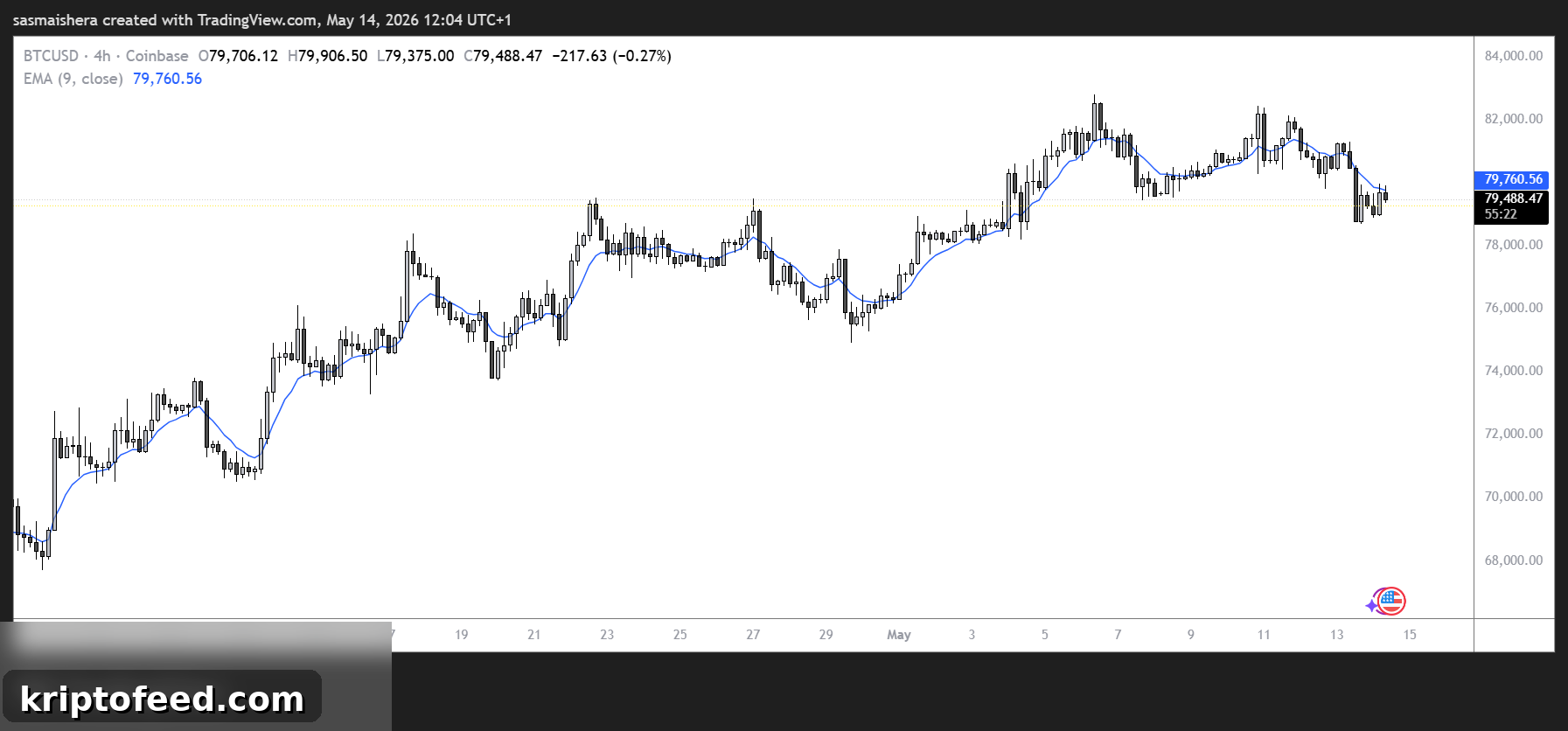
To relieve immediate pressure, bulls must push and close above the 200-day EMA at $81,986. Overcoming that level would next expose resistance at the 61.8% Fibonacci retracement of $83,437 and the horizontal barrier near $84,410. A sustained daily close above those zones would improve the odds of a renewed advance toward the January highs around $97,924.