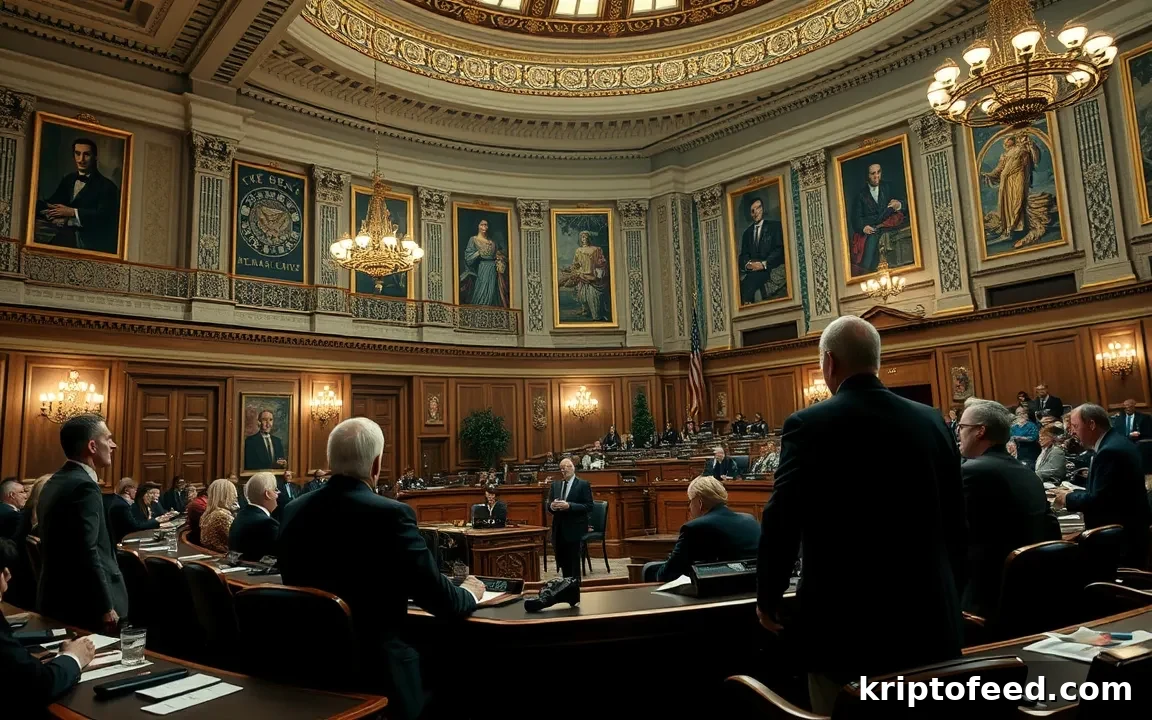
- Lawmakers voted 215 to 211 to advance the Guidance and Establishing National Innovation for US Stablecoins Act.
- Wednesday’s votes represented a rebound for Republican leadership after an unexpected setback on Tuesday.
- Many House Democrats continue to oppose all three bills and have pushed back strongly.
The U.S. House of Representatives narrowly voted Wednesday to revive momentum for a package of cryptocurrency bills, reviving what Republican lawmakers have dubbed “Crypto Week” after an initial effort to move the measures forward collapsed earlier in the week.
Lawmakers approved a procedural motion by a 215–211 margin to advance the Guidance and Establishing National Innovation for US Stablecoins Act—commonly called the GENIUS Act—which creates a regulatory framework for dollar-pegged stablecoins and has already passed the Senate.
If the House adopts the bill later this week, it would then be sent to President Donald Trump’s desk for signature.
In a separate procedural vote, the House also agreed to advance the Digital Asset Market Clarity Act, known as the Clarity Act. That bill would clarify regulatory responsibility between the Securities and Exchange Commission (SEC) and the Commodity Futures Trading Commission (CFTC) for oversight of digital assets.
A third bill aimed at preventing the Federal Reserve from issuing a central bank digital currency (CBDC) directly to individuals was also cleared for a final vote.
Tuesday’s vote collapsed amid Republican defections
Wednesday’s results marked a recovery for Republican leaders after Tuesday’s unexpected failure, when the House initially rejected the procedural motion by a 196–223 vote.
That earlier vote featured a group of Republican defections driven by concerns about CBDC-related provisions in the GENIUS Act.
According to reports in The Hill, Representatives Marjorie Taylor Greene, Chip Roy, Michael Cloud and Anna Paulina Luna were among those who voted against advancing the package.
Greene voiced persistent worries that the GENIUS Act could provide a legal basis for the Fed to launch a digital dollar—an assertion the bill’s authors have disputed.
After the failed vote, President Trump personally intervened, telling reporters Tuesday evening that “key lawmakers” had agreed to support the legislation.
His remarks were widely interpreted as helping to consolidate GOP support ahead of Wednesday’s procedural votes.
Democrats oppose the measures, calling them dangerous
No Democrats voted to advance any of the bills, setting the stage for a partisan showdown as the legislation moves toward final passage votes.
Speaking at a press conference earlier Wednesday, Rep. Maxine Waters, a senior member of the House Financial Services Committee, warned that both the GENIUS Act and the Clarity Act would dangerously deregulate the crypto sector.
“These bills are an invitation for Trump to continue his large-scale crypto rollback,” Waters said, calling the measures “two of the most dangerous pieces of legislation” proposed during the current session.
Democrats also raised concerns that the bills would weaken consumer protections and erode the Federal Reserve’s authority, even as Republicans press to prohibit the Fed from issuing a Fed-backed digital dollar.