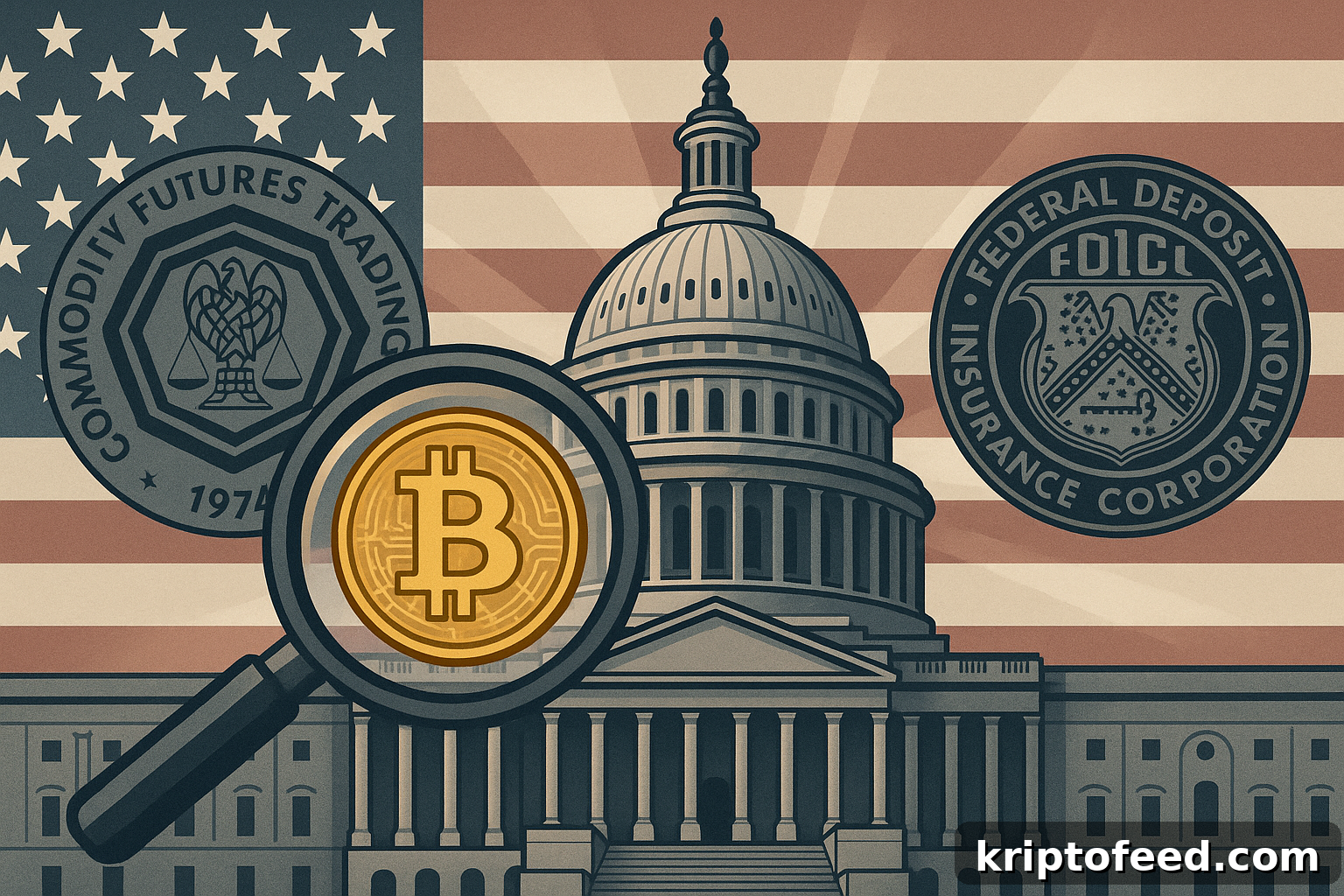
- Mike Selig is positioned to replace Acting Chair Caroline Pham at the CFTC if confirmed.
- The CFTC has already expanded crypto oversight through collateral approvals and spot trading permissions.
- Travis Hill’s confirmation would formalize his interim role at the FDIC and continue crypto-friendly banking policies.
Crypto regulation in the United States is entering a more defined phase as Senate procedures bring key financial watchdog appointments closer to completion.
Two agencies with direct influence over digital assets, the Commodity Futures Trading Commission (CFTC) and the Federal Deposit Insurance Corporation (FDIC), are on the verge of formal leadership changes, according to reporting from CoinDesk.
President Donald Trump’s nominees to chair both regulators have advanced through the Senate confirmation process, signaling a potential shift in how crypto markets and crypto-linked banking are supervised.
While final votes have not yet occurred, recent developments indicate decisions are approaching, narrowing uncertainty around regulatory direction for the industry.
Senate clears path for final votes
The Senate moved the confirmation process forward by approving a procedural resolution that clears the way for final votes.
The measure passed by a 52–47 margin and applies to a large group of nominees being considered together, per CoinDesk. Mike Selig, nominated to lead the CFTC, and Travis Hill, nominated to head the FDIC, are included among the group.
A spokeswoman for Senate Majority Whip John Barrasso said on X that the final vote is likely early next week, though the chamber remains days away from formally confirming the candidates.
Republicans in the Senate have adopted a strategy of voting on dozens of nominations in batches rather than individually. In this round, lawmakers are deciding on 97 confirmation questions at the same time.
Selig and Hill represent only two of those positions, but both roles carry outsized importance for the crypto sector. The batch approach has accelerated confirmations while compressing the time available for scrutiny of individual nominees.
CFTC positions itself as crypto regulator
Selig currently serves as a senior official at the Securities and Exchange Commission, where he has worked on crypto-related matters. If confirmed, he would replace Acting Chair Caroline Pham, who guided the CFTC through a series of initiatives viewed as supportive of digital asset markets.
Under Pham’s stewardship, the CFTC actively asserted its role in crypto supervision even as Congress continues to debate broader market structure legislation. The agency is widely expected to take a leading role in oversight if lawmakers eventually pass a bill that formally assigns authority.
Even without new legislation, the CFTC has already expanded its reach. The agency established a CEO council to advise on policy, approved the use of Bitcoin, Ether, USDC and other payment stablecoins as collateral, and allowed registered firms to offer spot crypto trading services. Those steps have integrated crypto more deeply into regulated financial activity.
FDIC banking stance comes into focus
At the FDIC, Hill has already been serving as interim chief, so his confirmation would formalize an existing role rather than introduce a new leader. During his interim tenure, Hill has pursued policies that indicate a more accommodating stance toward crypto banking.
His approach has included engagement with banks that provide services to digital asset firms—an area that previously faced uncertainty amid regulatory caution—suggesting continued support for banks that serve the crypto sector if he is confirmed permanently.
Oversight framework begins to align
Taken together, the pending confirmations point toward a more coordinated regulatory environment for crypto in the United States. With leadership at both the CFTC and FDIC close to being finalized, oversight of crypto markets and crypto-related banking may soon operate under clearer, more consistent supervision.
That alignment could reduce uncertainty for firms and investors operating at the intersection of traditional finance and digital assets, shaping how the industry evolves under federal oversight in the months ahead.