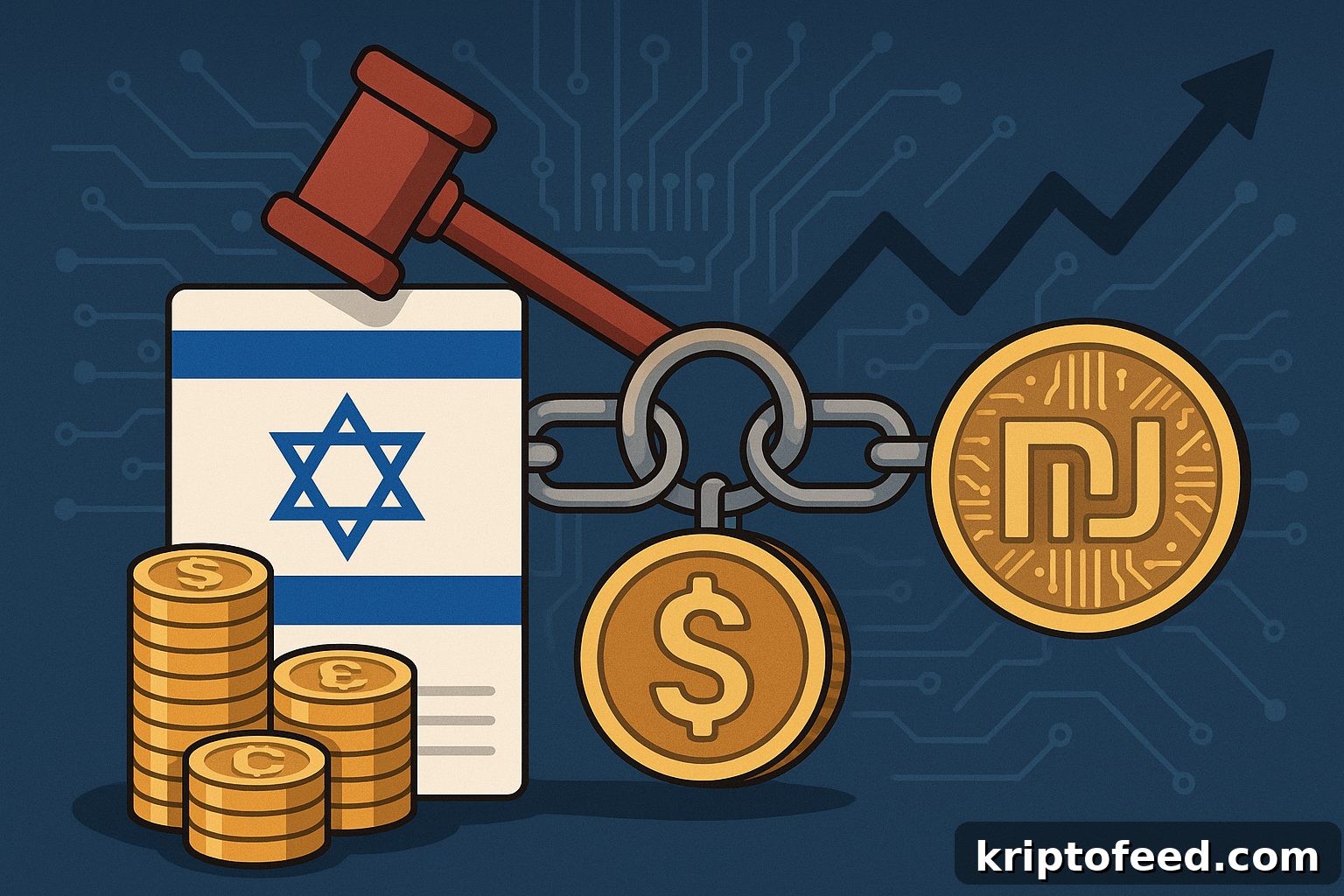
- Israel plans tighter stablecoin oversight as adoption surges globally.
- Regulators warn dominance of Tether and Circle poses systemic risk.
- Digital shekel roadmap advances for 2026 as CBDC development accelerates.
Israel is moving toward stronger supervision of stablecoins as the Bank of Israel positions these tokens as a core component of the country’s future payments system.
This policy shift comes as regulators reassess how privately issued digital dollars integrate into everyday financial flows and national infrastructure.
Stablecoins are no longer peripheral assets used primarily by crypto traders; they are increasingly treated as major payment instruments with broad international reach and significant influence.
Bank of Israel Governor Amir Yaron used the Payments in the Evolving Era conference in Tel Aviv to outline how regulatory expectations will rise alongside growing stablecoin adoption.
Rising pressure from global adoption
The Bank of Israel emphasized that global stablecoin usage has expanded to a scale that cannot be ignored. The sector’s market capitalization has surpassed $300 billion, with monthly transaction volumes exceeding $2 trillion.
Officials noted these figures place stablecoins on a scale comparable to the balance sheets of mid-sized international commercial banks. That growth has been driven by stablecoins’ use in trading, cross-border payments, and as a digital instrument that avoids the price volatility common to many cryptocurrencies.
As the footprint of stablecoins expands, regulators say there is growing urgency for clear, enforceable rules to manage risks and protect payment systems.
Concerns over market concentration
Conference discussions highlighted the market concentration around two dominant issuers. Roughly 99% of stablecoin activity is tied to Tether and Circle, which creates a concentrated risk profile in a sector that supports a large portion of digital asset transactions.
Israeli policymakers warned that such concentration raises systemic vulnerability: disruptions or weaknesses at the issuer level could quickly propagate through global payment channels. To reduce that risk, officials stressed the need for robust reserve practices, including fully backed 1:1 reserves and highly liquid assets to withstand sudden redemption demands.
Digital shekel plans move forward
Parallel to the stablecoin debate, Israel advanced plans for its own central bank digital currency (CBDC). Yoav Soffer, who leads the digital shekel project, described the currency as central bank money intended for broad public use.
Soffer published a 2026 roadmap outlining the project’s next stages and confirmed that official recommendations are expected by year-end. The update signals an acceleration in the timeline similar to moves undertaken by other major central banks.
Observers say the faster schedule reflects central banks’ response to rising competition from private digital money and the rapidly changing payments landscape. The roadmap prompted commentary across the crypto and financial sectors, focusing on how the Bank of Israel’s timetable positions the digital shekel as a strategic counterbalance to fast-growing private alternatives.
Market participants view the digital shekel as part of a broader global trend: central banks are racing to modernize digital money strategies to preserve control over national payment infrastructure while supporting innovation through regulated channels. With stablecoins increasingly influential in international transactions, the digital shekel project is being framed as both a protective and progressive measure — aiming to secure monetary sovereignty and ensure the stability and integrity of Israel’s payments ecosystem.