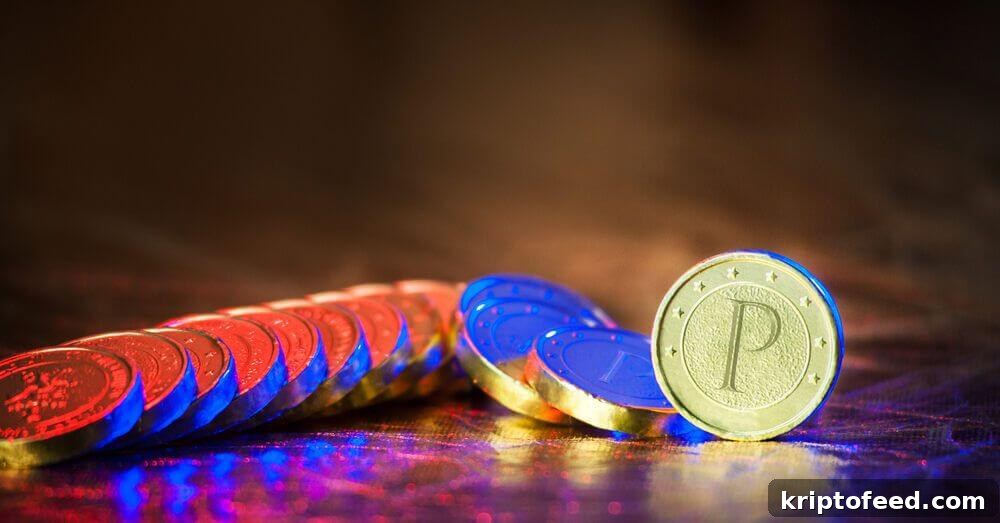
Originally launched in 2018 to address Venezuela’s economic turmoil, the Petro (PTR) is still struggling to gain acceptance as a legitimate national currency.
Introduced two years ago as a response to severe economic instability, the Petro has yet to achieve widespread recognition or adoption within Venezuela. Despite government efforts to position it as a reliable medium of exchange, many obstacles remain.
While authorities have attempted to peg the Petro at roughly $80, it has been trading on the open market for as little as $8. This significant price gap has unsettled Venezuelans who expected to purchase PTR at the government’s suggested value.
The government has pushed hard to integrate the Petro into daily economic life. At various points the PTR was designated as the sole payment method for public workers’ vacation bonuses and for purchasing passports. An official wallet—PetroApp—was also launched to store users’ tokens.
These measures to establish the token as a valid and secure payment option clash with lingering doubts about its true value. Several businesses have stopped accepting the Petro even as the government continues to promote it, creating friction between officials and the population.
Recently, the government even tried to compensate doctors for COVID-19 work using Petro payments, an approach that underscored both the desire to operationalize the token and the controversy surrounding its practicality.
Cryptocurrencies in general enjoy relatively broad acceptance in Venezuela. Bitcoin, in particular, is seen by many as more stable than the local bolívar and a better store of value than either the bolívar or the Petro—both of which are expected to keep depreciating under the combined pressures of U.S. sanctions and falling oil revenues that have weakened the country’s exporting capacity.
Venezuela is experiencing the largest non-war economic collapse in 45 years. The scale of the deterioration has surpassed that of Zimbabwe under Robert Mugabe and even the economic disintegration seen during the fall of the Soviet Union.
The government is also exploring alternatives to the U.S. dollar in bilateral trade, including proposals to use the Russian ruble for certain commercial agreements. Observers speculate that Caracas may be seeking deeper economic cooperation with Moscow if domestic stabilization efforts continue to falter.