- Lookonchain reported that $436.5 million in USDC was moved to Kraken.
- Project revenue for November fell to $27.3 million.
- The tagged wallets still held over $855 million in stablecoins and 211 million SOL.
Internal treasury activity at Pump.fun has come under intense scrutiny after co‑founder Sapijiju disputed claims that the project had cashed out more than $436 million in stablecoins.
The disagreement began when blockchain analytics platform Lookonchain reported that wallets associated with the Solana meme‑coin launchpad had transferred a large amount of USDC to the cryptocurrency exchange Kraken.
The transfers prompted concerns about potential sell pressure and uncertainty over how the project is managing its reserves.
The story quickly spread across X, with users analyzing the fund movements, debating the project’s financial position, and questioning whether the explanations provided were sufficiently clear.
USDC flows tied to internal treasury management
In an X post, Sapijiju said these transfers were part of Pump.fun’s internal treasury operations and were not sales.
According to the post, the USDC originated from the PUMP token’s initial distribution and was moved between internal wallets to support the company’s runway and reinvestment plans.
He also noted that Pump.fun has never worked with Circle.
Treasury management commonly includes wallet reorganization, capital allocation, and budgeting, and does not necessarily imply liquidation or sales.
Lookonchain’s report stated that, since mid‑October, transfers to Kraken totaled $436.5 million in USDC.
The timing drew extra attention after DefiLlama reported Pump.fun’s monthly revenue dropped to $27.3 million in November, falling below $40 million for the first time since July.
Despite concerns, data from DefiLlama, Arkham, and Lookonchain indicate wallets tagged as Pump.fun still hold more than $855 million in stablecoins and 211 million SOL, with SOL trading around $136.43 at the time of the report.
Analyst and community reactions
Nansen research analyst Nikolai Sondergo interpreted the reported transfers as a sign of potential additional selling.
By contrast, EmberCN suggested the movement reflected a private placement of PUMP tokens to institutional investors rather than an aggressive dump.
These conflicting readings prompted broader scrutiny of the token’s performance and the project’s structure.
CoinGecko data showed PUMP trading at $0.002714, down 32% from its ICO price of $0.004 and roughly 70% below its September high of $0.0085.
At the time of reporting, PUMP traded at $0.002738, up 6.9% over the prior 24 hours.
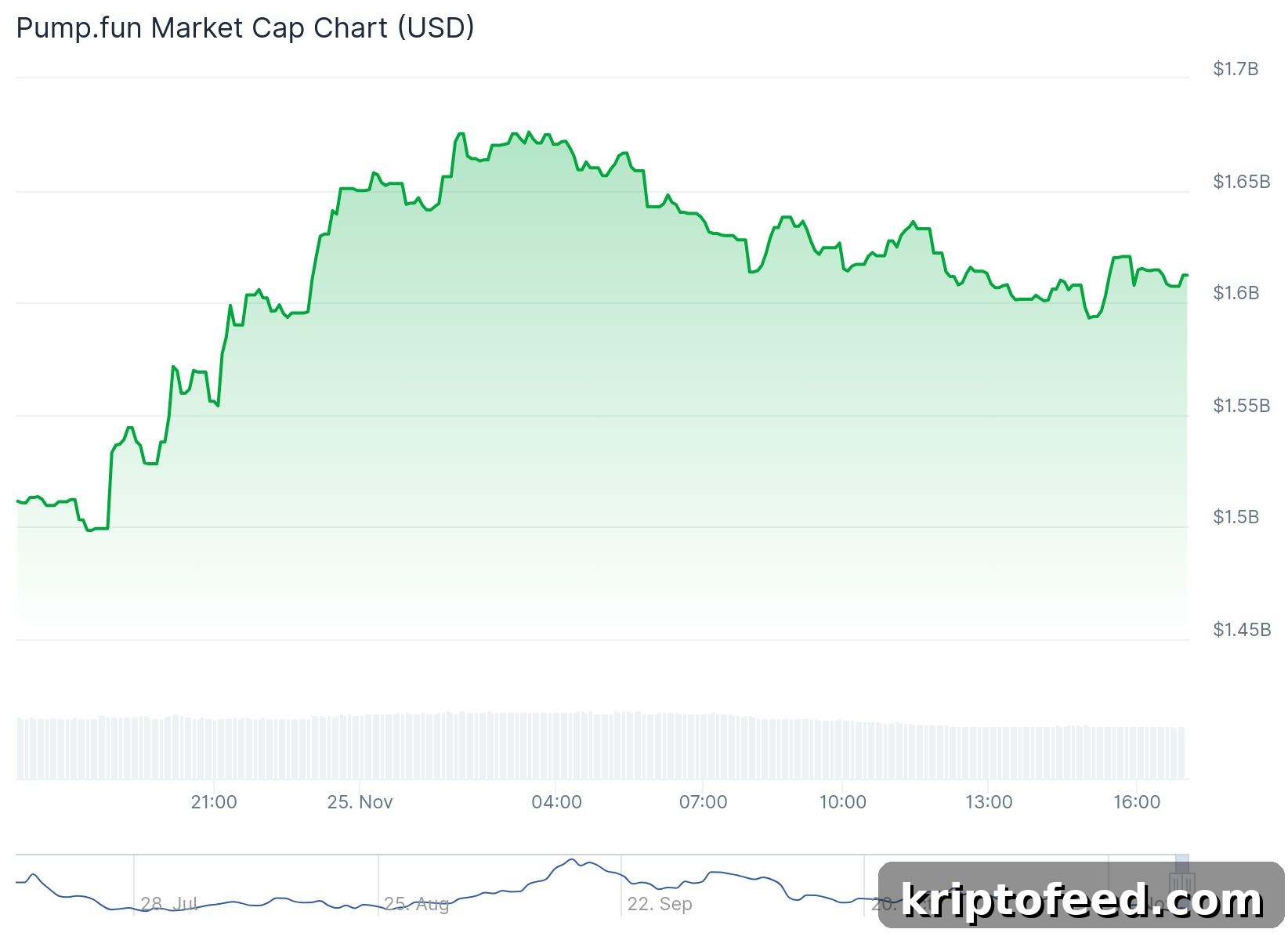
Price movements added tension to community debate as users sought to verify whether the treasury actions aligned with market conditions for the token.
Across X, multiple posts highlighted a divide in sentiment.
Some users argued the explanations raised more questions than they answered, pointing out inconsistencies and calling for clearer communication from the team.
Others rejected the critical narrative, linking the treasury activity to concerns about token performance and execution.
A segment of the community defended Pump.fun’s right to manage revenues, ICO proceeds, and reserves as it sees fit, noting that post‑ICO treasury adjustments are common and that the key issue is whether USDC reserves adequately back circulating supply.
Treasury structure emerges as central issue
As more users traced the fund flows, the conversation shifted from immediate sell pressure to the broader structure of Pump.fun’s treasury.
Debate focused on the size of the reserves, how the project organizes its wallets, and whether the team has provided sufficient transparency about its financial management.
The presence of over $855 million in stablecoins suggests significant capital is held under the project’s control, yet users remain concerned about the timing, communication, and purpose of transfers.
Coupled with declining revenue, volatile token prices, and community skepticism, the episode has underscored how treasury management can become a sensitive market issue.
With X continuing to follow developments closely, the discussion has shifted toward expectations for transparency, the sufficiency of reserve backing, and policies that support long‑term development.