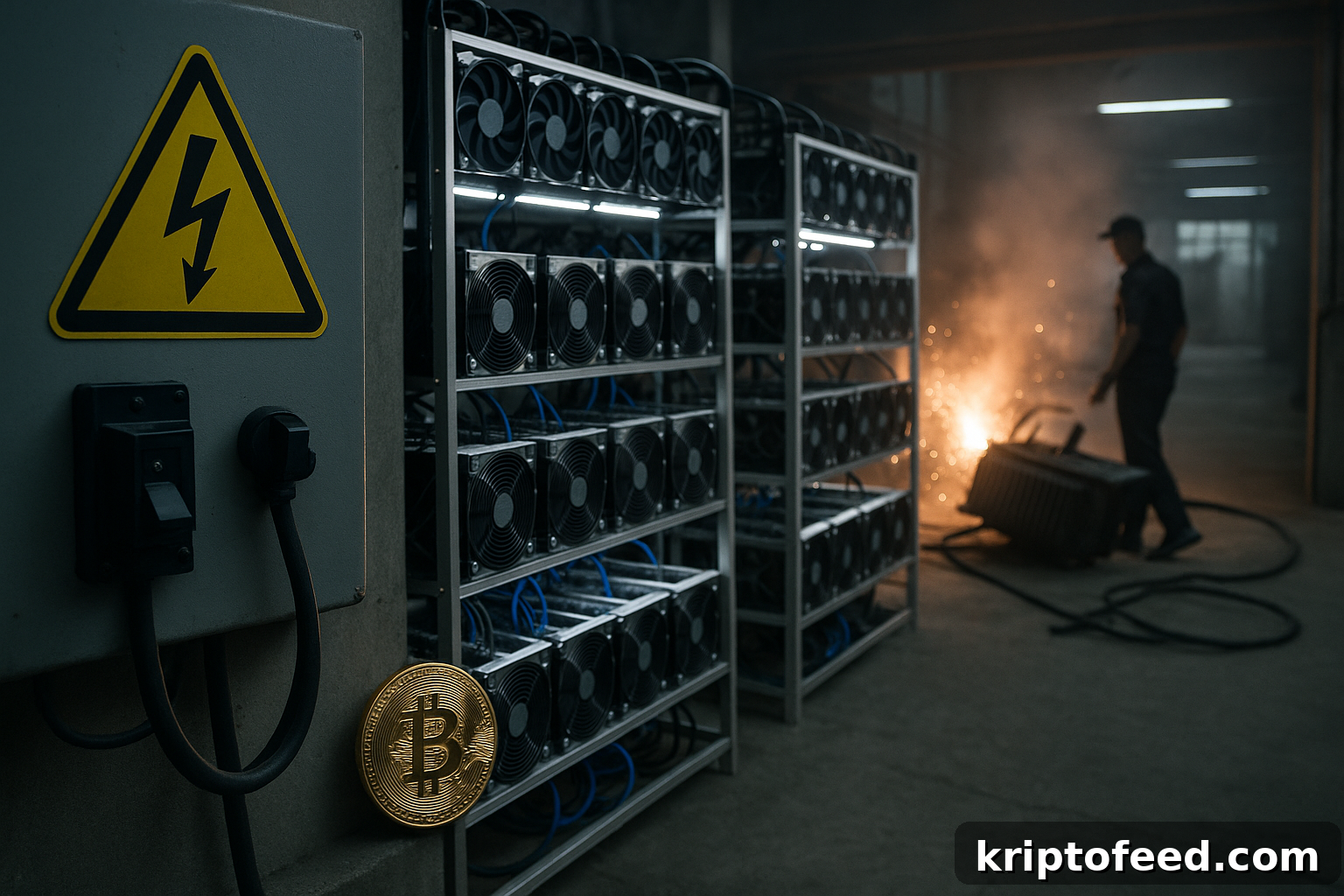
- Authorities identified 13,827 sites involved in illegal electricity consumption for mining.
- TNB seized bitcoin mining machines during joint inspections.
- Smart meters are being installed to detect suspicious energy use in real time.
Malaysia is ramping up its response to rising energy losses linked to cryptocurrency mining, as new figures reveal widespread electricity theft across the country.
National utility Tenaga Nasional Bhd (TNB) has reported losses exceeding $1 billion from illegal electricity use between 2020 and August of this year.
The scale of the theft has pushed authorities to strengthen monitoring tools, expand inspections, and build new data systems as bitcoin mining operations continue to strain the national grid.
Officials now view the situation as an urgent energy security issue requiring steady oversight.
Rising cases of electricity theft
The Ministry of Energy Transition and Water said 13,827 locations were found using electricity illegally for cryptocurrency mining during the period, according to a written parliamentary response dated Tuesday.
Malaysia does not have specific regulations governing crypto mining, but the activity becomes illegal once meters are tampered with or bypassed.
Such actions are covered under offenses described in the Electricity Supply Act.
The ministry confirmed these illegal activities caused financial losses of 4.6 billion ringgit, equivalent to roughly $1.11 billion.
Mining setups require continuous and intensive power consumption, which is often concealed to avoid detection.
This concealment enables unauthorized operations to drain the grid rapidly.
Coordinated law enforcement operations
TNB has carried out joint inspections with multiple law enforcement agencies to address the growing number of cases.
Police, communications regulators, anti-corruption bodies, and other authorities have participated in these operations.
Their coordinated actions have resulted in the seizure of bitcoin mining machines at many of the identified sites.
With illegal mining activity still on the rise, TNB has moved toward systems that support preventive surveillance.
The utility has built a database that maintains comprehensive records of owners and tenants of locations suspected of involvement in mining-related electricity theft.
The ministry said the database helps identify patterns, profile high-risk locations, and support future inspections across different states.
Technology-based monitoring measures
Malaysia is also relying on real-time energy monitoring to reduce losses.
Smart meters are being installed at distribution substations to track consumption patterns and detect manipulation more quickly.
These meters help identify sudden spikes or irregular behavior, often indicative of hidden mining operations.
Real-time alerts enable TNB to respond faster before theft spreads or escalates.
Competitive electricity prices in the country make it attractive to mining operators, increasing pressure on the grid and complicating enforcement efforts.
Because mining is energy-intensive and not directly regulated, authorities are using existing energy laws supported by surveillance technology to curb illegal consumption.
Strengthening oversight across the network
Malaysia has opted to reinforce enforcement rather than introduce specific mining regulations.
Authorities are relying on interagency cooperation, improved inspection strategies, and an expanded data system to protect the utility network.
TNB continues refining its approach, as illegal mining operations often relocate after raids, requiring continuous monitoring and updated intelligence.