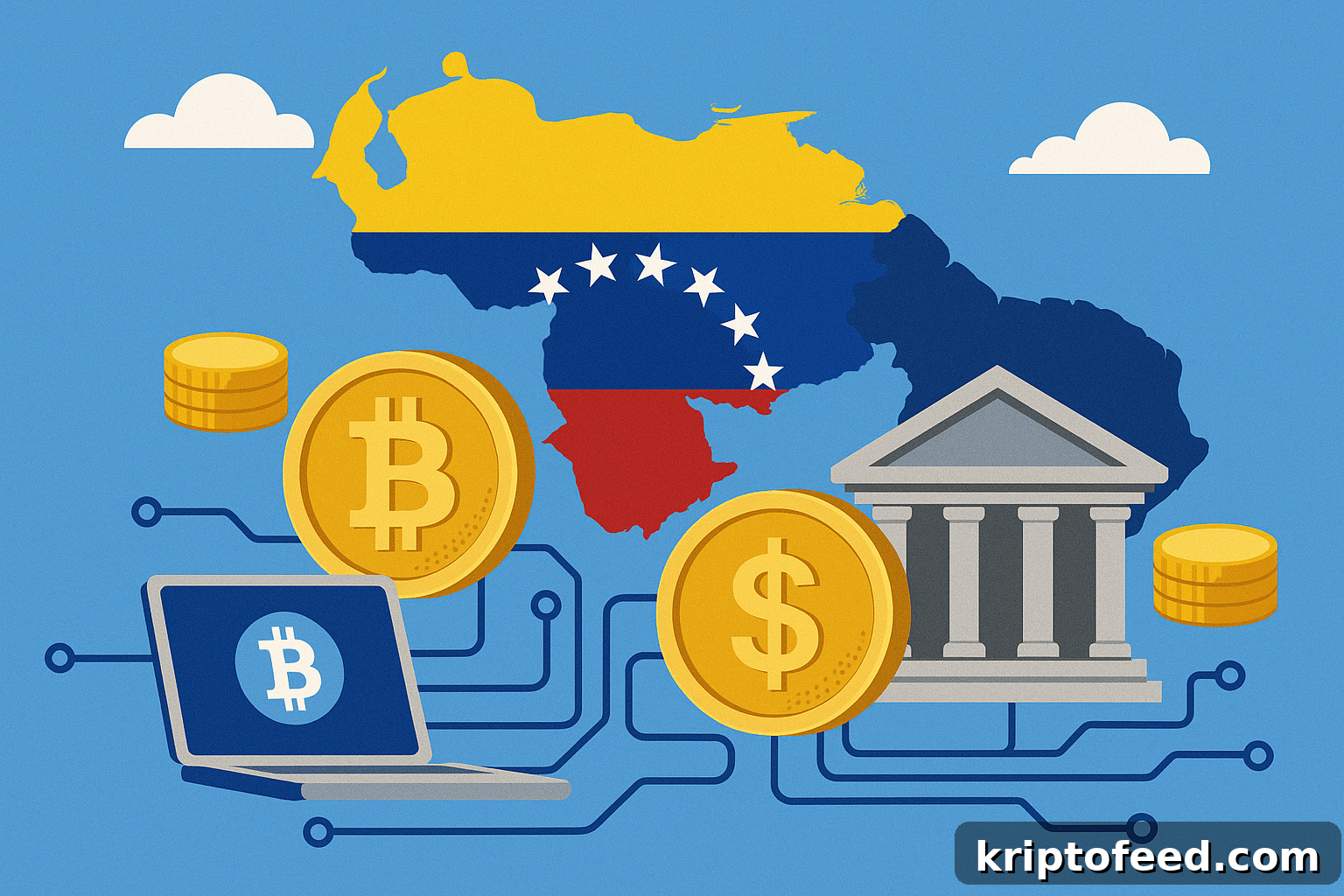
- Local banks will offer custody, transfers, and crypto-to-fiat conversion services.
- The bolívar’s sharp depreciation has driven increased use of stablecoins.
- Conexus currently handles nearly 40% of Venezuela’s electronic payments.
Venezuela is preparing to merge its struggling traditional banking system with digital currencies as payment giant Conexus plans to integrate Bitcoin and stablecoins into the national banking infrastructure.
The move, expected to launch in December 2025, marks a major step in the country’s financial transformation and will provide Venezuelans with a regulated channel for using cryptocurrency.
With the bolívar’s persistent depreciation and growing stablecoin adoption, this development could make Venezuela one of the first countries to formally combine fiat and crypto operations within a unified system.
The integration also reflects Venezuela’s long-running effort to work around international sanctions that have constrained access to global banking services.
By leveraging blockchain-based systems, Conexus aims to give citizens a more resilient alternative that can simplify remittances, domestic transfers, and business payments without heavy reliance on foreign intermediaries or unstable local exchange rates.
The initiative also seeks to improve financial inclusion nationwide, making digital transactions more accessible to individuals and businesses across the country.
Conexus aims to bridge banks and blockchain
Conexus, which currently processes nearly 40% of Venezuela’s electronic transactions, is spearheading this shift by enabling local banks to offer direct crypto services such as custody, transfers, and fiat conversion for Bitcoin and stablecoins.
The integration is intended to make access to digital currency seamless for customers through their regular bank accounts, removing the need for external wallets or separate apps.
The new infrastructure will be built on blockchain technology to enhance transparency and transaction security.
According to the company, the system will enable both individuals and businesses to move between digital and traditional currencies securely, reducing reliance on unregulated exchanges.
Rising reliance on stablecoins amid inflation
Years of hyperinflation have eroded confidence in the bolívar, pushing Venezuelans to rely heavily on stablecoins like Tether (USDT) as a store of value and medium of exchange.
From small retailers to freelancers, many now prefer stablecoins to protect their earnings from volatility.
Conexus president Rodolfo Gasparri has emphasized that the surge in stablecoin transactions demonstrates clear public demand for better integration between crypto and banking systems.
The company’s planned model aims to formalize this reality by providing regulated access to crypto within Venezuela’s financial framework, allowing citizens to transact and save with digital assets with greater confidence.
A potential model for emerging economies
The Conexus initiative could not only reshape Venezuela’s financial sector but also serve as a model for other economies facing currency crises.
By providing a direct bridge between fiat and digital assets, the model could help millions gain access to more stable, low-cost, and transparent financial services.
Venezuela’s attempt to merge traditional finance with blockchain technology aligns with global trends toward the digitalization of money, particularly in regions where economic instability drives innovation.
If implemented successfully, this system could function as a prototype for countries across Latin America and beyond where inflation and limited banking access continue to undermine economic stability.