- Selig brings prior experience from the CFTC, private practice, and the SEC’s Crypto Task Force.
- He signaled support for enforcement focused on fraud and serious misconduct rather than minor technical violations.
- His confirmation comes as Congress debates expanding the CFTC’s authority over crypto markets.
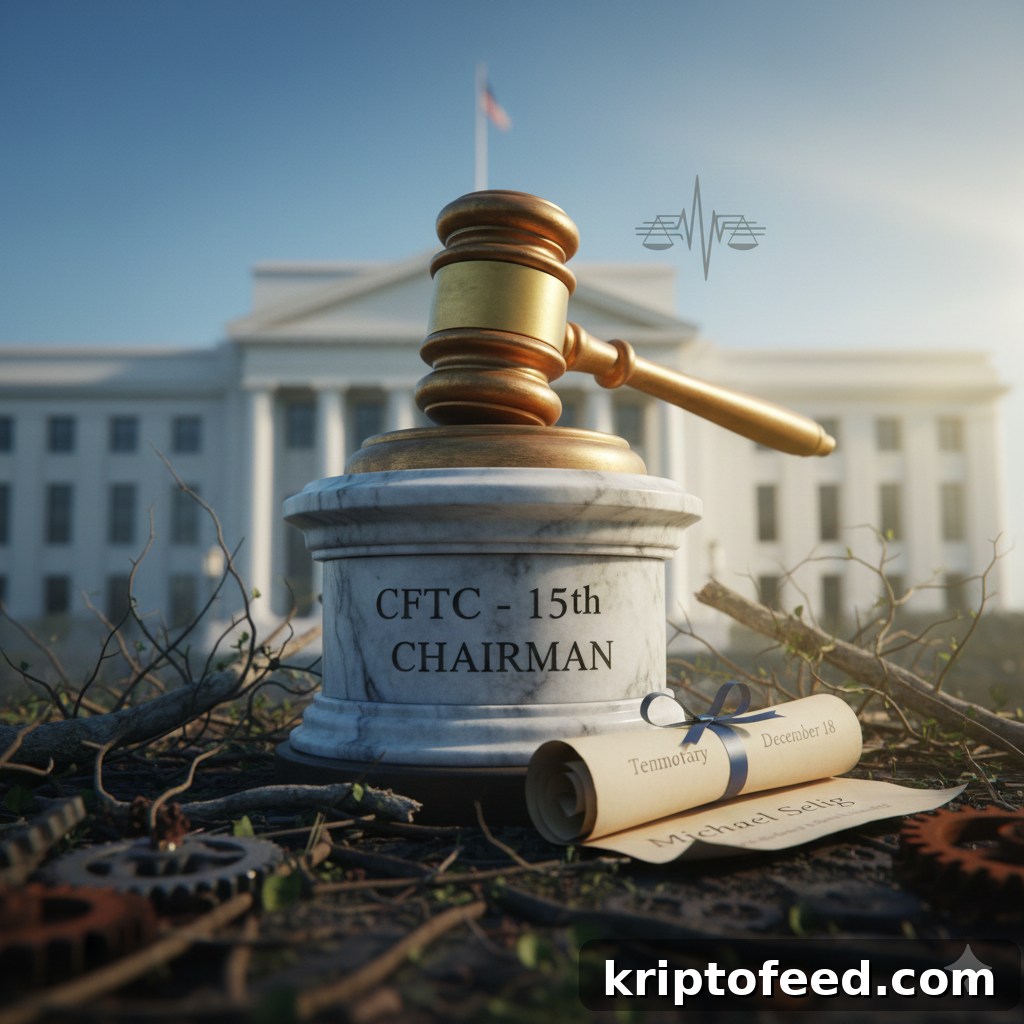
After serving nearly a year as acting chair, Michael Selig was confirmed by the U.S. Senate on December 18 and will soon be sworn in as the 15th Chairman of the Commodity Futures Trading Commission (CFTC).
His confirmation ends an extended interim period at the derivatives regulator and returns a familiar figure to the center of U.S. market oversight.
Selig’s confirmation arrives as policymakers and market participants closely watch how the CFTC positions itself amid ongoing debate over digital asset regulation, market structure, and interagency coordination.
That attention is heightened while Congress considers legislation that could meaningfully expand the agency’s authority.
Return to a Familiar Regulatory Agency
Selig has deep professional ties to the CFTC. He first joined the agency in 2014 as a law clerk to Commissioner Christopher Giancarlo, who later became chair.
After leaving the agency, Selig worked in private practice advising trading firms, exchanges, and digital asset companies on compliance with U.S. securities and commodities laws.
Earlier this year he returned to public service as chief counsel to the SEC’s Crypto Task Force, served as senior counsel to Chair Paul Atkins, and participated in interagency discussions on digital asset market oversight.
Leadership Transition at the CFTC
Selig succeeds Caroline Pham, who served as acting chair for much of 2025. For months Pham was the only commissioner on the CFTC confirmed by the Senate, a situation that underscored a leadership gap at the agency during a period of regulatory change.
Under Pham the agency continued to operate, but long-term policy decisions were often deferred pending permanent leadership.
With Selig’s confirmation, the Senate-backed chair position is restored at a time when the commission’s mandate could soon expand.
Enforcement Priorities and Direction
During his confirmation process Selig signaled support for a more targeted enforcement strategy. He argued that allocating agency resources to policing minor, technical violations can be counterproductive—encouraging legitimate firms to move operations offshore without materially improving market integrity.
At the same time, he emphasized the need for the CFTC to remain vigorous in pursuing fraud, manipulation, and other serious misconduct.
That emphasis aligns with enforcement priorities under Pham, which narrowed case selection to prioritize complex frauds and retail investor harms over document-based violations.
Over the past year, the CFTC also revised investigative procedures to give firms greater transparency and additional time during enforcement processes, reflecting a shift in regulatory tone.
Crypto Oversight and Legal Context
On digital assets, Selig is expected to continue efforts to bring crypto activity into regulated U.S. markets. The CFTC has launched pilot programs covering token collateral and spot crypto products listed on regulated exchanges.
Previously, Selig supported clearer market-structure rules and stronger coordination with the SEC, the Treasury Department, and banking regulators.
His confirmation comes amid congressional debate over a bill that could give the CFTC primary oversight of spot crypto commodity markets—legislation that would significantly expand the agency’s role in regulating crypto.
With a full agenda and limited transition time, Selig’s early decisions will be closely watched by financial markets and regulated entities as they assess the future shape of U.S. crypto oversight.