The DAO will feature two tokens: a stablecoin called Ducat and a governance token called Locke.
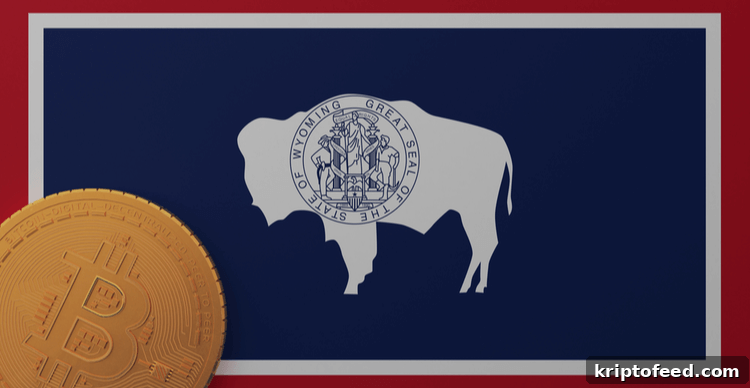
Wyoming has become the first U.S. state to legally recognise a Decentralised Autonomous Organisation (DAO), according to a press statement published on 4 July. Earlier this year, Wyoming enacted legislation that formally integrates DAOs into state law as distinct limited liability companies (LLCs). That law took effect on 1 July, and the same day the state acknowledged American CryptoFed DAO as a legal entity.
American CryptoFed DAO’s chief executive officer, Marian Orr, said the move establishes Wyoming as a leading jurisdiction for crypto assets and blockchain in the United States, and “arguably” worldwide. “What this means is that creating a true digital currency with mass acceptance is now possible,” he added.
The DAO project was initiated by mSHIFT, a mobile banking firm founded in 1999. mSHIFT filed for recognition of its DAO on 1 July, backed by 165 merchant service providers organised under the Merchant Advisory Group (MAG). John Drechny, CEO of MAG, said the legal recognition opens a “path in which merchants will have more choices for payment acceptance.” He also noted that the DAO’s token design will enable merchants to offer fee-free payment options.
Two-token economy
American CryptoFed DAO has proposed a two-token economic model designed to protect the ecosystem from both inflationary and deflationary pressures. The two tokens are Ducat and Locke.
Ducat is an EOS-based stablecoin intended for everyday transactions and as a store of value for holders. New Ducat tokens will be generated via interest and rewards, and their value is planned to track inflation similarly to the US dollar.
Locke is the DAO’s governance token, with a maximum circulation capped at 10 trillion. Locke holders will have voting rights within the ecosystem and will participate in governance decisions. In addition to governance, Locke is intended to help stabilise the value of the Ducat stablecoin.
The DAO team says the two-token architecture aligns with the regulatory framework described in the Token Safe Harbor Proposal 2.0. Originally proposed in February 2020 and published on GitHub in April 2021 by SEC Commissioner Hester Peirce, the Token Safe Harbor would provide a three-year conditional exemption for developers of decentralised networks to build and decentralise their projects without immediate exposure to federal securities enforcement.