Some people have been asking this question for the past year without finding a clear answer: will Ethereum eventually be worth more than Bitcoin, or will it always trail the world’s most famous cryptocurrency? Is it sensible to ask this now, and what are the realistic prospects for the future? Let’s compare Ethereum and Bitcoin to understand the differences and help you consider which currency might be the better investment.
What are Ethereum and Bitcoin worth today?
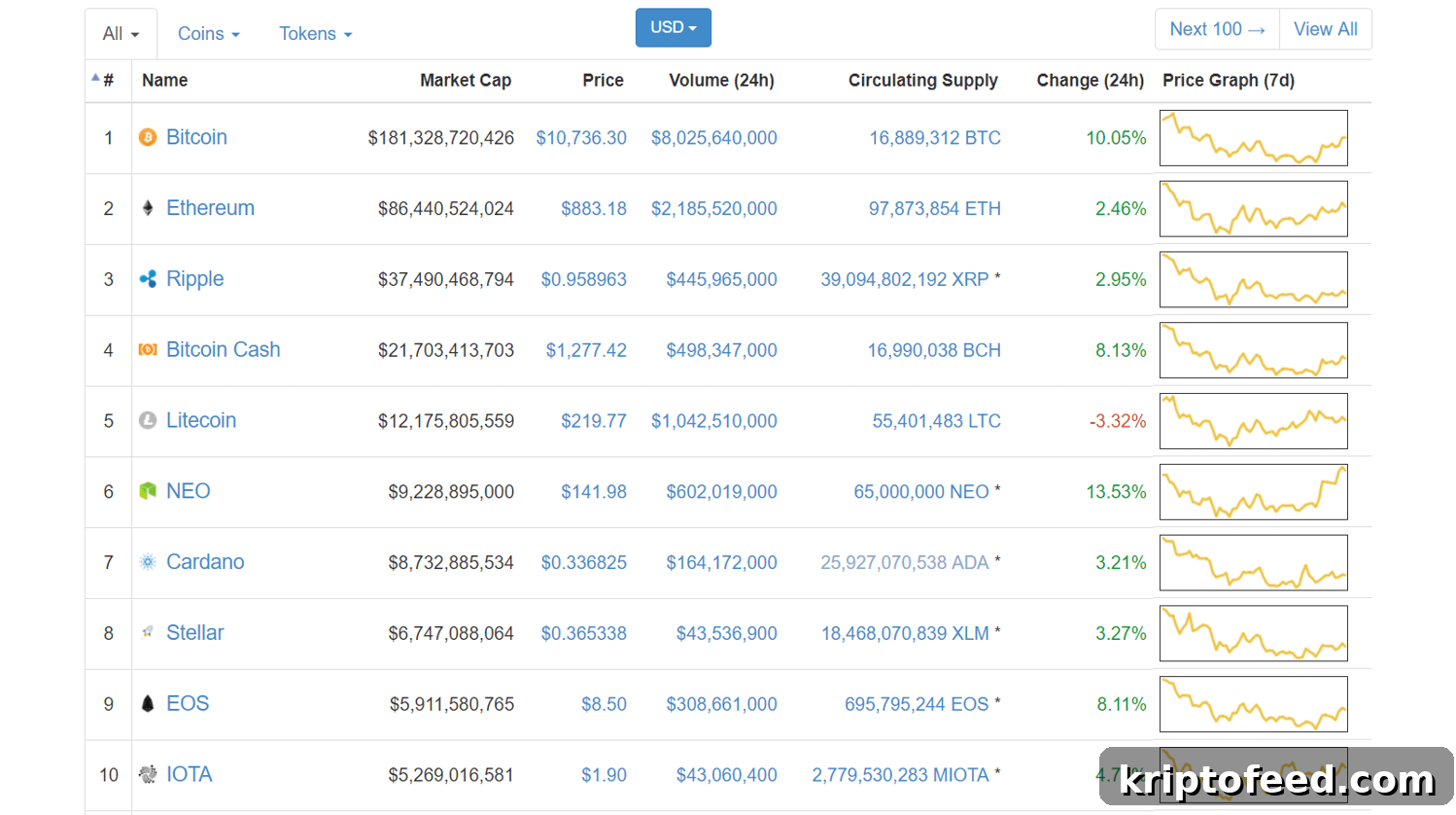
At present, one Ether (the official unit of the Ethereum cryptocurrency) is worth roughly 6.5% of a Bitcoin. That gap translates into thousands of dollars: Ethereum is trading around $520 while Bitcoin sits near $8,167. Given this disparity, some find it hard to imagine Ethereum overtaking Bitcoin in the short term. But cryptocurrency prices can change rapidly and dramatically. Consider 2017: Ether jumped from $8 to $800 in one year, while Bitcoin rose from $968 to $9,758. The price gap remains, but it could narrow if a technological breakthrough or strong institutional support favored Ethereum and its ecosystem over Bitcoin.
Ethereum: more than just a currency
Analysts who predict Ethereum surpassing Bitcoin highlight a key point: unlike Bitcoin—the original cryptocurrency created in 2009 by Satoshi Nakamoto—Ethereum is much more than a simple digital currency.
Versatile and dynamic, the Ethereum system was launched in 2015. It is a platform for running smart contracts—self-executing contracts stored on the blockchain that can validate and enforce agreements for exchanging money or other assets.
On this front, Ether holds advantages: it processes far more transactions per second than Bitcoin (roughly 20 transactions per second versus Bitcoin’s 3–4) and is developing solutions aimed at reaching transaction volumes comparable to payment networks like Visa, which handle tens of thousands of transactions per second.
High-profile backers for Ethereum
In 2017 the Enterprise Ethereum Alliance was formed—a consortium including around 500 major companies, tech startups, and industry experts dedicated to advancing Ethereum technology. The size of the consortium and the prestige of its members (including Microsoft, Intel, Credit Suisse, J.P. Morgan, UBS, BP, Santander and Accenture among others) signal growing institutional interest and significant planned investments from large corporations. That institutional support could plausibly drive value appreciation for Ether and the Ethereum ecosystem. By contrast, Bitcoin has not attracted a similar consortium of corporate backers, though late 2017 did see the launch of Bitcoin futures, marking another form of institutional engagement.
Different monetary supplies: Bitcoin vs. Ether
Unit price differences and the currencies’ distinct monetary supplies may influence future investor preferences. Bitcoin has a capped supply of 21 million units (about two thirds already mined), making it a scarce asset often compared to gold. Ether, by contrast, has no fixed maximum supply defined in the same way—100 million units have already been issued, and no hard cap has been set. Traders choosing between the two may face different scenarios: Ether is often easier to buy directly, while Bitcoin is frequently traded via derivatives like contracts for difference (CFDs). As a result, investors aiming to use an intermediary cryptocurrency for speculating on other tokens may prefer Ether, and many retail investors who want direct exposure may also lean toward Ether due to accessibility.
Conclusions
Current information suggests two parallel narratives: Ethereum and its platform continue to develop and strengthen, offering substantial growth potential through smart contracts and enterprise adoption, while Bitcoin remains the dominant store-of-value cryptocurrency widely used by traders worldwide. It is difficult to predict whether and when Ether might overtake Bitcoin. What is clear is that both cryptocurrencies still present notable growth opportunities and distinct use cases that appeal to different types of investors.
Explore trading strategies and learn more about trading Ethereum and Bitcoin with trusted educational resources.