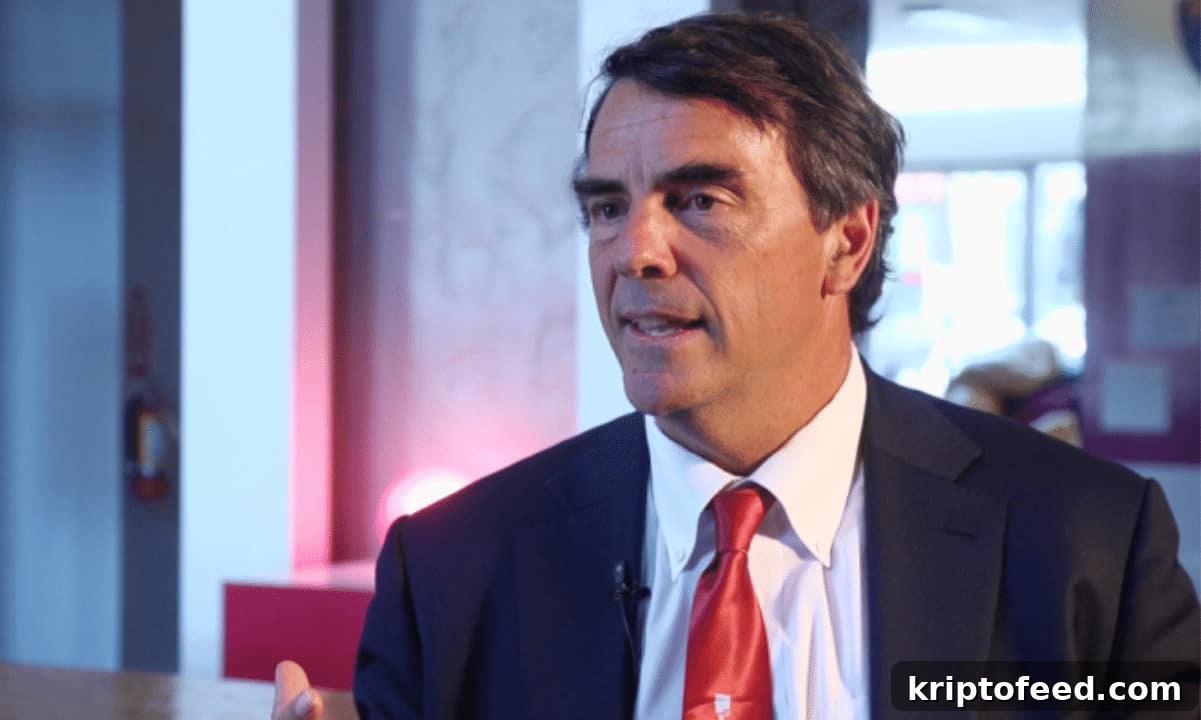
Venture capitalist Tim Draper says fears that quantum computing could break Bitcoin (BTC) are misplaced, arguing that traditional banks and the dollars held within them face a greater security risk.
In remarks published by Benzinga and shared on X on June 9, Draper said he considers his BTC holdings safer than cash kept in a bank account.
Draper Says Banks Face Greater Quantum Risk Than Bitcoin
Addressing concerns that quantum computers might eventually break Bitcoin’s cryptography, Draper noted that financial institutions rely on legacy systems that would be easier to compromise than the Bitcoin network.
“Quantum will crack the banks long before it touches the blockchain,” he wrote on X. “Everyone’s panicking about quantum breaking Bitcoin’s encryption while banks are running on legacy infrastructure that makes Bitcoin look like Fort Knox.”
He also suggested that if the Bitcoin network were compromised, full node operators could potentially roll back to the last secure block. Banks, he argued, “don’t have that option.”
The rollback scenario deserves careful scrutiny. While a chain rollback is technically possible, it requires wide consensus from node operators and miners and is typically considered only in extreme situations. Such an action would also conflict with Bitcoin’s reputation for immutability, a tension Draper did not address in detail.
BTC investor Lark Davis supported Draper’s broader point, saying that with “basic security hygiene,” crypto holdings would be safer than cash in a bank unless private keys are stolen. Davis added that quantum technology threatens all legacy security systems, and that singling out cryptocurrency is misleading.
Draper reiterated a long-held prediction that Bitcoin will eventually eclipse the dollar. In a Crunchbase interview earlier this year, he described a scenario where retailers “only take Bitcoin,” prompting a run on the dollar. In April he renewed an earlier wager that BTC could reach $250,000, this time giving it an 18-month horizon.
A More Nuanced View From Security Researchers
Security researchers have explored the quantum threat to Bitcoin in detail. On-chain analyst James Check argued in April that the often-quoted figure of 6.3 million BTC with exposed public keys overstates the true risk.
Check noted that active institutions such as exchanges and custodians, which account for much of that exposure, are already working on mitigations. He estimated the genuinely high-risk portion is closer to 1.716 million BTC held in early Pay-to-Public-Key addresses, most of which are believed to be permanently lost coins from Bitcoin’s earliest blocks.
Draper’s infrastructure argument contrasts with the view of security expert Jameson Lopp. Lopp, a Casa co-founder who co-authored the BIP-361 proposal to address quantum-vulnerable legacy addresses, says banks can upgrade to counter quantum threats “orders of magnitude faster” than Bitcoin can, because Bitcoin requires broad decentralized consensus for protocol changes.
Lopp estimated that a full Bitcoin upgrade to quantum-resistant cryptography could take up to a decade, highlighting a core difference in risk assessment: Draper believes banks will fail first, while Lopp believes Bitcoin’s slow upgrade path poses the greater challenge.