Key Takeaways
- Bitcoin hash rate is the amount of computing power contributing to mining
- It has continued to reach new all-time highs
- This puts pressure on miners’ profitability, at a time when electricity costs have risen and Bitcoin’s price has fallen
- Overall, a high hash rate indicates a healthy and more secure Bitcoin network
“All-time high” is a phrase I haven’t used much recently when covering the cryptocurrency space. Yet one metric keeps pushing to higher peaks: the Bitcoin hash rate.
The Bitcoin hash rate refers to the total computing power devoted to securing the network through mining. As the charts below show, its relentless rise since the pandemic shows no clear signs of slowing. But what does this mean, and why is it increasing?
What is the Bitcoin hash rate?
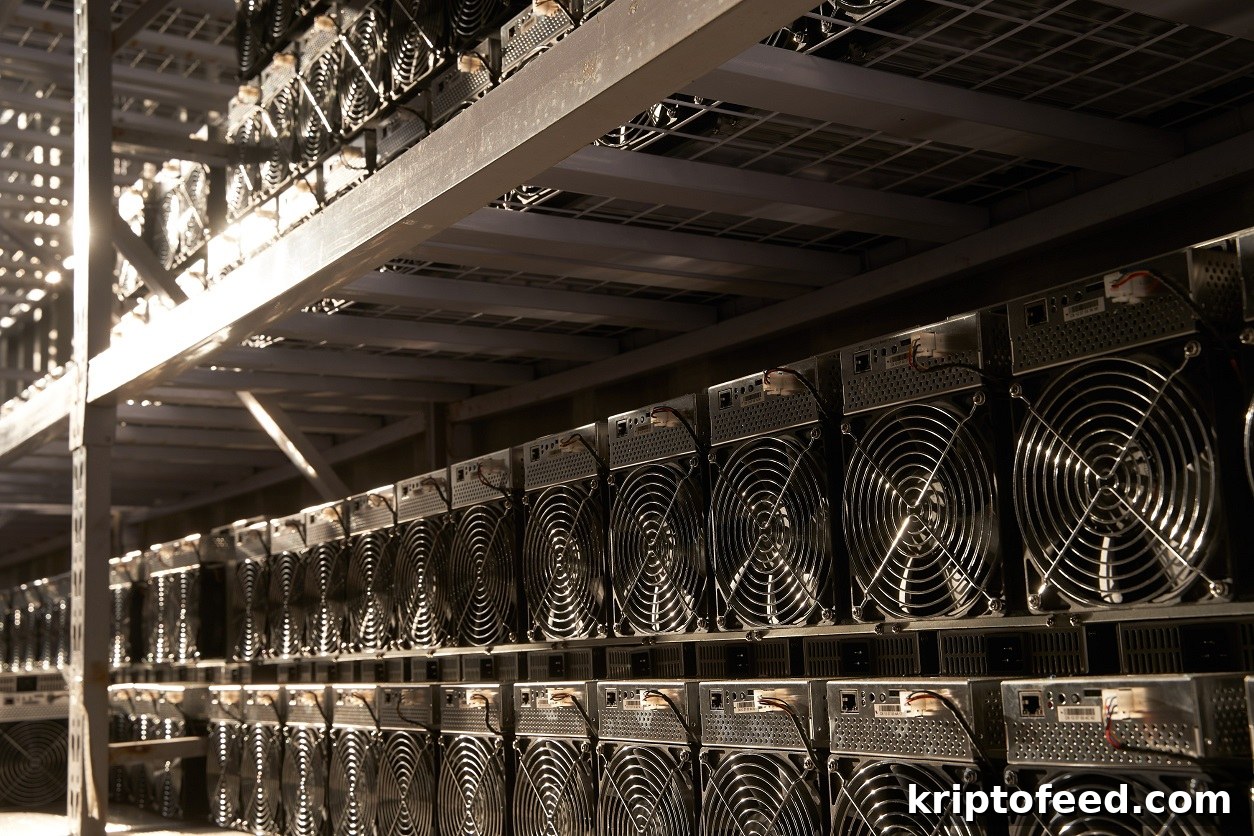
The days when anyone could mine on a personal computer are long gone. Today mining is dominated by large mining pools using specialized hardware built specifically for this purpose.
Mining involves those machines solving complex cryptographic puzzles. When a puzzle is solved, the latest block of transactions is validated and added to the blockchain, and the process then repeats for the next block. The miner that successfully validates a block is rewarded with newly created Bitcoins.
The mechanics are intricate, but the important point is that Bitcoin is programmed to release a fixed schedule of new coins over time, and the protocol targets a new block roughly every ten minutes.
If more computers join the network and the hash rate rises, one might expect puzzles to be solved faster, producing blocks more quickly and increasing coin issuance. However, Bitcoin includes an automatic difficulty adjustment: as more computing power joins, the puzzles become harder to solve.
I won’t pretend to fully explain the inner workings of the Bitcoin blockchain, but the takeaway is simple: when more miners join, mining difficulty increases.
As Bitcoin grew in popularity and price, that’s exactly what happened. More miners connected to the network, and mining has become a highly optimized, industrial process. A decade ago, when the miner count was small, you and I could have mined with laptops to a reasonable degree. Those days are past.
Why is it hitting all-time highs?
There are several reasons the hash rate continues climbing to new highs, but the core driver is simply more miners joining the network.
That raises the question: why are miners connecting despite a decline in Bitcoin’s price? A few plausible explanations exist.
First, mining hardware was scarce during the pandemic-driven bull run and component prices, especially for chips, were very high. Many miners ordered new rigs during the bull market but only received the equipment recently—or are still waiting on deliveries.
Second, as Bitcoin’s price fell, mining profitability declined because miners’ revenue is denominated in Bitcoin. However, newer mining rigs have become more energy-efficient and, as hardware prices eased, acquiring additional equipment became more accessible, increasing the number of active miners.
Another factor was the Ethereum Merge in September, when Ethereum moved from Proof-of-Work to Proof-of-Stake, ending mining on that network. Some displaced Ethereum miners redirected their hardware to mine Bitcoin instead.
What does a higher hash rate mean?
The most immediate consequence of a rising hash rate is increased pressure on miners. Greater competition and a higher required hash threshold squeeze profitability, especially when electricity costs rise and Bitcoin rewards fall in value.
A clear illustration of this pressure can be seen in 2022 share performance for some publicly traded mining companies.
On the positive side, the Bitcoin hash rate is also a metric of network security. A higher hash rate makes the network more secure against attacks, so an all-time high is good news from that perspective.
In short, a rising hash rate generally signals a robust, healthy Bitcoin network. The trade-off is that miners face tougher conditions and thinner margins as competition and operational costs increase.