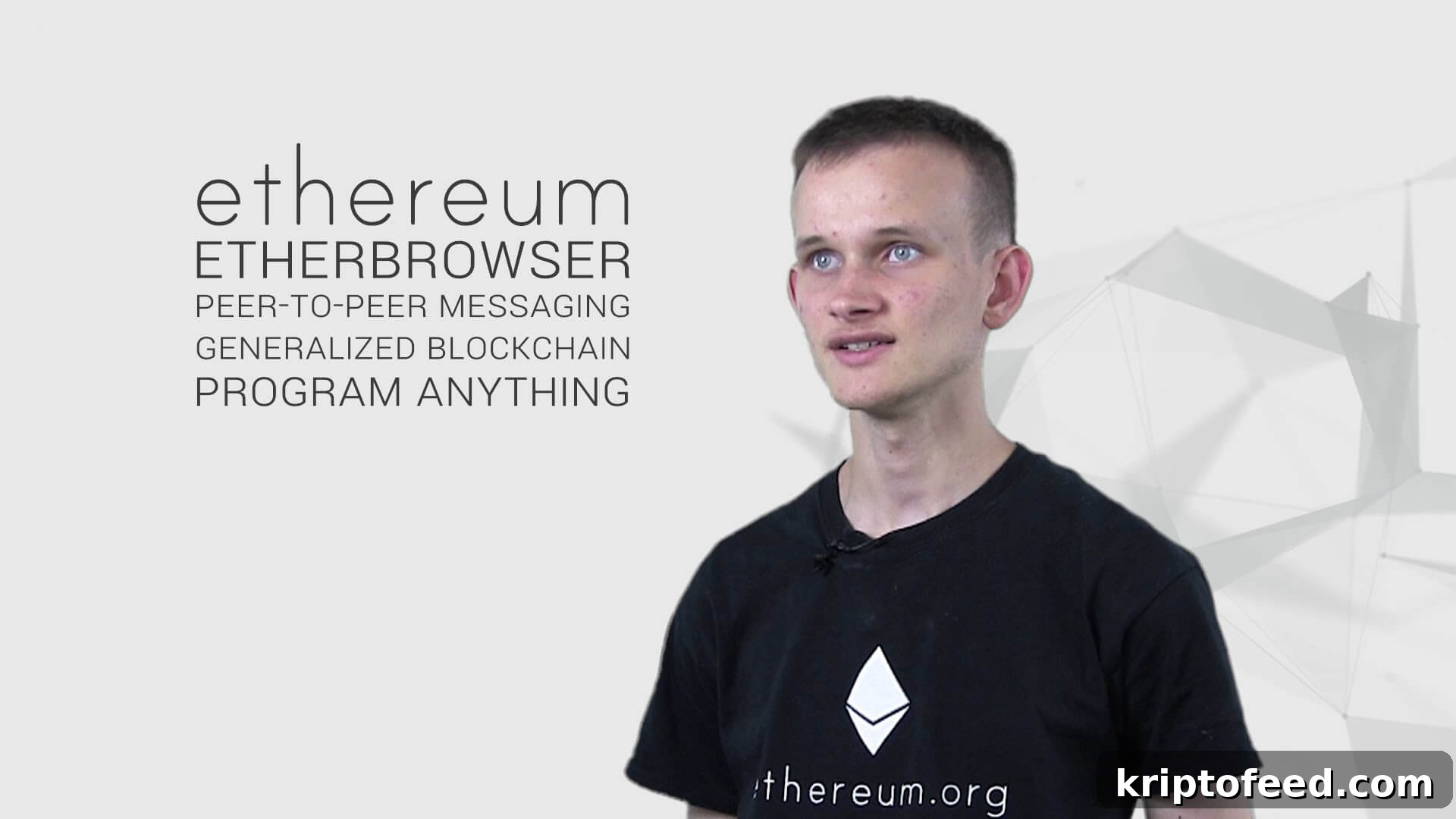
When news surfaced that the Ethereum Foundation had a $9 million shortfall due to falling prices for Ether and Bitcoin, many immediately compared the situation to the Bitcoin Foundation’s financial troubles earlier this year.
Vitalik Buterin published a post explaining the shortfall and attempting to reassure supporters. Although the Foundation’s finances are strained, the situation is not as dire as the Bitcoin Foundation’s problems were a year earlier. The Foundation has enough resources to continue its activities for the near term and aims to extend that runway by finding new revenue sources and reducing operating costs.
We spoke with Vitalik to clarify the Foundation’s plans, discuss how the Ethereum platform could continue without heavy Foundation involvement, and address other important questions about development priorities and sustainability.
Ian DeMartino: Is the Ethereum Foundation going anywhere soon?
Vitalik Buterin: The Foundation is definitely staying. It has funding for a substantial period and intends to remain a leader in the ecosystem. Since launch, many developer groups working on Ethereum are independent of the Foundation. Until now, the Foundation has done a great deal—maintaining three clients, building middleware, languages, and other infrastructure—which increased costs but provided valued tools for the community.
The community consistently indicates it wants the Foundation to continue, primarily to ensure that core research and protocol upgrades are delivered on schedule and to coordinate adoption of important changes. Without a central coordinating body, coordination problems like those seen in Bitcoin (for example, blocksize debates) could arise. Ethereum already has a multi-year roadmap that includes Proof-of-Stake and other upgrades.
To avoid diffusion that would hinder upgrades like Proof-of-Stake, the Foundation will focus on protocol-level work and non-development tasks such as education and outreach. That said, the Foundation’s budget will shrink soon—likely around half of current spending—and it will no longer maintain four core clients indefinitely. The expectation is that the community will pick up many roles the Foundation previously filled.
Examples of community-driven growth include multiple block explorers and independent development tools emerging shortly after launch. The Foundation doesn’t want to compete with promising community projects or companies building services better left to private entities. Many Foundation projects, like the MIX DApp IDE, are close to a 1.0 release, and language tools such as Solidity are already usable. Several promising efforts—like functional programming, formal verification, and other advanced tools—are progressing through community contribution rather than Foundation-only development.
DeMartino: You mentioned a budget of 340,000 Swiss francs (~$345,900) with a goal of reducing it to 200,000. Is that sustainable?
Buterin: It depends on short- and long-term variables. Cryptocurrency prices are volatile; Ether could fall or rise substantially. The Foundation is exploring additional funding channels, collaborating with external developers and groups, and seeking donors or sponsors. At around 200,000 CHF per month, we estimate survival for about a year under current conditions. If needed, the budget could be reduced further to around 100,000 CHF or adjusted upward depending on revenue. The plan is to remain flexible and pursue multiple funding and collaboration avenues.
DeMartino: If revenue streams underperform, could the Foundation reduce costs further or operate on a voluntary basis?
Buterin: Yes. The project could adopt a minimal approach—supporting a single client and focusing on delivering Ethereum 1.1 and 2.0. If no other clients emerged, that single client could serve the network. The Foundation is not the only entity in the ecosystem. Even if the Foundation lost its entire Ether holding, other regional groups and volunteer contributors would continue core projects. One reason for the crowdsale was to accelerate development beyond the pace of Bitcoin’s early years and to seed the ecosystem. We’ve already passed multiple critical milestones and the community is strong.
DeMartino: Does cryptocurrency price instability negatively affect crowdfunding with crypto?
Buterin: Crowdfunding with cryptocurrencies has many flaws but remains preferable to some alternatives. For example, alternative funding mechanisms might simply waste large sums through mining without societal benefit. Crypto crowdsales concentrate capital for development, but they are front-loaded, creating sustainability issues. Price volatility introduces uncertainty—when prices are high, projects have more resources; when prices fall, they have less. There’s no perfect model, only trade-offs; crypto crowdfunding carries both benefits and significant risks.
DeMartino: Did the Foundation consider hedging using tools like BitReserve or NuBits to mitigate volatility?
Buterin: A common question is why the Foundation didn’t sell more Ether earlier. We bear responsibility for choices that led to losses. During the crowdsale, the Foundation agreed to strict withdrawal limits to avoid any appearance of impropriety—rules that capped how much could be sold. This constraint, combined with falling prices during the 42-day period, reduced our available funds. Later, rapid selling or using hedging tools was also problematic: selling large quantities tends to depress market prices, and there is no magic way to offload large crypto amounts without market impact. Internal coordination issues further delayed decisive action. We learned from those mistakes.
DeMartino: You mentioned that with cost reductions the Foundation could last until the end of 2016. What are the most critical tasks during that period?
Buterin: The community’s priorities are clear: keep developing the protocol and deliver major upgrades like Proof-of-Stake, scalability solutions, and zero-knowledge-proof enhancements. Beyond protocol work, infrastructure and community coordination will be crucial—particularly at events like Devcon in London, which aims to unify efforts and align higher-level development goals.
DeMartino: Proof-of-Stake has critics who claim it can’t work. How do you respond?
Buterin: I believe critics are mistaken—often due to misconceptions or biases. Proof-of-Stake (PoS) simulates miners using virtual stake rather than real-world capital expenditure on mining hardware. Economically, PoS changes the capital and opportunity cost structure: rather than buying hardware and consuming electricity, participants lock up tokens as a form of capital commitment. Those locked tokens create opportunity costs but avoid the high real-world costs and risks of physical miners. In a closed system, protocol designers can tune incentives and rules to achieve high security while dramatically reducing operational cost. My conservative estimate is that PoS can provide comparable security to Proof-of-Work at orders-of-magnitude lower cost. Work continues—technical papers and formal proofs (for example, on Casper) are forthcoming to demonstrate viability rigorously.
DeMartino: Where do you see Ethereum and cryptocurrencies in two years?
Buterin: My hope is that Proof-of-Stake is implemented and early scalability alphas are available. Scalability is vital: current blockchains handle only a limited number of transactions per second, far short of national or global needs. Ideal improvements will reduce the requirement for every node to process every transaction. Approaches that shard or group transactions and assign verification to subsets of validators could boost throughput dramatically—potentially to tens of thousands or more transactions per second—while keeping participation feasible on laptops. If transaction costs fall to fractions of a cent, blockchains could become the default platform for many everyday applications. When blockchain-based development becomes the default out of convenience, real progress will follow.
DeMartino: Anything else to add?
Buterin: I’m encouraged by the rapid growth of applications on Ethereum. I expected it would take months to move from simple schemes to mainstream artistic use, but adoption has been faster than anticipated—artists are already releasing work on-chain. Devcon 1 will be a critical milestone to bring the community together to plan next steps. Development continues across many areas, including light clients, and overall there’s a lot to be optimistic about.
We thank Vitalik Buterin for his time and insights.