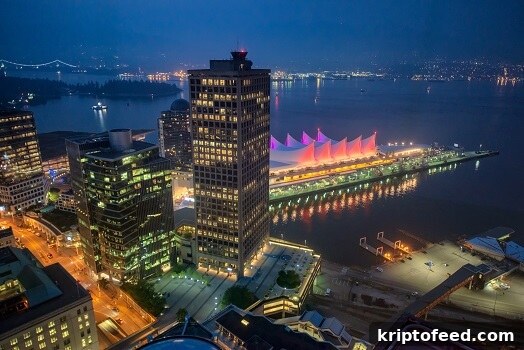
- Vancouver Mayor Ken Sim proposes Bitcoin as a reserve asset to protect purchasing power.
- Jeff Booth supports Ken Sim’s proposal and acknowledges Bitcoin’s potential as a strategic asset.
- Former U.S. CFTC Chairman Christopher Giancarlo endorses national bitcoin reserves, comparing them to gold.
Vancouver Mayor Ken Sim has introduced a bold proposal to explore holding bitcoin as a municipal reserve asset to diversify the city’s financial holdings and help preserve purchasing power.
The proposal, titled “Preserving Municipal Purchasing Power Through Diversification of Financial Reserves: Becoming a Bitcoin-Friendly City,” is scheduled for formal presentation to Vancouver’s city council on December 11, 2024. If adopted, the plan would represent a notable move toward public-sector adoption of cryptocurrencies at the municipal level.
Protecting Vancouver from Economic Shocks with Bitcoin
In his proposal, Mayor Sim seeks to investigate how adding bitcoin to the city’s reserves might shield Vancouver from inflation and economic volatility. The measure aims to assess whether a portion of municipal funds held in bitcoin could act as a hedge against currency depreciation and other financial risks.
This initiative arrives amid growing interest in bitcoin as a reserve asset among governments and public institutions, particularly in the United States. Several U.S. lawmakers have recently proposed including bitcoin in public financial reserves, signaling a broader reassessment of how digital assets might fit into national economic strategies.
Although the full text of Vancouver’s proposal has not yet been released, bitcoin advocate and entrepreneur Jeff Booth publicly expressed support for Mayor Sim’s plan during an X Spaces discussion on November 26, 2024. Booth described the move as an important step toward recognizing bitcoin’s potential as a long-term strategic asset for a city’s financial portfolio.
Former CFTC Chairman Backs a National Bitcoin Reserve
At the same time, Christopher Giancarlo, the former chairman of the U.S. Commodity Futures Trading Commission (CFTC), has spoken in favor of considering bitcoin as a strategic reserve asset for nations.
In a recent interview, Giancarlo called Bitcoin “the first digital commodity in the world,” noting its similarities to traditional commodities such as gold, oil, and copper—assets that countries have historically accumulated as stores of value. He praised the concept of a national bitcoin reserve and highlighted its potential to contribute to long-term financial stability in an increasingly digital global economy.
Giancarlo acknowledged concerns about bitcoin’s speculative behavior, but he drew parallels with past speculative phases in technology markets—such as the internet bubble—where early speculation eventually gave way to durable technological innovation with lasting economic impact. He suggested that blockchain and bitcoin technology may follow a similar trajectory, and that governments and financial institutions could benefit from positioning themselves early in that transition.
As cities and nations weigh the risks and rewards of digital assets, Vancouver’s proposal represents a case study in how local governments might integrate cryptocurrency into formal reserve strategies. The city council’s review will likely explore governance, custody, risk management, accounting treatment, and transparency measures required to responsibly hold bitcoin in public reserves.
Whether Vancouver’s proposal leads to a formal allocation remains uncertain, but the conversation reflects a shifting landscape in public finance. Increasingly, policymakers, business leaders, and regulators are debating whether digital assets like bitcoin can complement traditional reserves and offer new tools to protect purchasing power and enhance financial resilience.