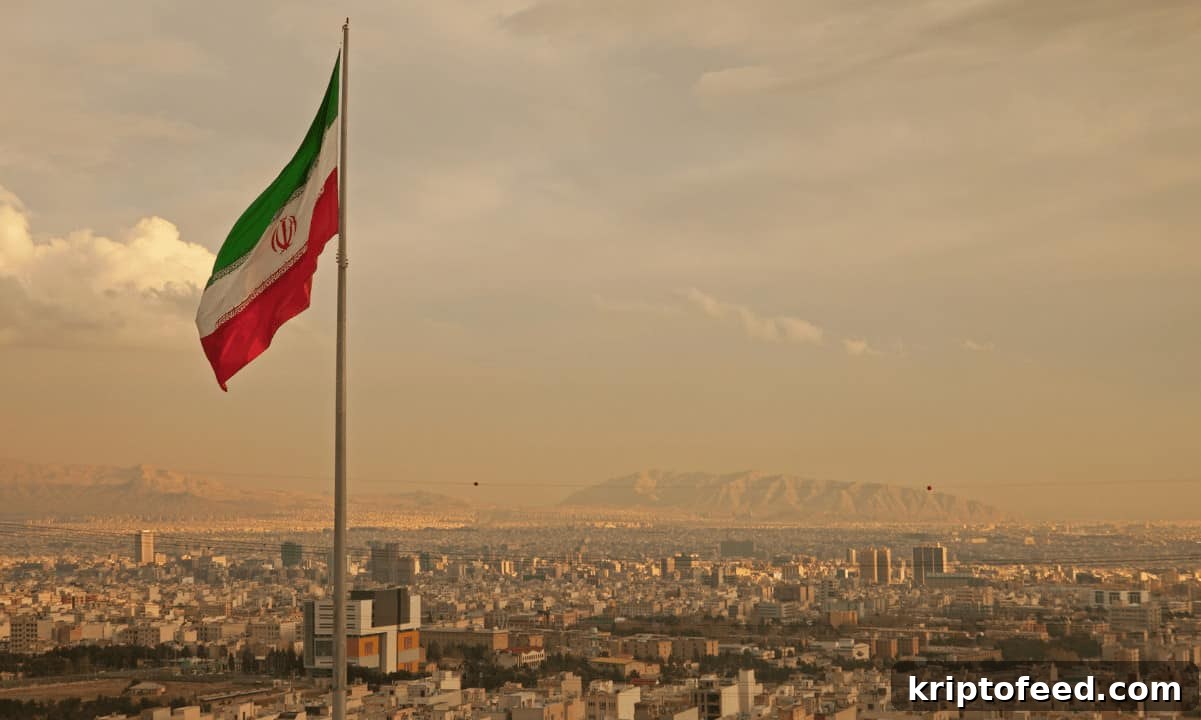
The US Department of the Treasury’s Office of Foreign Assets Control (OFAC) has imposed sanctions on Nobitex, Iran’s largest digital asset exchange, as well as three other Iranian crypto platforms. This action is part of the Trump administration’s broader Economic Fury initiative, which aims to increase economic pressure on Tehran.
The Treasury designated Nobitex, Wallex, Bitpin, and Ramzinex, alleging that the exchanges assisted users in evading sanctions, facilitated financial activity linked to Iran, and processed transactions tied to the Islamic Revolutionary Guard Corps (IRGC).
Terror Finance and Sanctions Evasion Risks
In an official statement, Treasury Secretary Scott Bessent said Iran has increasingly relied on digital asset technologies to advance what he called a “corrupt agenda,” including efforts to circumvent international sanctions and move wealth out of the country. He added that the Treasury will continue monitoring financial flows through traditional banking channels and digital assets to prevent Iran from advancing any nuclear capabilities.
The Treasury claimed that Nobitex handled more than half of all Iranian digital asset inflows in 2025 and was a central participant in Iran’s crypto ecosystem. According to the agency, Nobitex enabled payments linked to terrorist activity, sanctions evasion, and transactions involving the IRGC, including activity tied to ransomware actors associated with the IRGC. The Treasury also asserted that Nobitex assisted the Central Bank of Iran in accessing hundreds of millions of dollars in stablecoins used to support the Iranian rial and helped regime insiders reach international crypto exchanges across multiple jurisdictions.
The Treasury further alleged that Nobitex continued to protect and move assets out of Iran even during internet blackouts that began with the onset of the war. Alongside the exchange designation, OFAC named several company leaders and officials, including Amir Hossein Rad, Nobitex’s chairman, co-founder, and former CEO.
According to the Treasury’s account, Rad played a role in restoring Nobitex’s operations after the platform suffered a cyberattack in June 2025 that resulted in significant losses. The agency also designated Nobitex co-founders Seyed Mohammad Ali Aghamir Mohammad Ali and Seyed Mohammad Aghamir Mohammad Ali, both identified as members of the Kharrazi family, which the Treasury described as connected to Supreme Leader Mojtaba Khamenei’s inner circle. Current Nobitex CEO Seyed Ali Khoee was also designated.
Wallex, Bitpin, and Ramzinex Also Targeted
The Treasury described Wallex as Iran’s second-largest digital asset exchange by trading volume, reporting that it received roughly 12% of Iranian digital asset inflows in 2025. The agency alleged Wallex facilitated transactions tied to the IRGC. Bitpin was said to have captured about 10% of Iranian digital asset inflows that year and processed millions of dollars in transactions, including transfers allegedly connected to IRGC actors; some Bitpin investors were reportedly linked to efforts to evade US sanctions.
Ramzinex, a Tehran-based exchange established in 2018, was reported to have processed more than $2.45 billion in transactions and is alleged to have facilitated payments related to the IRGC and an Iranian government-backed financial institution.
These designations subject the named exchanges and individuals to US economic restrictions, including asset freezes and prohibitions on US persons engaging in transactions with the sanctioned parties. The Treasury said these measures are part of ongoing efforts to disrupt networks that exploit digital assets to support malign activity and evade international oversight.