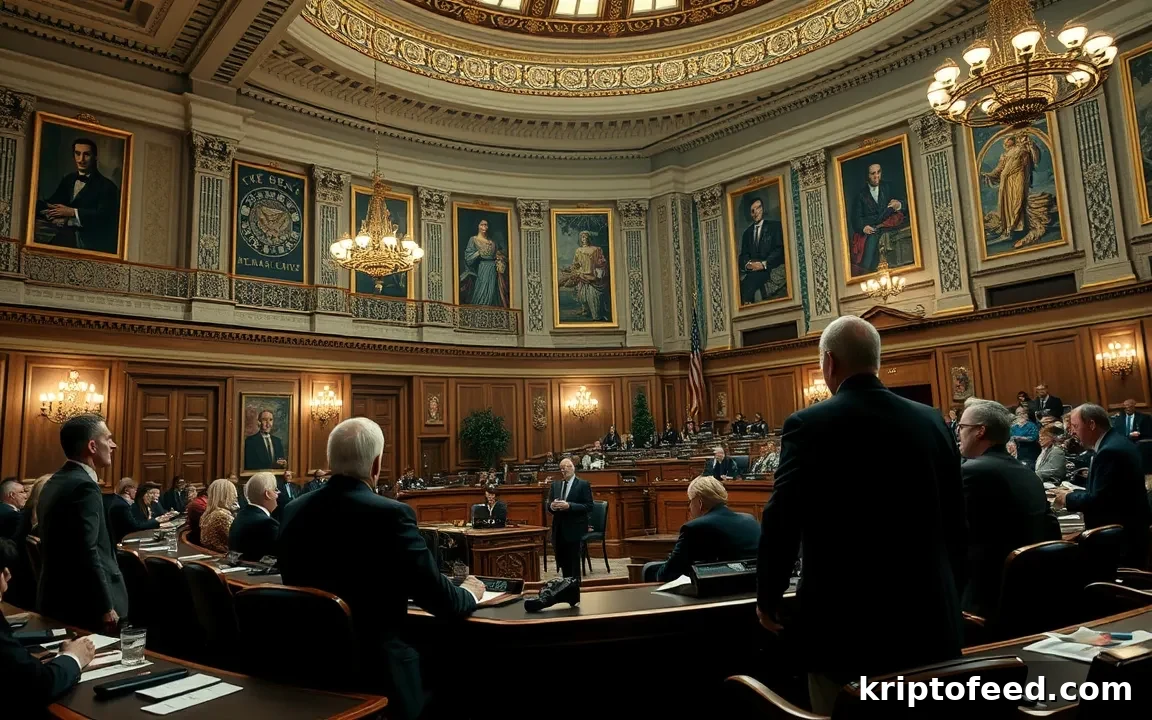
- Lawmakers voted 215 to 211 to advance work on the Guiding and Establishing National Innovation for US Stablecoins Act.
- Successful Wednesday votes marked a revival of Republican leadership after an unexpected setback earlier in the week.
- Many House Democrats continue to call for rejection of all three bills.
The U.S. House of Representatives voted Wednesday by a narrow margin to resume consideration of several high-profile cryptocurrency bills, reviving what Republican lawmakers have dubbed “Crypto Week” after an initial attempt to fast-track the legislation collapsed earlier in the week.
Lawmakers approved a procedural vote, 215 to 211, to advance the Guiding and Establishing National Innovation for US Stablecoins Act — known as the GENIUS Act — which would establish a regulatory framework for U.S. dollar–pegged stablecoins and has already passed the Senate.
If the GENIUS Act clears the House later this week, it would move to President Donald Trump’s desk for signature.
In a separate procedural vote, the House also agreed to proceed with the Clarity Act, a bill that would clarify regulatory responsibilities between the Securities and Exchange Commission (SEC) and the Commodity Futures Trading Commission (CFTC) over digital asset oversight.
Another bill aimed at blocking the Federal Reserve from issuing a retail central bank digital currency (CBDC) directly to individuals likewise advanced toward final floor consideration.
Tuesday’s vote collapsed amid Republican defections
Wednesday’s successful procedural votes marked a turnaround for House Republican leadership after an unexpected setback on Tuesday, when the chamber voted 196 to 223 against even considering the three bills.
That earlier defeat reflected GOP defections driven by concerns about CBDC-related language contained in the GENIUS Act.
Reportedly, Representatives Marjorie Taylor Greene, Chip Roy, Michael Cloud and Anna Paulina Luna were among the Republicans who voted no in the Tuesday vote.
Greene cited persistent concerns that the GENIUS Act could provide a statutory basis for the Fed to introduce a digital dollar — a characterization the bill’s authors have denied.
After the failed vote, President Trump intervened publicly late Tuesday, telling reporters that “key lawmakers” had agreed to back the legislation.
His remarks were widely viewed as helping to unify Republican ranks ahead of the Wednesday procedural ballots.
Democrats oppose the measures, calling them dangerous
No House Democrats supported moving forward with any of the bills, setting the stage for a partisan clash as the measures advance toward final votes.
On Wednesday morning, Representative Maxine Waters, a senior member of the House Financial Services Committee, warned that both the GENIUS Act and the Clarity Act would dangerously deregulate the cryptocurrency industry.
“These bills are a gift-wrapped invitation for Trump to continue his cryptocurrency scheme on a full scale,” Waters said, calling the proposals “two of the most dangerous pieces of legislation” introduced this session.
Democrats also expressed concern that the bills would weaken consumer protections and undermine the Federal Reserve’s authority, even as many Republicans push for an explicit ban on the Fed issuing a Fed-backed digital dollar to the public.