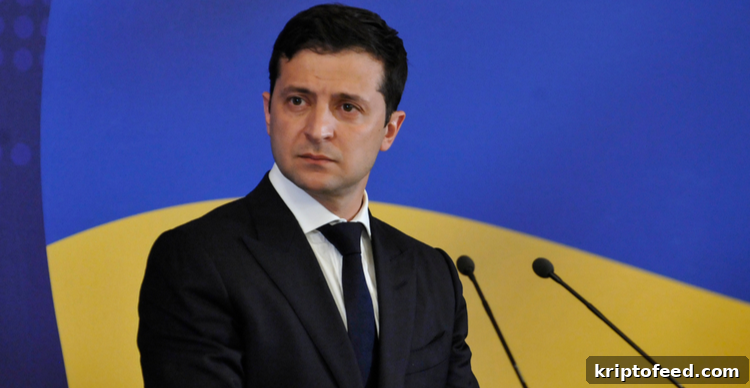
President Volodymyr Zelensky objected to parts of the law, which underwent its second reading late last month
The Office of Ukrainian President Volodymyr Zelensky has returned a draft law on crypto regulation to the parliament. According to an announcement posted on the president’s official site, Zelensky chose not to sign the bill because he has concerns about certain provisions. The statement explained that the president is seeking changes to assign primary responsibility for cryptocurrency regulation to the National Securities and Stock Market Commission.
Under the current text, the Ministry of Digital Transformation is set to oversee crypto regulation, while securities-based digital assets fall under the authority of the national securities regulator. The National Bank of Ukraine would retain responsibility for the country’s digital central bank currency (CBDC).
If the president’s proposed amendments are adopted, the central bank would continue to issue and monitor the CBDC, while the securities regulator would assume responsibility for other aspects of digital assets and cryptocurrency markets.
“Public reports from the International Organization of Securities Commissions (IOSCO) indicate that certain types of digital assets, from an economic perspective, possess characteristics that make them financial instruments. Regulation of these types of digital assets should be handled by financial regulators, as it falls within their area of expertise,” the president’s statement said.
Zelensky also voiced concern about the cost of creating new regulatory bodies to implement the law.
“Establishing new authorities as required by this law would demand significant funds from the state budget. Therefore, Volodymyr Zelensky proposes that regulation of digital assets be incorporated into the remit of the National Securities and Stock Market Commission,” the announcement added.
Although the draft law passed its second reading, returning it to parliament means lawmakers must review and revise the bill before it is resubmitted to the president. Ukraine has taken a relatively welcoming stance toward blockchain companies so far, and this legislation could further improve the country’s appeal to the crypto industry if adjusted accordingly.
The securities regulator has also raised objections about potential involvement by the Ministry of Digital Transformation, arguing the ministry lacks the specialized expertise required for crypto oversight. The key question now is which direction Ukraine’s crypto regulatory framework will take.
In addition to introducing the draft law to parliament last summer, Ukrainian legislators have been working with local regulators to develop a body of laws aimed at integrating cryptocurrencies into the nation’s existing legal system.