
Blockchain is already transforming many industries, and countless others stand to benefit from its adoption. This technology offers significant advantages—especially in improving cost and time efficiency.
We identified several technology companies that are leading the way in blockchain adoption and making notable progress in their sectors—from distributed computing and smart contracts to secure messaging.
Read on to learn about our top three blockchain solutions you should get to know this month.
Golem Network – Decentralized Marketplace for Computing Power
App developers and individuals often need to rent computing power for tasks that require substantial processing time or capacity. Today, these resources are provided mostly by centralized cloud providers, which bring limitations such as rigid deployment processes, closed ecosystems, and proprietary payment systems.
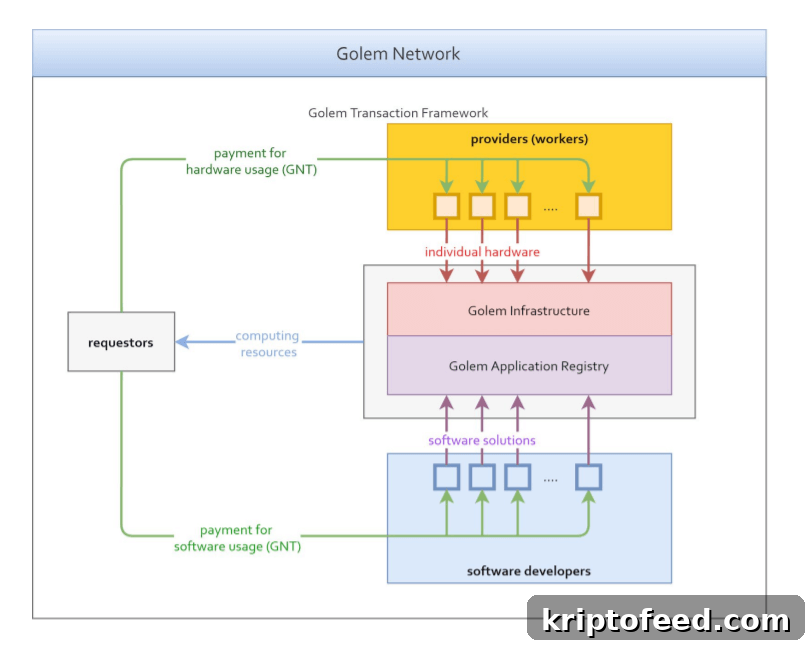
Google, Amazon, IBM and Microsoft dominate this market and leverage their positions to increase margins, often leading to inefficient pricing for compute services. Recent technological advances, however, allow this market to be reorganized along new principles, with Golem forming the backbone of that shift.
What the service does
Golem democratizes access to digital resources through the Golem Network, an open-access protocol designed to be accessible, reliable and censorship-resistant. Requestors can connect easily with providers of computing resources and software developers via Golem’s flexible open-source platform.
Users who contribute unused computing power are paid with Golem’s native token GLM (formerly GNT). The payment system is built on an Ethereum Layer 2 solution, which eliminates issues like network congestion, onboarding costs and high gas fees, enabling fast, low-cost micropayments.
Adoption and development
The Golem team is implementing initial use cases, the first being CGI rendering. Rendering images locally can be time-consuming, while cloud services are often expensive. CGI artists can use the Golem Network to rent computing resources from other users, making rendering faster and more cost-effective.
Several community hackathon projects are being ported to Golem’s mainnet. Examples include Golem SLATE (an app similar to CodePen), a Chess on Golem project that offers a classic chess experience, and a decentralized machine learning app called DeML.
As Ethereum scales and better data-exchange technologies emerge, the Golem platform can offer microservices for applications of all sizes—from note-taking apps to streaming services. Golem plans to integrate multiple decentralized Ethereum apps (dapps) and complementary solutions such as payment channel systems, decentralized identity services, task verification tools and decentralized storage.
Ubiq – Decentralized Smart Contract Platform
The blockchain’s ability to provide a trusted, immutable record of transactions is reshaping business processes. Many companies choose Ethereum for its programmability and the power and versatility of smart contracts.
However, any organization building on an Ethereum Virtual Machine (EVM) is exposed to Ethereum’s future changes—updates and hard forks can introduce instability. Ubiq aims to reduce that uncertainty.
What the provider does
Ubiq offers a reliable blockchain for hosting an EVM, lowering the risk of network instability and unintended hard forks by using thoroughly tested code and a conservative upgrade schedule.
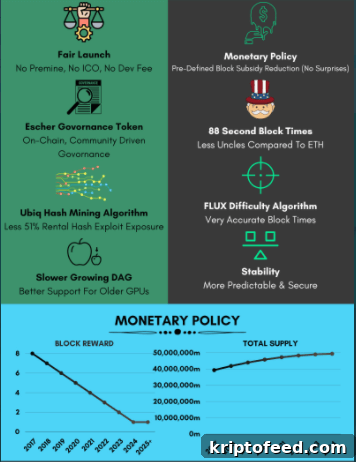
Ubiq began from an Ethereum codebase but modified key parameters such as block times and reward structures. An independent report found that Ubiq provided greater chain security than Ethereum and achieved a higher transaction throughput per second with a block gas limit set at 40 million.
The blockchain supports smart contracts, dApps and tokens, and its development is guided by Ubiq’s transparent, auditable governance system called Escher.
Adoption and development
Since its genesis block in 2017, Ubiq has formed partnerships with exchanges, launched the Pyrus wallet and earned recognition in the blockchain community. Today, the Ubiq ecosystem includes a decentralized exchange (DEX), an event framework for token issuance, and yield farming options.
Looking ahead, Ubiq plans to expand into decentralized finance (DeFi), implement chain bridges, add governance features and support non-fungible tokens (NFTs), broadening the platform’s capabilities for enterprise and developer use.
ADAMANT Messenger – Decentralized Messaging
In the wake of data scandals and rising phishing and identity theft, privacy has become a critical concern for businesses and individuals alike. Messaging services are particularly sensitive because people expect private conversations to remain private.
Although many modern messengers use encryption, users often distrust centralized providers that keep source code private and store message histories. These platforms frequently require personal identifiers like phone numbers or email addresses and may retain address books, photos and location data on their servers.
ADAMANT Messenger addresses these vulnerabilities and delivers strong privacy protections.
What the provider does
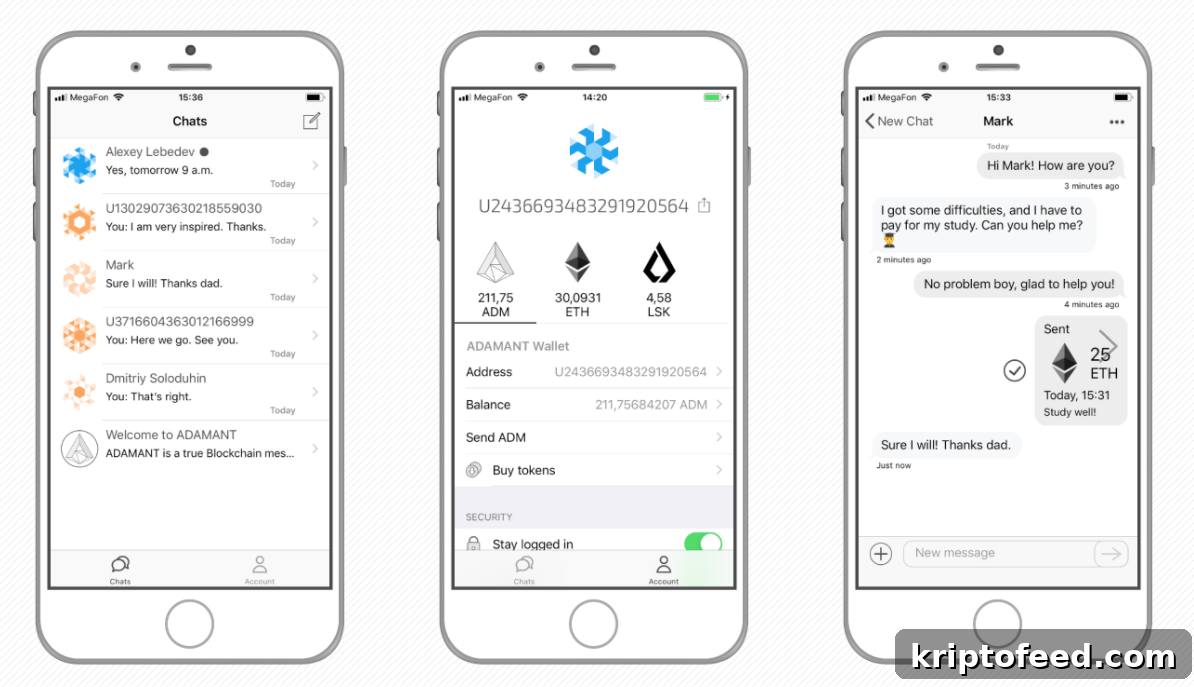
ADAMANT Messenger is a decentralized, blockchain-based messaging platform that operates independently of governments, corporations and developers. All messages are encrypted, and authenticity is enforced via the blockchain. Since the service does not collect personal identifiers, device data or IP addresses, it offers genuine anonymity.
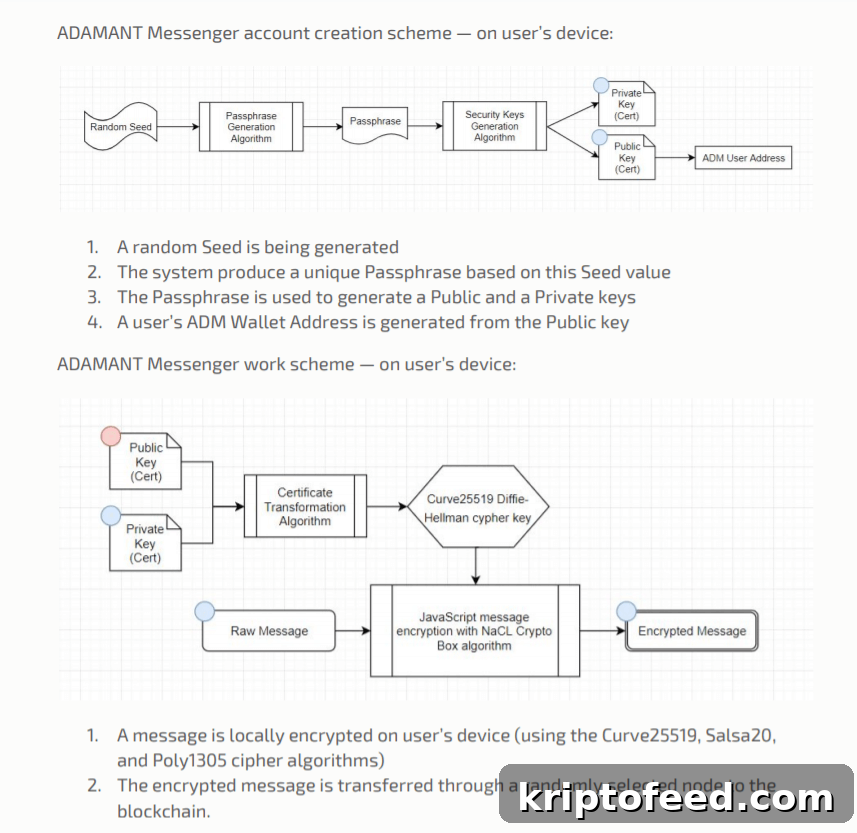
Users can create multi-currency crypto wallets easily and transfer coins anonymously within chats. Crypto chatbots facilitate currency exchange, and the platform supports activities such as betting and even games like blackjack. ADAMANT Messenger Business provides a private blockchain solution tailored for small and medium-sized enterprises.
Adoption and development
Since launching its mainnet in 2017, ADAMANT Messenger has developed its own blockchain explorer and added two-factor authentication. The platform’s native utility token, ADM, supports the decentralized messaging infrastructure and is listed on multiple exchanges.
In 2019 ADAMANT introduced anonymous crypto exchanges and partnered with Stably to integrate a stablecoin. Roadmap items include adding group chats, pinnable chats, voice calls, digital signatures, blockchain-based document storage, expanded cryptocurrency support and file and image transfer within chats.