Tezos has several exciting updates in the pipeline — can these move the XTZ price in June?
Designed to improve on many existing smart contract–enabled blockchain networks, Tezos offers an open-source platform where developers can build advanced protocols and smart contract solutions. The network shares similarities with major platforms like Ethereum while emphasizing upgradeability and on-chain governance. Its native token, XTZ, saw a significant surge during the recent crypto bull run.
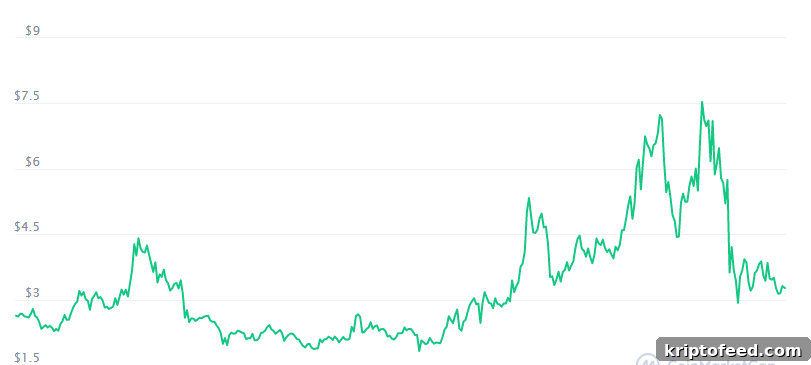
Starting the year near $2 in January, Tezos (XTZ) benefited from the broader market rally and reached an all-time high of $7.785 in the first week of May. A sharp correction in mid-May pulled prices down; as of June 14, XTZ traded around $3.258, representing a decline of about 41.85% from that peak. The monthly low so far was $2.927, recorded a few days earlier.
Will Tezos dip below that low or climb higher before the month ends? Let’s examine the factors that could influence XTZ’s price.
Tezos: Year-to-Date Performance
Source: CoinMarketCap
Around mid-June last year Tezos traded near $2.62 and experienced sporadic momentum through late 2020 before losing steam. The token returned to stronger upward movement in February of this year and, after several swings, reached its May high of $7.785 before pulling back. Price action in June has been relatively range-bound compared with the preceding months.
Viewed over a full 12-month span and excluding extreme short-lived spikes, overall returns are modest. However, recent months have shown strong volatility in both directions, making short-term trading and tactical investment approaches more practical for those targeting Tezos.
Where to Buy Tezos
Tezos Price Forecast: The Fundamentals
Granada Upgrade
Tezos continues to refine its protocol, and the next major upgrade — named Granada — is currently in testing during an exploratory phase. Granada aims to improve efficiency through several changes, including halving block production time and reducing overall gas costs by up to 80%. If successfully deployed on mainnet, these improvements could make Tezos more attractive to developers by offering faster transaction throughput and significantly lower fees compared with many competing blockchains.
Smart contract tooling is also advancing: the next version of SmartPy, a key smart contract library and development environment for Tezos, promises better contract authoring, analysis, and auditing capabilities to support safer and more complex decentralized applications.
NFT Adoption
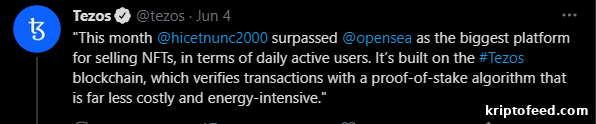
Tezos’s efficiency and low fees have attracted attention across the NFT space. Marketplaces and projects are increasingly exploring Tezos to lower transaction costs for creators and collectors. Earlier this year, OpenSea announced plans to integrate support for Tezos, leveraging the FA2 token standard that supports fungible, non-fungible, and non-transferrable token types within a single interface.
Source: Tezos official Twitter handle, June 4
On-chain NFT platforms built on Tezos, such as Hic et Nunc 2000, have seen growing activity and in some periods outpaced more established marketplaces in terms of new listings and community engagement. This momentum demonstrates increased interest in Tezos as an NFT-friendly network.
Growing Developer Community
Development activity around Tezos appears to be expanding. The official project listings and ecosystem announcements show multiple open roles ranging from frontend engineers to director-level positions, along with marketing, communications, and operations hires. Growing talent and resources within the ecosystem support longer-term protocol development and wider adoption.
Tezos Forecast: The Technicals
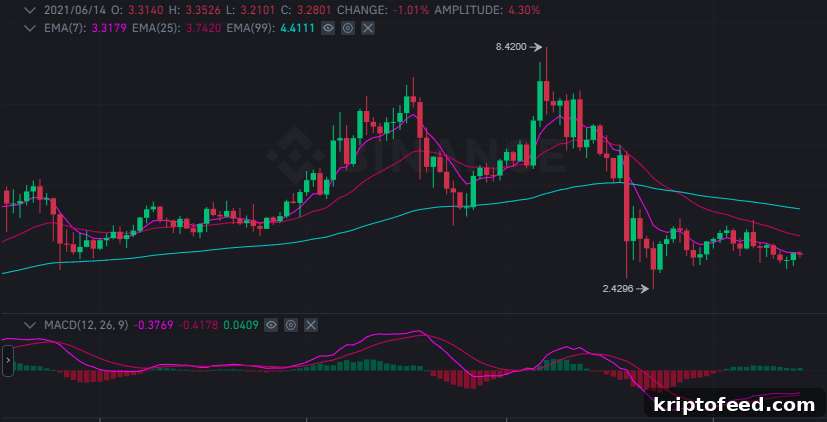
While fundamental improvements point toward stronger mid- to long-term prospects, technical indicators for June suggest limited near-term movement. Price action and momentum tools present a more cautious short-term outlook.
Source: Binance
Daily candlesticks show a relatively tight trading range. Short-term exponential moving averages (EMA 7 and EMA 9) are converging, which often indicates consolidation rather than a decisive breakout. The MACD has shown a modest bullish bias with the faster line resisting a bearish crossover and beginning to rise, suggesting possible small upward moves but not a strong rally in the immediate term.
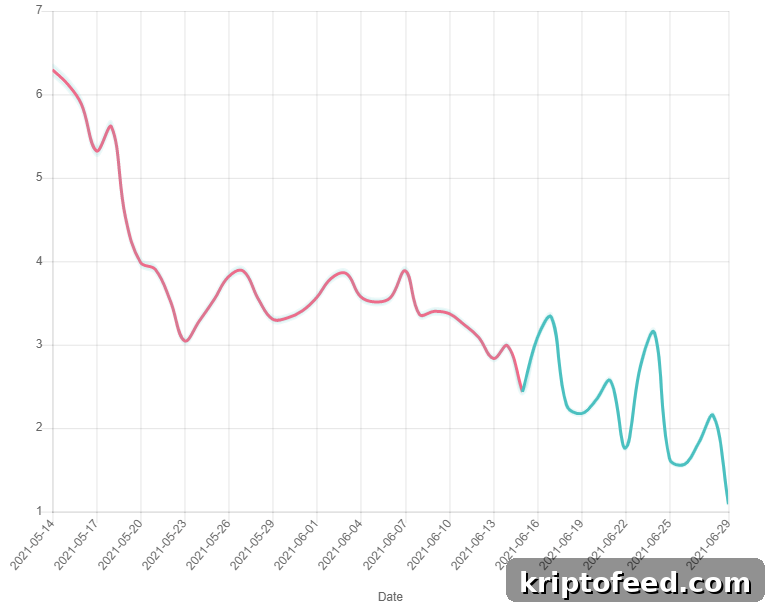
Source: www.gov.capital
Gov Capital, an asset price prediction platform, projects small fluctuations through the remainder of June, with a modest peak around $3.33 followed by a potential decline toward roughly $1.08 by month-end. These projections are generated by the platform’s proprietary AI model, which incorporates historical prices, trading volume, and recognized market cycles. Note that model outputs vary and should be interpreted cautiously.
Conclusion
Fundamental developments—such as the Granada upgrade, advances in smart contract tooling, growing NFT activity, and an expanding developer community—support a positive medium- to long-term outlook for Tezos. However, short-term technical signals point to consolidation and limited upside in June, with the possibility of further downward pressure as the month closes.
Markets remain sensitive to broader macroeconomic and regulatory shifts. Large fiscal plans or monetary policy changes can push more investors toward DeFi and crypto, while stricter regulation or higher taxes on digital assets could reduce market appetite. These and other unforeseen factors will ultimately influence XTZ’s near-term trajectory.
Please note, the details provided above reflect the writer’s personal analysis of market data and should not be taken as direct investment advice.