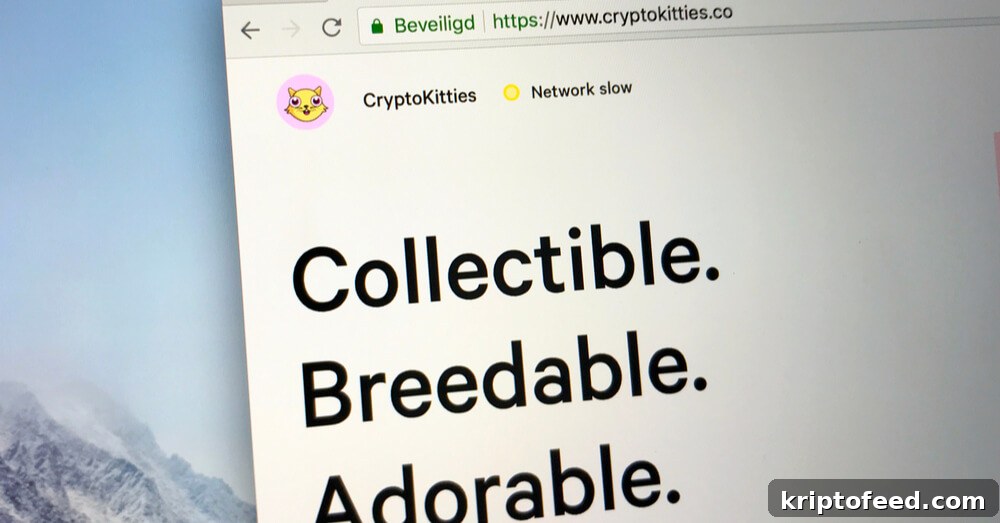
IAMAKitty appears to have been stolen from an Ethereum wallet; however, not everything is as it seems
Kevin Abosch, an Irish conceptual artist and an early adopter of blockchain technology as a medium for presenting artwork, reported that one of his pieces was taken from a blockchain-based installation.
The installation is an Ethereum wallet that functions as a network, titled “Stealing the contents of this wallet is a crime.” It was created in 2018.
The artist revealed in a tweet that one of his virtual pets, called IAMAKitty, had been removed from the crypto wallet.
Abosch designed the wallet as part of social experiments that challenge systems of value. It is a conceptual framework realized through mechanics that fit particularly well with the world of cryptocurrencies. Part of the wallet’s design included tokens that were deposited into the wallet from another of his works, titled “I Am A Coin” (2018), in which Abosch tokenized himself by undergoing a process involving his own blood to distribute ten million tokens with the ticker “IAMA”.
He described the piece “Stealing the contents of this wallet…” as a collaborative playground for explorers. For the most part, participants responded with goodwill and humor. Art enthusiasts familiar with Ethereum engaged playfully with the implications of the blood tokens, for example by moving .666 of IAMA in and out of the wallet.
“I think people just wanted to interact and therefore become part of the art in a sense,” the artist reflected.
Among the community, that spirit of playful participation is what made the theft reported on Friday feel out of place. The idea that someone would steal a CryptoKitty named in honor of Abosch’s work felt particularly petty to many.
However, it later emerged that Abosch himself had taken the artwork. He explained that a friend had informed him the “kitty” had been deposited in the wallet and he assumed it was a gift from Dapper Labs.
Abosch clarified that this action will not become part of a larger art collection or NFT collectibles. He also expressed frustration with several trends in blockchain-based art, particularly those that tie digital art’s valuation to scarcity.
“Many so-called crypto artists are minting NFTs but are merely using blockchain technology as a tool to engineer scarcity and as a platform to sell their work. I am not making a qualitative judgment on the artwork, I am only questioning the terminology. Of course, there are artists whose work thematically engages with cryptocurrency and blockchain technology […] which seems more appropriately labeled crypto art,” he explained.