As stablecoins move closer to mainstream finance, the regulatory debate is shifting from being about crypto in isolation to focusing on the future of the global payments system. Recent comments by Bank of England Governor Andrew Bailey suggested global regulators could be headed for a “wrestle” with the U.S. over stablecoin rules, highlighting an emerging divide between European, American, and other regional approaches.
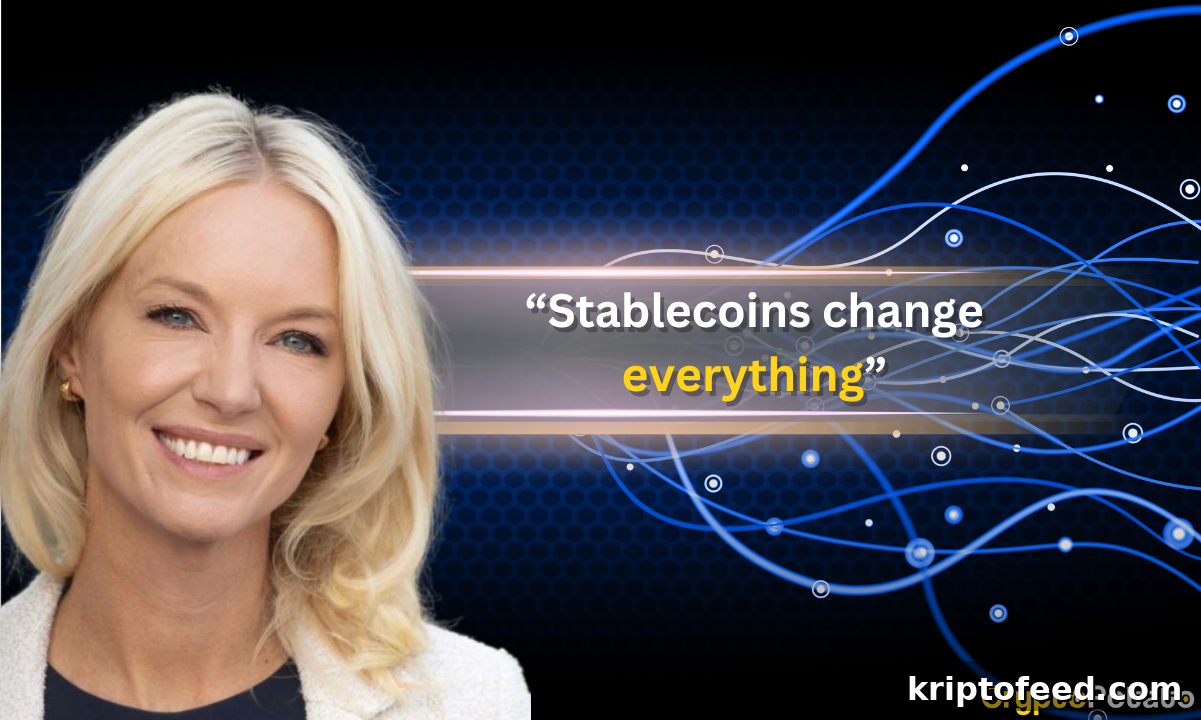
For some observers, that disagreement points to a deeper question. Jody Mettler, Chief Operating Officer of BitGo and President of BitGo Trust, says the core issue is whether digital money will develop into a single, interoperable global system or into parallel networks shaped by regional priorities such as monetary sovereignty, reserve rules, custody, settlement finality, and consumer protection.
In the interview that follows, Mettler explains how MiCA is shaping Europe’s digital asset infrastructure, why institutions are demanding banking-grade certainty rather than abstract “crypto rules,” and how stablecoins can force banks, issuers, custodians, and payment providers to rethink cross-border finance architecture.
Governor Andrew Bailey warned that global regulators may be heading for a “wrestle” with the U.S. over stablecoin rules. From your vantage point, what is the real disagreement underneath that fight: consumer protection, financial stability, dollar dominance, or control over payment rails?
The debate has moved beyond crypto regulation alone. What lies beneath the “wrestle” Andrew Bailey mentioned is a broader argument about how modern payment and settlement infrastructure will be designed and which standards will define it globally.
At BitGo, we observe that institutions are not asking for generic “crypto rules.” They want banking-grade certainty around custody, settlement finality, and redemption mechanics. That distinction is where regulatory divergence becomes significant. The U.S. generally favors a market-led framework that encourages innovation, while Europe—through MiCA—is building a more prescriptive system prioritizing systemic stability, reserve quality, and controlled market entry.
In Europe, policy also emphasizes financial autonomy. This shows up in efforts to ensure euro-denominated digital money and regulated stablecoin frameworks develop alongside, rather than fully depend on, dollar liquidity and U.S.-dominated payment rails. But that ambition requires the right infrastructure: deep liquidity, regulated custody, banking connectivity, and trusted settlement layers that institutions can plug into at scale.
So the real tension is less about any one rule and more about whether global digital money evolves into a single interoperable system or into a set of regionally anchored financial networks.
When people talk about the U.S. and Europe “diverging” on stablecoins, what does that actually mean in practice for issuers, custodians, banks, and payment companies?
It means the market is splitting less around “crypto vs. traditional finance” and more around how each region defines and controls the plumbing of digital money.
Europe moved earlier with MiCA, which goes beyond licensing crypto firms. MiCA standardizes custody, issuance, trading, and transfer of digital assets across the EU under a single supervisory perimeter. That predictability lets institutions build to a single framework instead of adapting to 27 different interpretations. The U.S. is still shaping its market structure through legislation like the Clarity Act, so the roles of participants across the stack are still being negotiated.
Practically speaking, this difference matters. Institutions ask about how assets are held in bankruptcy-remote structures, how settlement finality is achieved across venues, and how liquidity can move between regulated counterparties without changing risk assumptions each time it crosses a border. MiCA turns policy into a closer approximation of a rulebook for custody and market access, which reduces operational uncertainty.
The tension is that global institutions still want a single operating model for digital assets even as the infrastructure they use becomes regionally defined. Over time, that raises the question of whether liquidity, custody standards, and settlement systems will converge globally or evolve into parallel but interoperable regional stacks.
If stablecoins become a major part of cross-border payments, what happens when the rules for reserves, redemption, custody, and supervision differ from one jurisdiction to another?
MiCA helps by creating a single rulebook across Europe, which reduces fragmentation within the EU and gives institutions a clearer operating environment. But outside Europe, different markets will maintain different approaches, and that creates operational complexity.
Cross-border payments rely on trust that assets behave predictably as they move across systems. Significant differences in reserve standards, redemption mechanics, or custody practices introduce friction in liquidity and settlement, even when markets are linked.
BitGo’s focus in Europe is to help institutions operate under MiCA while staying connected to global liquidity. That means providing regulated custody, segregated client assets, and infrastructure that allows assets to move and settle without rebuilding market-by-market.
Are we heading toward a single global stablecoin market, or toward competing blocs: dollar stablecoins under U.S. rules, euro stablecoins under EU rules, and sterling- or other local models elsewhere?
In the near term, regional frameworks are likely to emerge first. The dollar will probably remain dominant because it sits at the center of existing global liquidity and trade, but Europe is clearly working to establish its own regulated digital financial infrastructure. The bigger question is whether these regional systems remain interoperable or lead to fragmented pools of liquidity tied to specific jurisdictions.
How should policymakers think about the line between stablecoins as crypto products and stablecoins as payment or banking infrastructure? At what point do they stop being an asset class and start becoming part of the monetary system?
The transition occurs when stablecoins are used at institutional scale for settlement, treasury operations, and cross-border transfers. At that stage, they cease to act like purely speculative assets and interact directly with payment systems and financial infrastructure. That’s when custody, asset segregation, settlement finality, and regulatory oversight become critical—institutions require the same confidence and safeguards they expect from traditional financial infrastructure.
Europe has been more explicit about protecting monetary sovereignty in its digital-assets framework. Is the stablecoin debate also a debate about whether Europe can build payment infrastructure that is not dependent on U.S. dollar rails?
Yes. Europe is considering how to maintain influence over its financial infrastructure as digital money scales. Currently, most liquidity and activity center on dollar-backed stablecoins, raising the question of whether Europe can develop euro-denominated digital assets and payment rails that are competitive, liquid, and usable at institutional scale.
Creating a successful euro stablecoin ecosystem requires more than regulations. It needs deep liquidity, trusted custody providers, settlement infrastructure, banking connectivity, and broad institutional participation. MiCA matters because it provides firms a clearer framework to start building those infrastructure layers within Europe rather than relying entirely on external rails over time.
Looking five years ahead, do you think stablecoins will be absorbed into the existing financial system, or will they force banks and payment networks to fundamentally change how they operate?
Likely a combination of both. Traditional financial institutions are already integrating digital asset infrastructure—especially around custody, settlement, and payments—into existing systems. At the same time, stablecoins introduce expectations such as real-time settlement, 24/7 value movement, and programmable features that traditional systems were not originally designed to support. Over time, parts of the banking and payments ecosystem will need to evolve to meet these expectations.