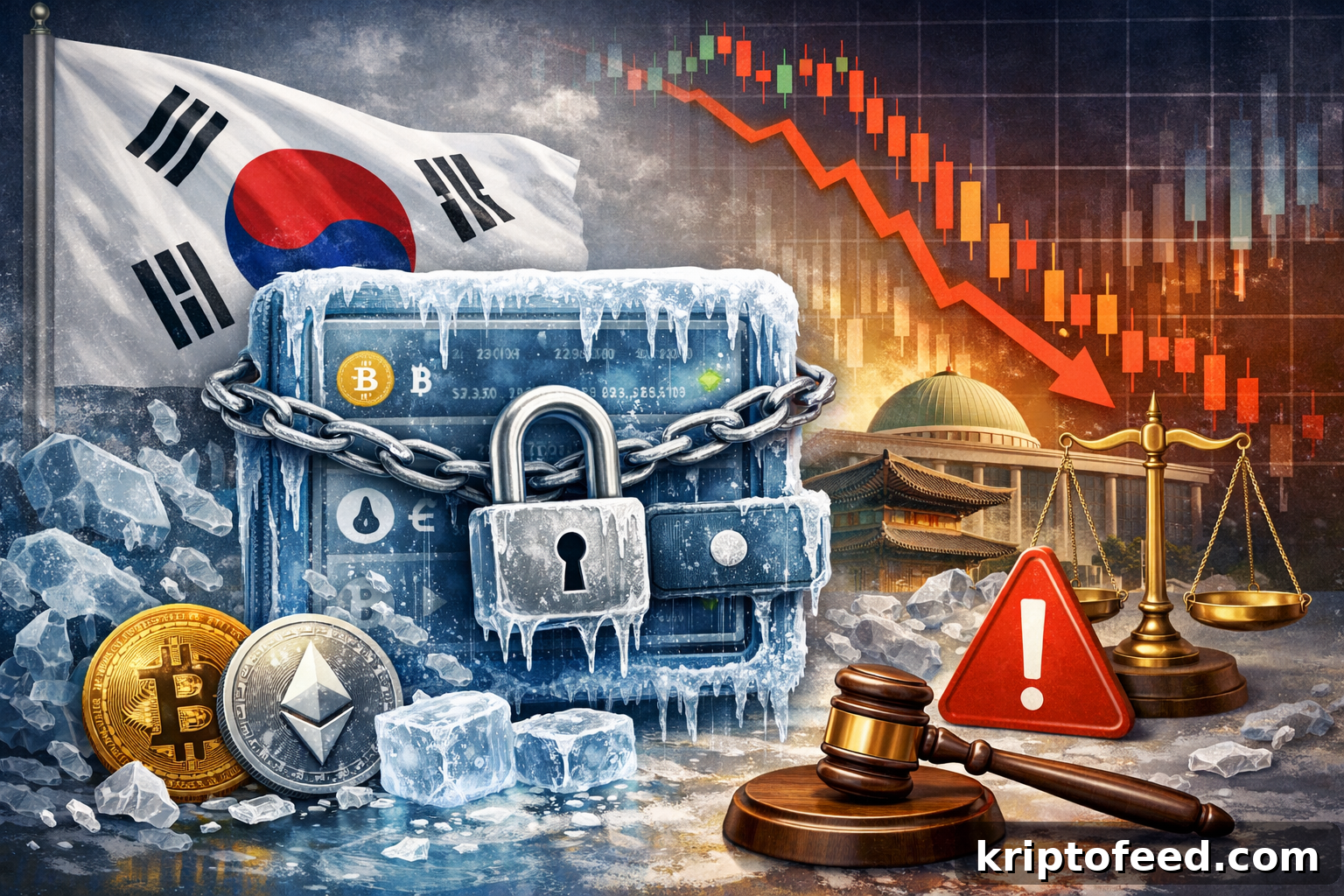
- The proposal would allow regulators to suspend transactions before illicit profits are laundered or moved.
- Authorities want to expand enforcement tools modeled on stock-market measures to cover cryptocurrency trading.
- Recent steps by tax and financial supervisors show a closer alignment with traditional finance rules.
South Korea’s financial regulators are reviewing a proposal that would let them suspend transactions before suspected price manipulators can transfer or launder illicit gains.
The idea is to enable earlier action in fast-moving crypto markets, where profits can be shifted quickly and become harder to trace.
If adopted, the change would mark a significant advance in the country’s second phase of crypto regulation, expected to move beyond user protection into more direct efforts to prevent market abuse, while work continues on stablecoin rules that have not yet been formally enacted.
Early intervention tools
The Financial Services Commission (FSC) is evaluating a transaction-suspension system that would let supervisors block certain crypto transfers at an earlier stage.
Local news outlet Newsis reported that the proposal would enable authorities to act before suspected manipulators withdraw or launder potentially illegal proceeds.
Under the current framework, freezes frequently depend on court orders.
That process can take time, giving suspects opportunities to conceal funds. Regulators argue crypto markets move faster than traditional assets, making delays more costly.
The proposed system would mirror tools already used in South Korea’s stock market, where accounts linked to suspected manipulation can be frozen before profits are realized.
Closing enforcement gaps
Market supervisors have identified specific tactics that can generate large but unstable gains in crypto trading.
These include frontrunning, automated wash trading, and placing large buy orders that push prices up.
Such gains can vanish quickly once assets are moved off exchanges.
Regulators say crypto markets require stronger powers because assets can be transferred relatively easily to private wallets. That mobility, they argue, makes early intervention essential.
Lessons from capital markets
South Korea has already extended its enforcement reach in traditional finance. Amendments to the Capital Markets Act came into force in April 2025.
Those changes permit account freezes when unfair trading or illegal short-selling is suspected.
According to reports, the FSC discussed applying similar measures to crypto during a closed-door meeting in November.
The talks took place as authorities reviewed the first case of price manipulation handled under the revised capital markets rules.
Tighter rules across the board
The proposal builds on a series of measures that underline South Korea’s push to align crypto regulation with standards used in conventional financial markets.
On October 10, the National Tax Service warned that cryptocurrency holdings kept in cold wallets remain subject to enforcement, noting its authority to conduct home searches and seize offline storage devices in tax-evasion probes.
On December 7, the Financial Services Commission explored the idea of imposing bank-like liabilities on crypto exchanges, which would require platforms to compensate users for losses caused by hacks or system failures, even in the absence of proven negligence.