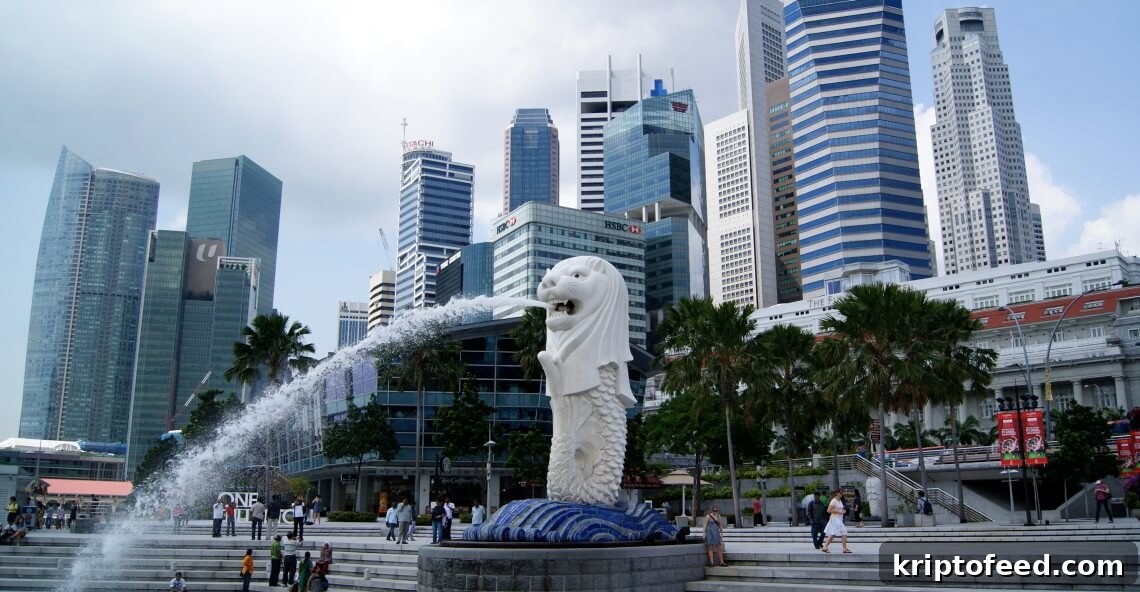
Singapore’s central bank and financial regulator is positioning the city-state as Asia’s leading fintech hub.
As technology reshapes how we live, work, and socialize, it will also transform how we transact, save, and manage wealth, said Ravi Menon, Managing Director of the Monetary Authority of Singapore (MAS), at a conference on June 29, 2015.
To accelerate this shift, MAS has committed S$225 million (about US$166 million) to develop the fintech sector. As part of a five-year investment plan, the authority has funded initiatives including a blockchain-based record-keeping system.
“MAS will partner the industry to work towards the vision of a Smart Financial Centre, where innovation is pervasive and technology is used widely to increase efficiency, create new opportunities, manage risks better, and improve people’s lives,” Menon explained.
One major technological trend reshaping finance is the adoption of blockchains and distributed ledgers. These technologies offer faster, more efficient processing, lower operational costs, and greater resilience against system failures.
Large global banks such as Citigroup, UBS, and Barclays are actively exploring blockchain technology. The central question for many institutions is not whether blockchain will be adopted, but when it will become mainstream.
“The important thing for our financial institutions is to be alert to these and other technology trends, understand their possible implications, and seize the opportunity to apply relevant technologies safely and efficiently—to boost productivity, gain competitive advantage, and serve consumers better,” Menon added.
Blockchain, Not Bitcoin
While the long-term role of bitcoin and other cryptocurrencies remains uncertain, Menon argued that the more profound impact on financial services and the broader economy is likely to come from the blockchain technology that underpins them.
Steven Tong, Managing Director of Startupbootcamp Fintech Singapore, shares this view. Speaking with Deal Street Asia, Tong said he is not particularly bullish on cryptocurrencies themselves, but sees significant opportunities in blockchain applications.
“Fundamentally, it’s the blockchain that brings about the innovation we’re seeking. Just look at bitcoin—there’s an estimated 6 to 10 million bitcoin wallets and not all of them have actual bitcoins stored in them. Their acceptance rate is still very low. Until we find some real need for an alternative currency, I’m not sure it will really take off.”
Earlier this year, Startupbootcamp Fintech Singapore selected 10 startups across niches such as wealth management, payments, peer-to-peer lending, and online security. Three of those teams focus on blockchain solutions.
Toast (formerly CryptoSigma) offers a remittance platform that leverages blockchain technology to make cross-border money transfers easier and cheaper.
Open Trade Docs (formerly Debune) enables secure storage of documents on the blockchain, allowing records to remain verifiable and in sync—especially useful when smart contract features are integrated.
Otonomos helps manage corporate actions on the blockchain, enabling entrepreneurs to establish “blockchain-chartered companies” where shares can be held and transferred much like bitcoins are stored in a digital wallet.
Tong emphasized the strategic value of these developments:
“This is clearly a trend that’s been going on overseas and if we can do this in Singapore, it will help demonstrate and build our thought leadership.”
Startupbootcamp Fintech Singapore is supported by a broad group of partners and backers, including major payments, banking, venture capital, and technology firms, as well as government-affiliated investment entities.
“The good thing about working with the government is the macro perspective you develop over time,” Tong said. “I look at this as an entire startup ecosystem, rather than just a specific industry or accelerator. I consider the issues and challenges of building that ecosystem.”
He concluded by noting Singapore’s progress: in the 2007–2008 period the startup scene was nascent, but the ecosystem has advanced significantly. While challenges remain, authorities are aware of them and are taking steps to transform Singapore into an innovation-driven economy.
Image credit: Singapore, Wikimedia; Ravi Menon, Prestige Singapore.