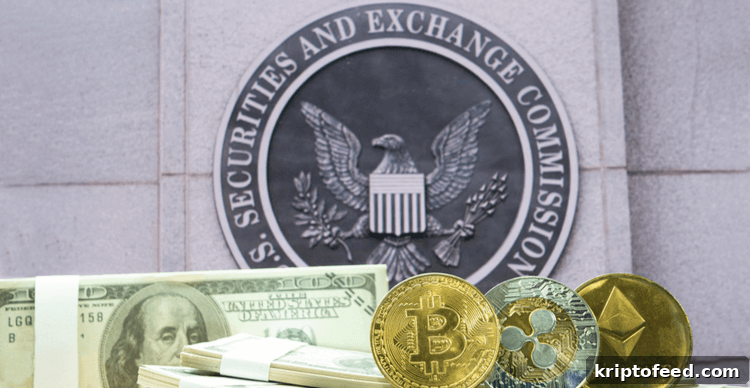
Gensler notes, however, that Congress could impose a ban if it chooses
The United States has no plans to ban cryptocurrencies in the same manner as China, confirmed Securities and Exchange Commission (SEC) Chairman Gary Gensler on Tuesday.
The SEC chief made the statement during a hearing before the House Committee on Financial Services.
His remarks came in response to Representative Ted Budd, who asked whether the regulator is considering following China’s approach by banning cryptocurrencies in the U.S. to pave the way for a successful central bank digital currency (CBDC).
Gensler replied that the securities regulator cannot ban crypto and has no plans to do so. He added that only Congress could enact such a prohibition.
The SEC chair’s comments mirror those of Federal Reserve Chair Jerome Powell, who told lawmakers last week that the Fed has no plans to ban cryptocurrencies during testimony before the House Financial Services Committee.
SEC focuses on regulating exchanges and stablecoins
While both the Fed and the SEC express no desire to outlaw Bitcoin and other cryptocurrencies, Gensler emphasized that the industry should be properly regulated. In response to a question about oversight, he noted that although new technologies can be revolutionary, they can only thrive within an established regulatory framework.
Gensler said he wants robust regulatory measures targeting crypto exchanges and projects in the decentralized finance (DeFi) space.
One way to ensure regulatory oversight is to require exchanges to register, the SEC chair added. That would include decentralized exchanges (DEXs) that do not custody funds but still rely on a centralized protocol and therefore warrant clearer public policy.
Gensler also addressed concerns about stablecoins and other crypto tokens. He suggested stablecoins can pose systemic risks and indicated that many tokens could ultimately be classified as securities.
Despite these statements, the regulatory outlook for crypto in the United States remains uncertain, a factor that discourages some traditional firms from engaging in crypto trading. Gensler said regulation will move more swiftly if the SEC and the Commodity Futures Trading Commission (CFTC) coordinate effectively.