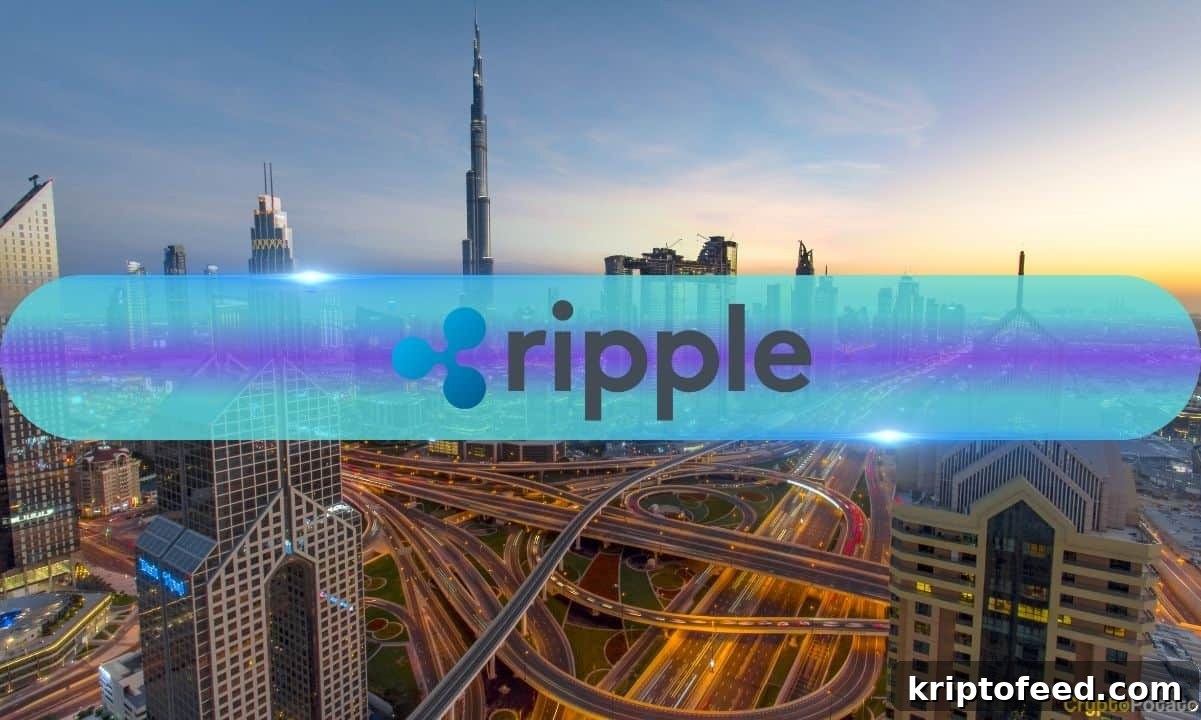
Six years after opening its first office in Dubai, Ripple has strengthened its commitment to the Middle East and Africa by establishing a regional headquarters in Dubai International Financial Centre (DIFC).
The CEO of DIFC described Ripple’s expansion as a clear sign of confidence from leading digital asset firms in Dubai’s role as a global blockchain and fintech hub. The move underscores growing interest from institutional players in regulated, blockchain-based financial solutions located in the city.
Ripple says the new headquarters will allow the company to scale its local team to meet accelerating demand for regulated, blockchain-enabled payments and custody services across the region. The expanded presence is intended to support both existing clients and new partners seeking compliant, enterprise-grade infrastructure.
In an official statement, Ripple noted it first established a Middle East and Africa regional office in Dubai in 2020. Since then, the company has steadily increased its footprint across the Middle East, and the region now accounts for a significant share of Ripple’s global customer base. The new office consolidates that growth and positions Ripple to better serve a wider set of markets in the region.
Beyond opening local offices, Ripple previously received in-principle approval from the Dubai Financial Services Authority (DFSA) to extend its operations inside DIFC. In 2025 Ripple became the first blockchain payments provider to obtain full licensing from the DFSA, and its stablecoin RLUSD gained recognition as a crypto token. Those regulatory milestones helped pave the way for deeper engagement across the UAE and the wider Middle East.
The expanded Dubai headquarters will support Ripple’s work with banks, payment providers, and fintech partners across the Middle East and Africa. Companies already working with Ripple include Zand Bank, Ctrl Alt, Garanti BBVA, Absa Bank, and Chipper Cash. With more local resources, Ripple aims to deliver faster onboarding, improved technical support, and closer regulatory coordination for partners in the region.
“In recent years, the Middle East has become an increasingly vital driver of Ripple’s global growth. Our new regional headquarters is a reflection of our ongoing commitment to playing our part in the region’s upward trajectory. From our earliest days in the UAE, we have seen first-hand the appetite from local businesses for regulated, blockchain-powered payment infrastructure, an appetite that is only growing.
A larger team, based here in Dubai, will enable us to go further in supporting our clients and partners across the region and beyond,” said Reece Merrick, Ripple’s Managing Director for the region.
Establishing the DIFC headquarters reflects a broader trend of fintech and digital asset firms choosing Dubai as a base for regional operations. The combination of regulatory clarity, supportive policy, and a growing ecosystem of banks and technology providers has drawn companies seeking to scale compliant blockchain solutions. Ripple’s move signals both confidence in the market and a willingness to invest in long-term regional engagement.
For clients and partners, the new hub promises more direct access to Ripple’s product teams, shorter response times for implementation and support, and a local point of contact for regulatory and commercial collaboration. As cross-border payment use cases continue to expand across trade corridors in Africa and the Middle East, demand for reliable, regulated blockchain infrastructure is expected to rise—making a local presence an important advantage for providers like Ripple.
Looking ahead, Ripple’s Dubai headquarters will likely focus on deepening relationships with financial institutions, scaling technical integrations for payments and custody, and supporting wider adoption of tokenized currencies and digital settlement rails. The company’s strengthened regional footprint positions it to respond quickly to customer needs and evolving regulatory frameworks while contributing to the region’s broader fintech development.