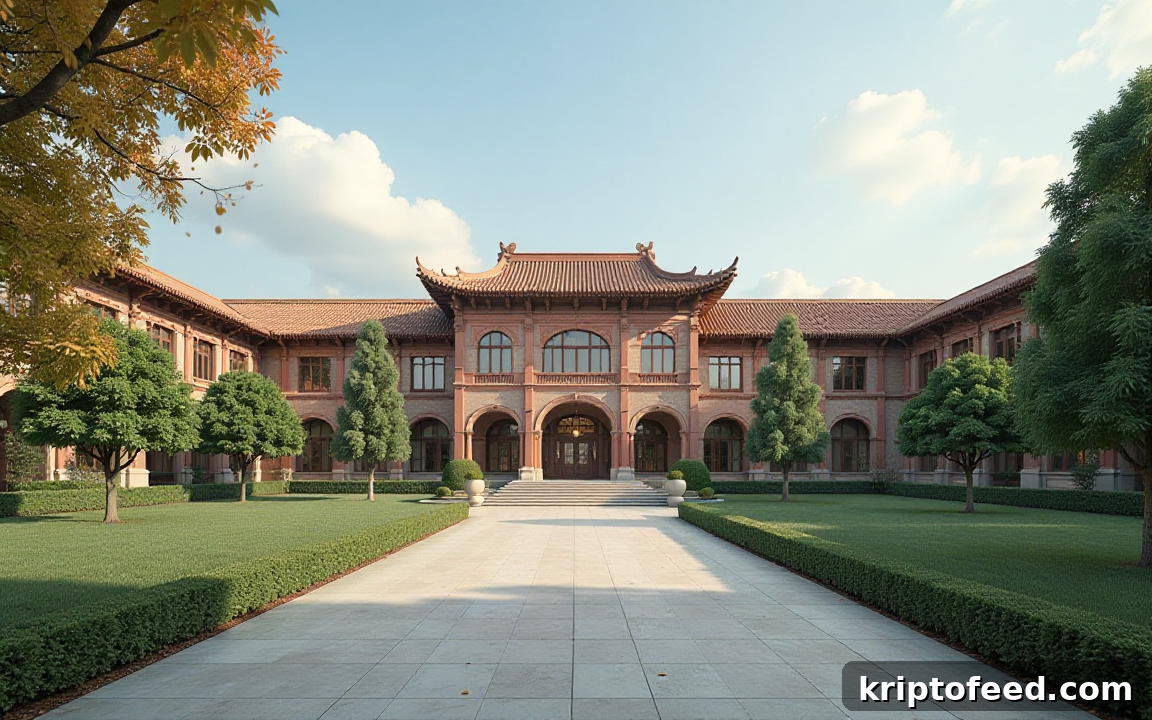
Ripple Labs has announced a new $5 million investment to expand blockchain education and research across the Asia-Pacific region, reinforcing its long-term commitment to developing real-world blockchain applications through academic partnerships.
The new funding, disclosed on June 10, is part of Ripple’s University Blockchain Research Initiative (UBRI), bringing regional support to more than $11 million since the initiative’s launch.
With this expansion, Ripple is strengthening its presence in six countries, deepening existing collaborations in South Korea, Japan, and Singapore, and establishing new partnerships in Taiwan and Australia.
The initiative aligns with Ripple’s broader strategy to cultivate a global talent pipeline in blockchain technology, especially through applied research on the XRP Ledger and related innovations.
Ripple supports student-led innovation across Asia’s leading universities
Ripple places strong emphasis on student-led innovation and academic research, targeting universities known for their strengths in fintech and digital asset studies.
In South Korea, Ripple renewed a $1.1 million partnership with Korea University to fund advanced blockchain research, including projects focused on privacy-preserving technologies such as zk-SNARKs and scalable Layer-2 solutions.
This follows prior collaborations with Yonsei University and Hanyang University, both researching secure blockchain infrastructures and decentralized finance models.
In Japan, Ripple continues to support the University of Tokyo and Kyoto University, where earlier UBRI grants have already exceeded $1.5 million.
These institutions play a key role in exploring next-generation blockchain use cases and directly contribute to the region’s growing prominence in digital innovation.
Taiwan joins the UBRI network with a focus on RWA tokenization
Ripple’s expansion to Taiwan marks an important milestone for the UBRI program, with the National Kaohsiung University of Science and Technology (NKUST) becoming UBRI’s 60th global partner.
The university will investigate tokenization of real-world assets (RWA), an area gaining traction in Taiwan’s financial sector and supported by initiatives from the Financial Supervisory Commission and leading financial institutions.
As part of the grant, NKUST will launch an XRPL Builders Club for students and operate a validator node, offering direct student engagement with blockchain infrastructure.
Research at NKUST will also examine cross-chain implications of asset tokenization across XRPL, Ethereum, and Solana, as well as related policy and compliance challenges.
Singapore expands AI-on-blockchain research
Ripple is also ramping up support in Singapore, where funding now exceeds $3 million across two major institutions: Nanyang Technological University (NTU) and the National University of Singapore (NUS).
At NTU, researchers are building an autonomous AI agent network on the XRP Ledger to develop a transparent, modular system for collaborative AI development using blockchain technology.
Meanwhile, Ripple’s renewed support for NUS will advance initiatives such as the region’s first university-based DAO, which originated with earlier UBRI support.
These projects highlight Ripple’s interest in the intersection of AI, decentralized governance, and real-world blockchain use cases.
Australia sees renewed academic ties and legal research
In Australia, Ripple has expanded its presence by partnering with Victoria University and renewing its long-term relationship with the Australian National University (ANU), raising its total academic investment in the country to $1.3 million.
Victoria University will focus on developing curricula that integrate blockchain into core education programs, helping equip students with industry-ready skills.
At ANU, Ripple’s funding supports ongoing research into blockchain law, virtual assets, and smart contract platforms, including the Layer-2 Evernode project built on XRPL.
Ripple also noted that ANU will continue to publish research through its Journal of Law and Technology while operating an XRPL validator to contribute to the network.
UBRI’s role in Ripple’s broader APAC strategy
The expanded UBRI investment aligns with Ripple’s wider push in the region, which included launching the XRPL Japan and Korea Fund in 2024 and collaborating with Web3 Salon to support XRPL-based startups.
Ripple remains a key investor in HashKey Capital’s XRP Tracker Fund, Asia’s first institutional investment fund focused on XRP.
This year’s UBRI Connect event will be held at the XRP Ledger Apex Summit, with a pre-summit hosted at NUS, underscoring APAC’s growing role in shaping the future of blockchain.
With this $5 million boost, Ripple is not only funding research but also building a strategic foundation for blockchain adoption led by academia and student innovators across Asia.