
- The Polyhedra Network (ZKJ) token plunged 91% following abnormal on‑chain activity.
- Binance cited large holder withdrawals and a liquidation cascade as drivers of the crash.
- An imminent June 19 token unlock may put additional downward pressure on price.
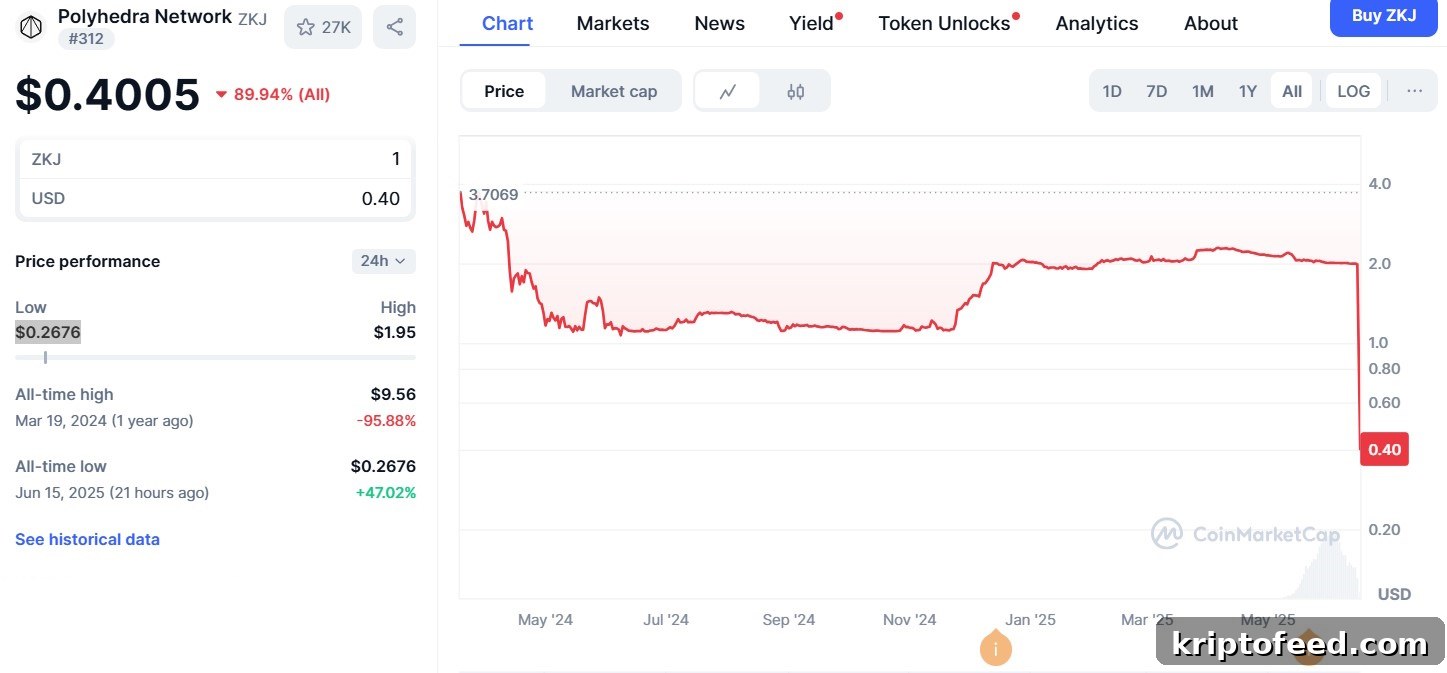
The cryptocurrency market was jolted by a severe collapse in the native token of Polyhedra Network, ZKJ. In under 24 hours the token lost more than 91% of its value, prompting widespread concern from exchanges, investors, and analysts.
ZKJ had traded around $2.00 for more than a month before falling to a record low of $0.2676 on June 15, 2025, erasing roughly $500 million in market capitalization. The sudden decline has highlighted questions about liquidity, tokenomics, and the influence of large holders in decentralized finance.
What triggered the sudden ZKJ price collapse?
The crash began on June 15 after Polyhedra posted on X (formerly Twitter) that a wave of “abnormal on‑chain transactions” targeted the ZKJ/KOGE trading pair. Within hours the token had plunged more than 83% as traders tried to assess the cause.
Binance later attributed the turmoil to a liquidity crisis linked to large withdrawals involving KOGE, a token closely paired with ZKJ. According to the exchange, those withdrawals initiated a liquidation cascade as major wallets began offloading positions.
As KOGE’s USDT pool was drained, trading activity shifted into the ZKJ/USDT pool, which rapidly became overloaded. That sudden migration of liquidity intensified selling pressure and accelerated ZKJ’s decline.
Massive withdrawals and whale activity
On‑chain data shows multiple wallets that had been farming Alpha Points withdrew significant balances prior to the crash. One wallet withdrew more than $3.7 million in KOGE and $530,000 in ZKJ, while two others removed nearly $5 million combined. These large exits are consistent with whale activity that can trigger cascading liquidations across leveraged positions.
As prices dropped, margin calls and forced liquidations added further selling pressure. While some community members have speculated about deliberate manipulation, no major blockchain analytics firm has confirmed such claims. Polyhedra says it is investigating the events and maintains that its core technology remains intact.
Binance changes Alpha Points rules for ZKJ and KOGE
In response to the episode, Binance announced a change to its Alpha Points rewards program. Effective June 17, trades between Alpha token pairs, including ZKJ and KOGE, will no longer count toward Alpha Points calculations. The change aims to reduce systemic risk and discourage concentrated trading activity that can amplify volatility.
Market observers see the policy update as a precaution intended to restore market integrity and limit opportunities for concentrated or coordinated trading that could cause sudden failures.
Upcoming token unlock increases bearish risk
Adding to investor unease is a scheduled unlock of 15.5 million ZKJ tokens on June 19. Valued at roughly $10 million based on prior prices, this distribution would represent more than 5% of the circulating supply and could introduce substantial selling pressure if recipients decide to liquidate holdings quickly.
Analysts warn that the timing of the unlock — coming immediately after a dramatic price collapse — increases the risk of further declines as market confidence remains fragile.
In summary, the ZKJ crash appears to result from a combination of large withdrawals from paired liquidity pools, concentrated selling by major holders, and subsequent liquidation cascades. Regulatory scrutiny, exchange interventions, and the looming token unlock create a challenging backdrop for recovery in the near term.