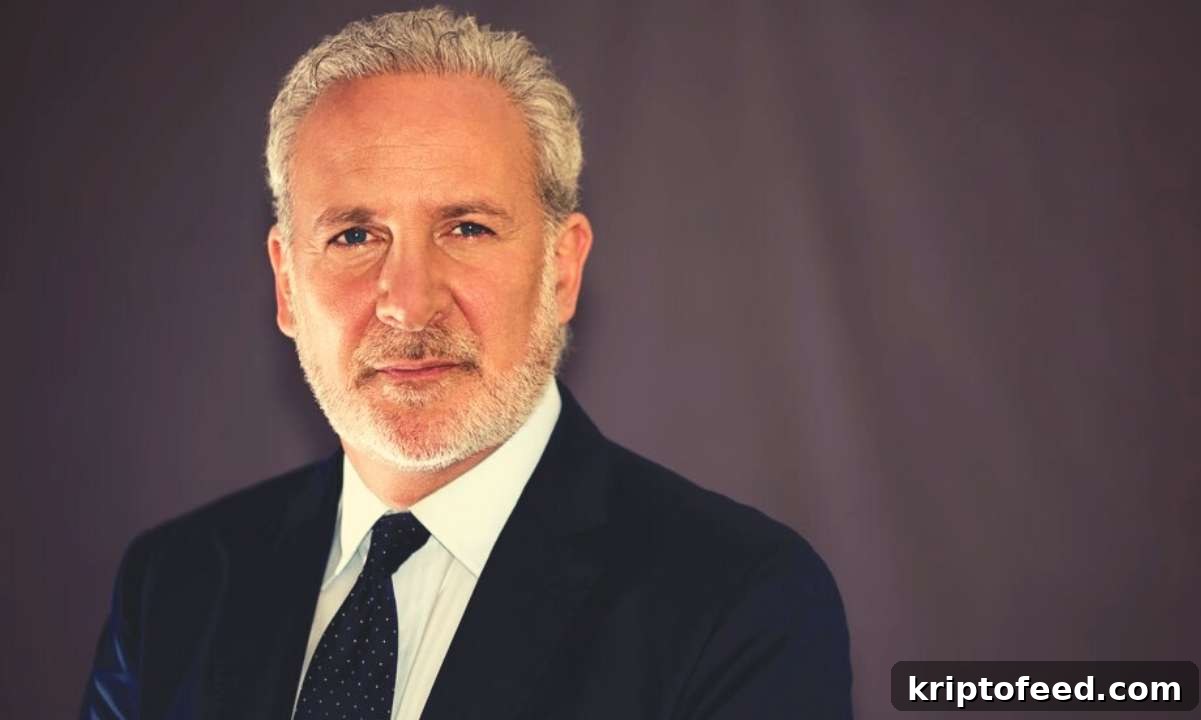
Economist Peter Schiff publicly broke with JPMorgan CEO Jamie Dimon on June 7, arguing that stablecoin issuers should not be held to the same capital and compliance standards as banks.
The comment surprised many, given Schiff’s long-standing reputation as a vocal critic of cryptocurrencies.
Schiff Draws a Line Between Banks and Stablecoin Issuers
In a post on X, Schiff said Dimon wanted crypto companies offering interest-bearing products to face the same capital and compliance requirements as traditional banks — a position Schiff strongly rejected.
“That’s nonsense,” he wrote. “Banks are FDIC insured and make risky loans under a fractional reserve system. Stablecoin issuers don’t.”
When a follower pointed out that this stance appeared inconsistent with Schiff’s history of criticizing crypto for lacking investor protections, he clarified his reasoning:
“Stablecoins have a use case and issuers are not banks, especially if the tokens are 100% backed by dollars and invested exclusively in Treasuries.”
Journalist Eleanor Terrett noted the unusual nature of the exchange, observing on X that it was rare for someone outside the crypto industry to argue that stablecoins should escape bank-level regulation.
Dimon’s comments came during a public interview in late May, where he criticized the CLARITY Act, a bill that had passed the Senate Banking Committee by a 15-9 vote earlier that month.
Dimon’s concerns focused on provisions related to stablecoin yields. He warned those provisions could enable crypto firms to pay interest on deposits without subjecting those deposits to the same protections banks receive and argued the bill lacked adequate anti-money laundering (AML) safeguards.
He also attacked Coinbase CEO Brian Armstrong, who has actively lobbied for the legislation, saying “he’s full of shit.” Armstrong responded that he was “a little perplexed” by Dimon’s remarks but maintained that he still had “a lot of respect” for JPMorgan’s CEO.
Senator Cynthia Lummis, a prominent supporter of the CLARITY Act, accused Dimon of either not having read the bill or attempting to mislead the public. She emphasized that the bill actually extends provisions of the Bank Secrecy Act to digital assets, countering Dimon’s portrayal.
A Fight That Has Been Building for Months
Dimon’s public criticism reflected a broader lobbying effort that has been underway for months. The American Bankers Association, for example, delivered thousands of letters to Senate offices ahead of the committee vote, pressing for changes to the bill’s language around stablecoin yields.
The AML issue has been a major point of contention. The Bank Policy Institute released data showing a sharp rise in illicit crypto activity last year, reporting a 162% increase that brought the estimated total to $154 billion. That report attributed part of the increase to a near-700% rise in value received by sanctioned entities and said stablecoins — particularly Tether’s USDT — accounted for a large share of illicit transaction volume.
Despite his defense of a regulatory distinction between banks and certain stablecoin issuers, Schiff has not softened his overall skepticism of cryptocurrencies. Over the past weekend he ran a poll on X asking followers how far Bitcoin’s price would need to fall before conceding he had been right about the asset.
Schiff has also warned the flagship cryptocurrency could drop markedly if key support levels fail, suggesting Bitcoin might fall as low as $20,000 if it breaks below $50,000. Currently, Bitcoin has rebounded above $63,000 after experiencing a significant slide that previously pushed it to a roughly 19-month low near $59,000.