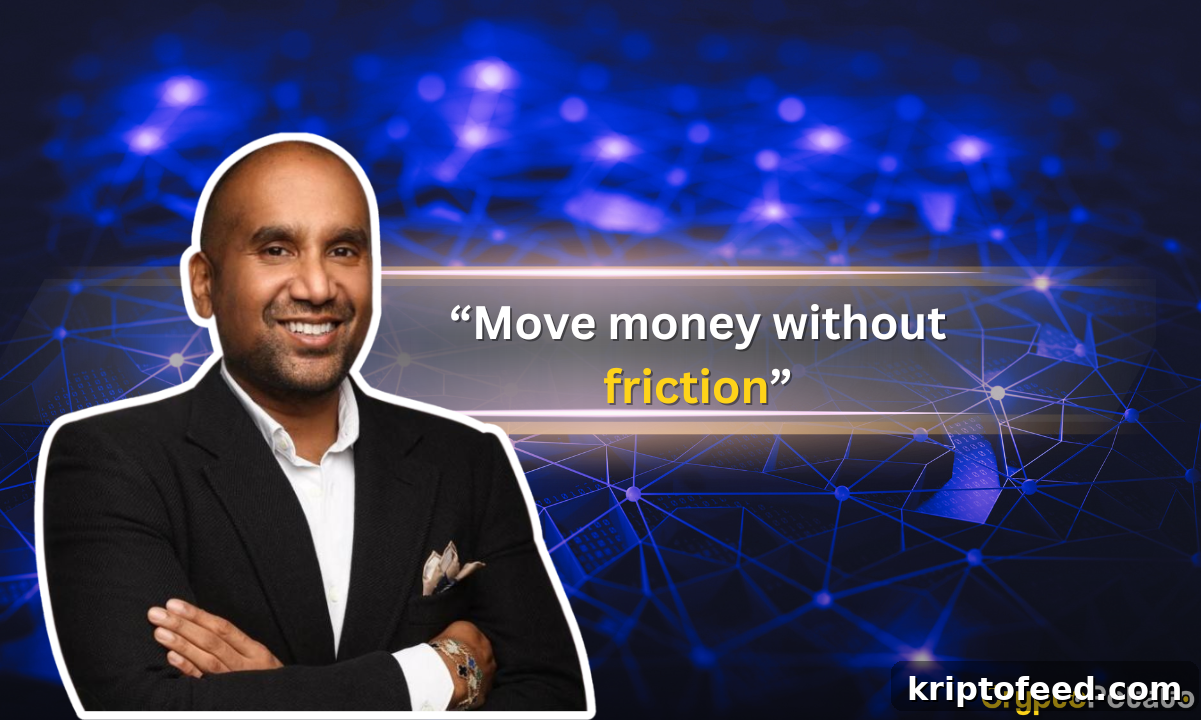
As financial infrastructure evolves, the boundaries between traditional banking, payments, forex, and digital assets are increasingly blurred. Companies operating internationally need faster, more transparent ways to move money across currencies, markets, and platforms.
To examine how this evolution is reshaping financial services, we spoke with Lux Thiagarajah, Chief Commercial Officer at OpenPayd.
With a career that includes FX trading at J.P. Morgan, senior roles at institutions like HSBC, and leadership positions at digital-native firms such as BCB Group and FalconX, Lux brings a distinctive perspective on the convergence of legacy finance and modern fintech infrastructure.
In the interview below, he explains how his trading background informs his approach to payments, why unified financial infrastructure is becoming essential for global businesses, and where the next phase of fintech growth is likely to come from.
You began your career as an FX trader at J.P. Morgan before moving into senior leadership roles across trading and payments. How has that trading background shaped the way you think about payments infrastructure and financial services today?
My trading background has most of all shaped my view on efficiency and timing.
On a trading desk, execution is everything. Speed matters, pricing matters, and small inefficiencies compound quickly. Delays in settlement or unclear costs directly affect profitability. That same mindset applies to payments today.
When I evaluate payments infrastructure, I look for systems that are fast, transparent, and predictable. Much of the legacy system still relies on delayed processes, opaque FX spreads, and multiple intermediaries. While that approach may have worked in the past, it no longer fits the needs of modern businesses.
Trading also taught me the critical role of liquidity. Whether in FX markets or payments, access to liquidity at the right time and in the right currency determines overall efficiency. The convergence between fiat liquidity and stablecoin liquidity is therefore a pivotal development for financial services.
You’ve worked across traditional institutions like HSBC and newer digital-native companies such as FalconX and BCB Group. What are the biggest structural differences you’ve observed between legacy financial systems and modern fintech infrastructure?
The biggest difference is not only technology but mindset.
Legacy financial systems were built for a different era. They are trusted and resilient, but rigid. Many processes are batch-based, infrastructure is fragmented, and change is slow because systems have been layered over decades.
By contrast, modern fintech infrastructure is designed for flexibility from the outset. It’s API-first, modular, and built to scale across markets quickly. Instead of stitching together multiple providers, fintechs create a unified layer that orchestrates activity behind the scenes.
Another distinction is problem-solving approach. Traditional institutions often optimize within existing frameworks, while fintechs are more willing to rethink the model entirely. That’s why we’re seeing infrastructure that links payment rails, FX, and digital assets in a unified way instead of treating them as separate systems.
Over time it’s become clear that neither side can succeed alone. The future lies in combining the resilience and trust of traditional finance with the speed and flexibility of modern infrastructure.
As Chief Commercial Officer at OpenPayd, you’re responsible for growth among new and existing clients. What capabilities are fintechs, exchanges, and digital platforms now looking for in payments partners?
Clients are no longer satisfied with a single payment rail or point solution. They want infrastructure that scales with them without constant re-engineering. That means access to accounts, payments, FX, and increasingly digital assets, all through a single integration. The era of patching together multiple providers for different functions feels outdated.
Reliability has become paramount. When payments are central to a product, there is zero margin for error. It’s not only about speed but about consistency and control at scale.
Optionality is also critical. Clients do not want to be locked into a single rail or model. They want the ability to route transactions via the most efficient route—whether traditional rails or newer settlement methods like stablecoins—without adding operational complexity.
Embedded finance and programmable payments are major trends in fintech. How will these trends reshape relationships between platforms, financial institutions, and end users over the next few years?
Embedded finance changes how financial capabilities are delivered: instead of being accessed independently, they are built into platforms and become part of the product itself. Programmable payments extend this by automating money flows, reducing manual tasks, and improving efficiency at scale.
The roles are becoming clearer: platforms own the user experience, infrastructure providers handle the complexity behind the scenes, and banks provide the regulatory foundation.
For users, the experience will feel seamless. For businesses, embedded finance and programmable payments provide greater control over how money moves through their ecosystems.
OpenPayd operates at the intersection of payments, banking, and digital assets. How important is unified financial infrastructure for companies operating globally, especially those scaling across multiple jurisdictions?
Unified infrastructure is becoming essential. Global businesses contend with different banks, payment rails, regulatory frameworks, and now different asset types. Each added layer increases complexity, and that complexity does not scale well.
A unified platform simplifies the environment. It enables businesses to access local and international payments, FX, and digital assets through a single framework rather than creating separate systems for each market or use case.
The operational value of unified infrastructure lies in consistent, standardized processes for compliance, reporting, settlement, and treasury management across regions. That consistency unlocks scale. Without it, expansion into new markets is slower, costlier, and more operationally complex than necessary.
Strategic partnerships are central to your role. What makes a partnership truly valuable in today’s fintech ecosystem, and how should companies think about long-term collaboration rather than simple integrations?
Valuable partnerships hinge on alignment. Is the objective solving a short-term need, or are both parties working toward a shared, long-term goal? The most successful partnerships are those where each side brings capabilities the other cannot easily replicate—whether distribution, regulatory coverage, or technical expertise.
Trust is also fundamental—not only in compliance but in day-to-day operations. In a fast-moving environment, circumstances change. Partnerships that endure are those that adapt without constantly renegotiating core terms.
Looking ahead, what will define the next phase of growth for fintech infrastructure providers, and where do you see the biggest opportunities for companies like OpenPayd in the next 3–5 years?
The next phase will be defined by convergence across financial infrastructure. Many core building blocks are already in place: stablecoins have shown they can operate at scale, APIs are becoming standard, and regulatory frameworks are getting clearer. The real challenge is integrating these components so the experience feels simple for end users.
The opportunity lies in orchestration. The underlying rails exist but remain fragmented. Providers that can unify those rails and abstract complexity will become the backbone of global financial services.
For OpenPayd, this means continuing to develop universal financial infrastructure that enables businesses to move money globally—across fiat and digital assets—without friction.
Disclaimer: This interview is provided for informational purposes only and does not constitute financial advice, an investment recommendation, or an endorsement of any project, protocol, or asset. Cryptocurrency markets are volatile and carry risk. Readers should perform their own research and consult qualified professionals before making financial decisions. This interview was conducted with OpenPayd, who contributed time and insights. The content has been reviewed and approved for publication by both parties, and minor edits were made for clarity and readability while preserving the original substance and tone.