- Researchers have identified cost savings in early tokenized systems.
- Smart-contract chains can amplify local problems into wider shocks.
- Tokenized assets now form a global market worth billions.
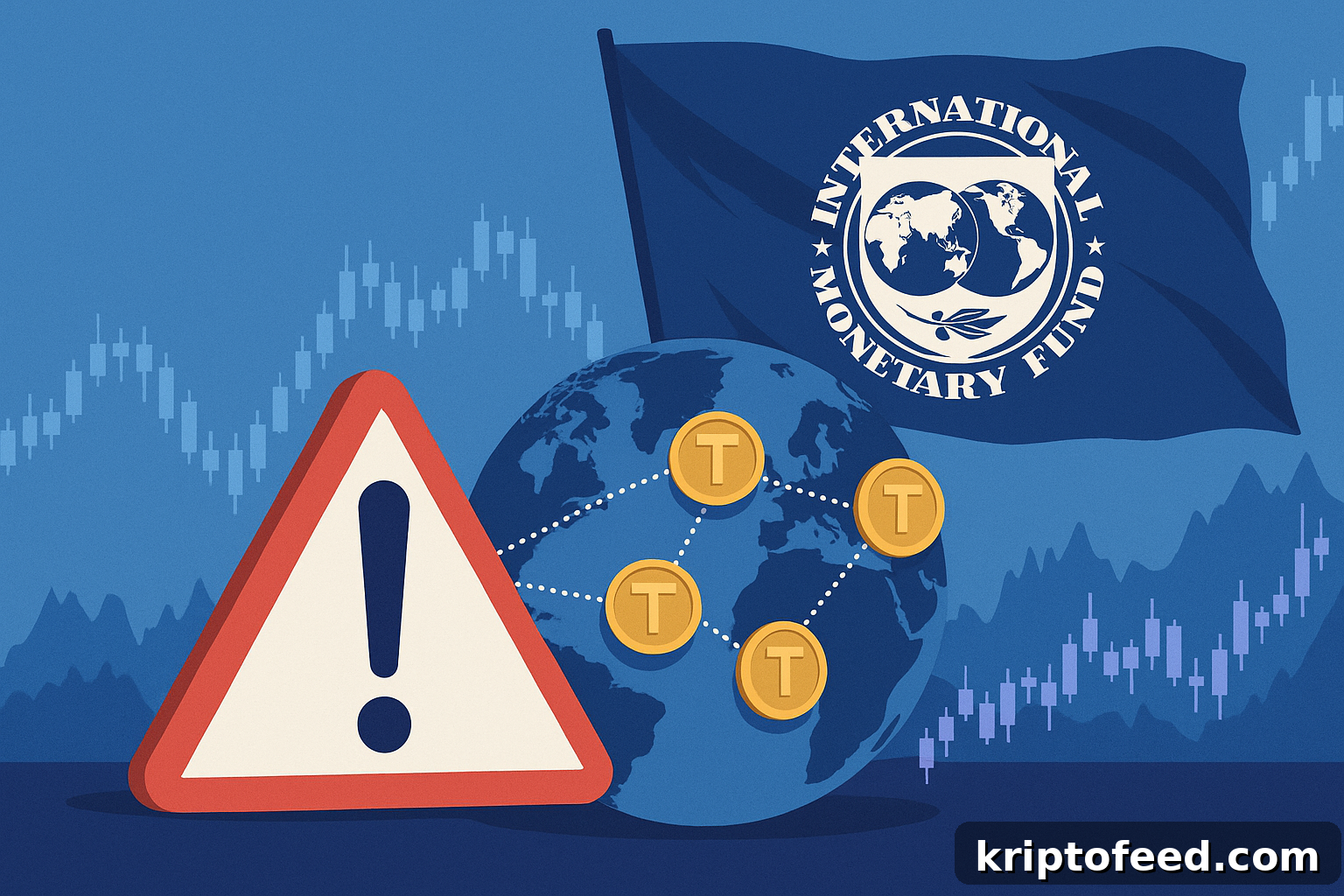
The IMF released a new video on its X account today that places tokenized markets at the center of a major shift in how global finance operates.
Rather than framing tokenization as a niche experiment, the Fund presents it as a structural development already influencing policy debates, investor behavior, and the future shape of cross-border markets.
The video also highlights that new digital frameworks can introduce vulnerabilities, accelerate market shocks, and prompt governments to take a more active role in managing monetary transitions.
How tokenization is changing market plumbing
The IMF video describes tokenization as the next step in the long transformation of money.
It emphasizes how digital tokens can replace extended chains of intermediaries that today handle verification, settlement, and record-keeping.
Clearinghouses and registrars are supplanted by functions encoded directly into software, allowing assets to move between holders more quickly.
Early studies cited in the video show meaningful cost savings in tokenized environments.
Those savings stem from programmability, near-instant settlement, and more efficient use of collateral.
The IMF frames these features as changes to the core mechanics of financial markets, altering how value circulates through the system.
Why the IMF says risks are rising
Alongside these benefits, the IMF points to increased exposure to volatility.
Automated trading has already produced sudden crashes—so-called flash crashes—and the video warns these events could intensify as markets become more directly automated.
Faster execution leaves less time for human intervention, increasing the likelihood that sharp swings will propagate across platforms.
The video also focuses on risks embedded in complex smart-contract chains.
When multiple layers of code interact under stress, small disruptions can cascade into broader failures.
The IMF likens this behavior to falling dominoes: a single fault can trigger a wider shock.
Market fragmentation is another concern. If competing tokenized platforms evolve without shared standards, they may not interoperate smoothly.
The IMF warns that fragmentation could constrain liquidity and erode the efficiency gains tokenization promises.
Governments and the history of monetary change
The IMF situates today’s wave of tokenization within the longer arc of government involvement in monetary transitions.
It highlights the 1944 Bretton Woods agreement, when global powers redefined the monetary order by fixing exchange rates to the U.S. dollar and linking the dollar to gold.
That top-down architecture shaped international finance for a generation.
The system collapsed in the early 1970s as mounting fiscal pressures made the gold link untenable.
The shift to fiat currencies and floating exchange rates changed how economies managed deficits and cross-border flows.
By invoking these episodes, the IMF underscores that governments rarely remain passive when new forms of money emerge.
Public authorities have historically intervened—sometimes reshaping markets and institutions—to manage risks, preserve stability, and maintain effective monetary transmission. The video suggests that similar dynamics are likely to play out as tokenized assets and infrastructure gain scale.
Overall, the IMF frames tokenization as a consequential evolution in finance: one that offers efficiency and cost benefits but introduces new channels for volatility, operational risk, and fragmentation. Policymakers, market participants, and infrastructure providers will need to balance innovation with safeguards to ensure that the transition supports resilient and inclusive global markets.