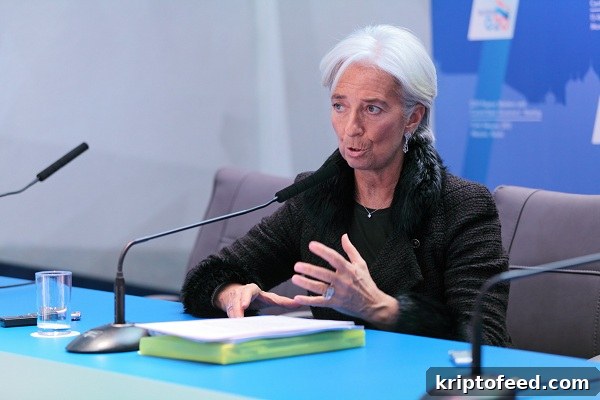
- IMF Managing Director Kristalina Georgieva urged global preparedness for central bank digital currencies (CBDCs) at the Singapore FinTech Festival.
- CBDCs are positioned as a potential replacement for cash, improving resilience and promoting financial inclusion.
- The IMF released a CBDC virtual handbook and recognized the Bank for International Settlements’ role in global digital finance experiments.
At the Singapore FinTech Festival, International Monetary Fund (IMF) Managing Director Kristalina Georgieva delivered a clear call for countries to prepare for the eventual rollout of central bank digital currencies (CBDCs). While she acknowledged that widespread adoption is not imminent, she noted that roughly 60% of countries are already exploring CBDCs in some form, signaling increasing global interest.
CBDCs as a viable alternative to cash
Georgieva highlighted the ways CBDCs could serve as a practical alternative to physical cash. In advanced economies, CBDCs can strengthen payment system resilience; in economies with large unbanked populations, they can expand access to formal financial services. She stressed that CBDCs should complement, not necessarily replace, private forms of money—offering a secure, cost-effective option within a diverse monetary ecosystem.
The IMF chief emphasized the importance of robust technological infrastructure for CBDC projects, including strong safeguards for personal data. She also suggested exploring how artificial intelligence (AI) might enhance national digital currencies, while urging that CBDC designs prioritize efficient cross-border payments to address current frictions such as cost, latency, and limited accessibility.
Her remarks come as concerns persist that CBDCs could be targeted by money launderers and cyber criminals, underscoring the need for careful risk assessment and protective measures.
IMF’s CBDC virtual handbook and cooperation with BIS
At the festival, Georgieva unveiled the IMF’s CBDC virtual handbook, a resource intended to guide policymakers through key design choices, technical considerations, and regulatory issues. The handbook aims to support countries at different stages of CBDC exploration by providing practical guidance and policy options.
She also acknowledged the Bank for International Settlements (BIS) for its active role in helping central banks test and experiment with digital money. The IMF has been collaborating with international partners to analyze necessary regulatory frameworks for crypto and digital assets, including the development of a crypto-risk assessment matrix (C-RAM) to help jurisdictions identify and manage risks in the cryptocurrency sector.
Joint work by the IMF and BIS, summarized in a Synthesis paper, received unanimous endorsement from the G20 Finance Ministers and Central Bank Governors Communique in October, reflecting growing international momentum to shape a coordinated approach to the future of digital finance.
Georgieva’s message at the festival was pragmatic: CBDCs present significant opportunities for resilience and inclusion, but realizing those benefits requires deliberate design, strong governance, international cooperation, and vigilant attention to privacy and security risks.