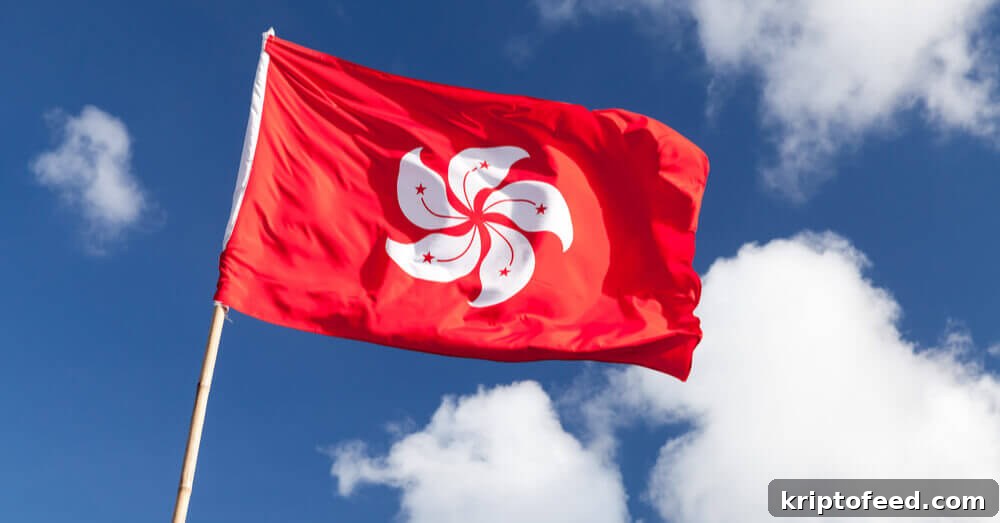
Hong Kong Securities and Futures Commission Says All Crypto Platforms Operating in the City Must Be Regulated
Speaking today at FinTech Week, Ashley Alder, CEO of Hong Kong’s Securities and Futures Commission (SFC), announced that new rules will require all crypto trading platforms operating in the city to be regulated. The scope of the regulation will include cryptocurrency exchanges that do not trade securities.
Until now, the SFC applied an “opt-in” regulatory approach for crypto exchanges, allowing platforms present in Hong Kong to voluntarily enter the regulatory framework. Under that policy, platforms were expected to offer trading in more than one token to qualify for the regime.
In a previous SFC statement, the regulator noted: “Platforms operating in Hong Kong that offer trading in at least one security token may now apply to be licensed by the SFC.” That position effectively limited oversight to platforms dealing in tokens the regulator deemed securities.
Alder said the opt-in model had left gaps that allowed some exchanges to operate without any formal regulatory oversight. He added that the SFC plans to introduce an updated licensing regime under the anti-money laundering (AML) ordinance to close those gaps.
“Once this new regime is in place, all virtual asset trading platforms in Hong Kong will be regulated, supervised and monitored under one of two regimes: the existing opt-in framework we introduced last year, or the new licensing approach announced today. Failure to meet this requirement would, of course, be an offense,” Alder said.
Multiple international exchanges have business operations or a presence in Hong Kong, including Huobi, OKEx and BitMex. These three platforms have attracted negative headlines recently, highlighting the risks and compliance challenges in the industry.
BitMex co-founders are currently facing charges in the United States related to alleged regulatory breaches, which brought significant scrutiny to that exchange’s operations.
OKEx was hit by turmoil after the arrest of its founder, Mingxing “Star” Xu, a bit over two weeks ago. That arrest disrupted the exchange’s operations and was followed by reports claiming more than 200,000 BTC were affected as a consequence of the disruption. The numbers reported vary across sources and remain subject to verification.
There were also rumors that senior executives at Huobi had been detained. Huobi, which was founded in China and later moved its headquarters to Singapore, publicly denied those claims. In a statement posted on Twitter, Huobi Global said: “Huobi Global is operating normally. We have seen rumors circulating within our community regarding the arrest of a senior Huobi executive by local authorities. We can confidently share that these rumors are false.”
The SFC’s announcement marks a notable shift toward broader, mandatory regulation of virtual asset trading in Hong Kong. By moving from a voluntary opt-in model toward an explicit licensing requirement under AML legislation, the regulator aims to strengthen oversight, close enforcement gaps, and reduce the potential for unregulated activity.
For market participants, the change signals that exchanges and trading platforms with any form of presence in Hong Kong should prepare for heightened regulatory requirements and closer supervision. The SFC’s two-track approach gives some continuity to platforms already operating under the opt-in regime while offering a more comprehensive licensing pathway for all other virtual asset trading platforms.
Regulators globally have been intensifying scrutiny of cryptocurrency markets, focusing on consumer protection, anti-money laundering controls and market integrity. Hong Kong’s decision to expand mandatory regulation aligns with that broader trend and reflects growing concerns about unregulated trading venues operating under ambiguous or voluntary frameworks.
As the SFC develops the details of the new licensing and AML-based regime, platforms operating in or targeting Hong Kong users should monitor regulatory guidance closely and assess their compliance posture. Noncompliance, as Alder stressed, will be treated as an offense and could carry legal consequences.
Market participants and stakeholders can expect further announcements from the SFC clarifying the implementation timeline, application requirements and the practical implications for both local and international virtual asset trading platforms that maintain operations linked to Hong Kong.