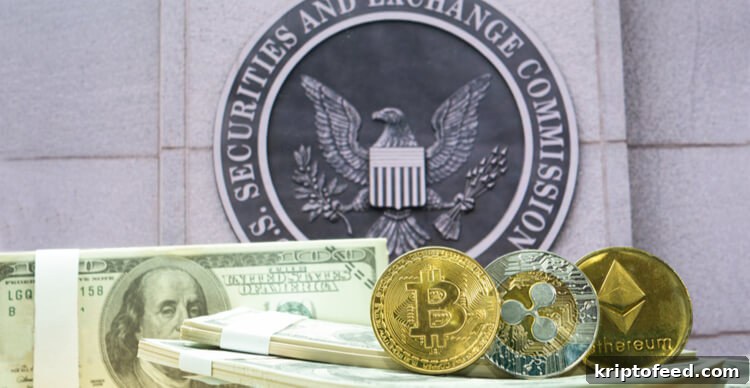
According to Hester Peirce, a commissioner at the U.S. Securities and Exchange Commission (SEC), the cryptocurrency market has matured and it would be unwise for the U.S. government to try to ban it.
Hester Peirce, the SEC commissioner widely known as “Crypto Mom,” recently said the crypto market has reached a level of maturity because of increased institutional interest, making any attempt by the U.S. government to prohibit it both impractical and ill-advised.
She made these remarks during an interview with Barron’s over the weekend. According to Peirce, growing involvement from major institutions in the traditional financial industry is a clear sign that the crypto market is maturing. She noted that the industry is now producing many “exchange-traded-like” products, such as ETPs, which are an important indicator of a developing market.
Some of those exchange-traded-like products include investment vehicles such as Grayscale Investments’ Bitcoin and Ethereum trusts, which have become very popular with institutional investors.
Canada’s approval of Bitcoin ETFs could help the U.S. make its decision
The SEC is currently reviewing eight Bitcoin ETF applications filed by VanEck Investment, WisdomTree Investment, NYDIG, Valkyrie, SkyBridge Capital, Simplify, Kryptoin and Fidelity.
Historically, the commission has rejected Bitcoin ETF proposals, so Peirce was asked whether the situation might be different this time. She said the market’s increased maturity and the participation of serious investors could address some of the SEC’s previous concerns about the underlying market.
Peirce also pointed out that Canada recently approved a number of Bitcoin ETFs, which could provide useful market data and real-world examples for the SEC to observe.
“Recently, Canada rolled out a few new exchange-traded products, and seeing how those perform is helpful,” she added.
Peirce emphasized that the cryptocurrency market is not the same as traditional financial markets. She argued that crypto will never fully resemble the stock market, so applying the existing regulatory framework designed for other markets to evaluate the viability of a Bitcoin ETF may not be ideal.
Her comments highlight a broader conversation within regulatory circles about how best to oversee digital assets while recognizing the sector’s evolving structure and growing institutional involvement. As the SEC continues to review the pending ETF applications, input from market developments abroad and the emergence of exchange-compatible crypto products are likely to play a role in shaping future decisions.