- The exchange partnered with Ripple to launch a limited-edition credit card.
- Users will enjoy up to 4% XRP cashback on everyday purchases.
- Ripple’s RLUSD stablecoin simplifies access to crypto.
As cryptocurrencies become more integrated into everyday financial activity, trading platform Gemini has teamed up with Ripple to release an XRP-based credit card.
The limited-edition metal card aims to streamline transactions for the Ripple community, enabling cardholders to earn instant crypto rewards every time they swipe.
Instead of traditional rewards models that pay out monthly in cash or points, Gemini offers up to 4% cashback in XRP distributed immediately after transactions.
Meet the Gemini Credit Card, XRP edition.
Designed for enthusiasts, this limited edition metal card gives up to 4% back in XRP instantly. No waiting, just stacking.
Available now 👀 pic.twitter.com/KU1bX7NvDS
— Gemini (@Gemini) August 25, 2025
The limited-edition card is currently available to users in the United States, and applications open today.
Spending in the Digital Age
The Gemini XRP Credit Card turns everyday purchases into effortless crypto-earning opportunities.
Imagine earning XRP tokens every time you buy groceries.
You can pay bills in dollars and receive instant crypto rewards credited to your account.
The rewards structure includes:
- 4% back in XRP for electric vehicle charging, ride-sharing, and fuel.
- 3% XRP rewards at restaurants and dining establishments.
- 2% XRP back on groceries.
- 1% back in XRP on all other everyday purchases.
Introducing the @Gemini Credit Card XRP Edition
→ $RLUSD now supported for US spot trading
→ Simplified trading, no extra conversion fees
→ Fast and simple access to crypto and stable value
→ Special-edition design for the XRP community https://t.co/gdNJIPWMcq— Ripple (@Ripple) August 25, 2025
Crypto enthusiasts can use this setup to passively accumulate XRP tokens.
The digital card turns routine spending—like grocery runs, lunches, and refueling—into crypto investments.
RLUSD Simplifies Trading
The XRP credit card launch comes alongside a significant update within the Gemini ecosystem.
The crypto exchange has officially integrated Ripple’s RLUSD stablecoin to support spot trading in the U.S.
Individuals can access the stable token without incurring extra conversion fees.
This integration streamlines how users move RLUSD, XRP, and other digital assets on the exchange.
The stablecoin enhances Gemini’s offering with a simplified stable value and crypto-based incentives.
The XRP card and Gemini’s stablecoin support underscore a broader trend: digital assets becoming practical for everyday use.
Why Timing Matters
This move follows Ripple gaining regulatory clarity after concluding its long-running dispute with the U.S. Securities and Exchange Commission.
Additionally, U.S. regulatory policy has evolved to provide more support for the crypto sector.
Legislation signed by the government granted clearer rules for digital asset innovation, particularly for stablecoins, helping pave the way for institutional adoption.
The XRP credit card reflects the maturation of the crypto market.
An industry that began as an experimental niche has transformed into mainstream financial infrastructure, with traditional offerings now incorporating crypto benefits.
Recent partnerships, such as agreements to distribute RLUSD in international markets, further highlight expanding real-world use cases.
XRP Price Outlook
The native Ripple token traded lower amid a broader market downturn.
Over the past 24 hours it fell about 2% to $2.95.
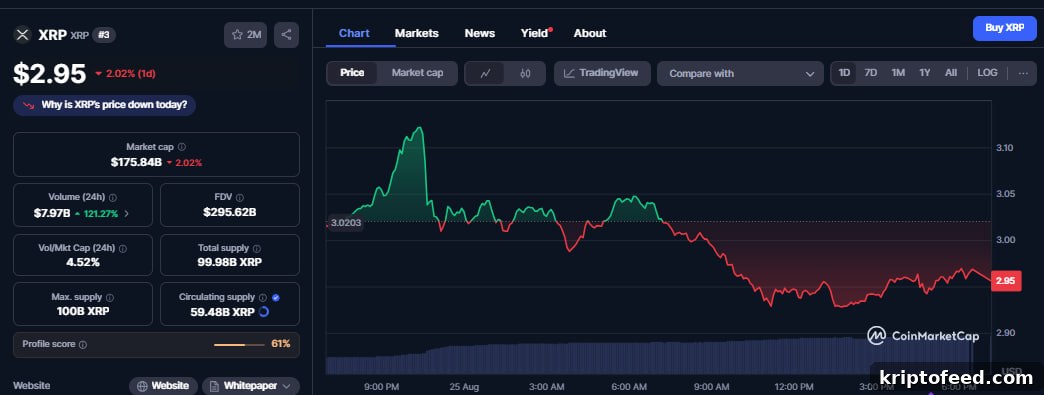
While bearish sentiment has pressured short-term trends, analysts point to promising longer-term prospects for XRP based on its practical utility in cross-border payments.
The resolution of the Ripple vs. SEC case has also increased XRP’s institutional appeal.
Companies seeking regulated digital assets to enter the crypto space may be more likely to choose XRP.
Some analysts anticipate XRP could reach $5 in 2025 and continue appreciating in subsequent years, assuming favorable market conditions and continued adoption.