The Bitcoin market remains highly speculative, with its price constantly shifting. After a decline earlier last week, the cryptocurrency climbed by more than $2,000 in a single day, reaching roughly $8,400. Decisions by international authorities continue to influence Bitcoin’s value. With the recent comments from the head of the European Central Bank, a significant impact on the market could follow.
Specifically, the president of the ECB publicly suggested that European banks might hold Bitcoin following developments in Bitcoin futures trading on U.S. exchanges.
Cryptocurrencies discussed at the European Parliament meeting
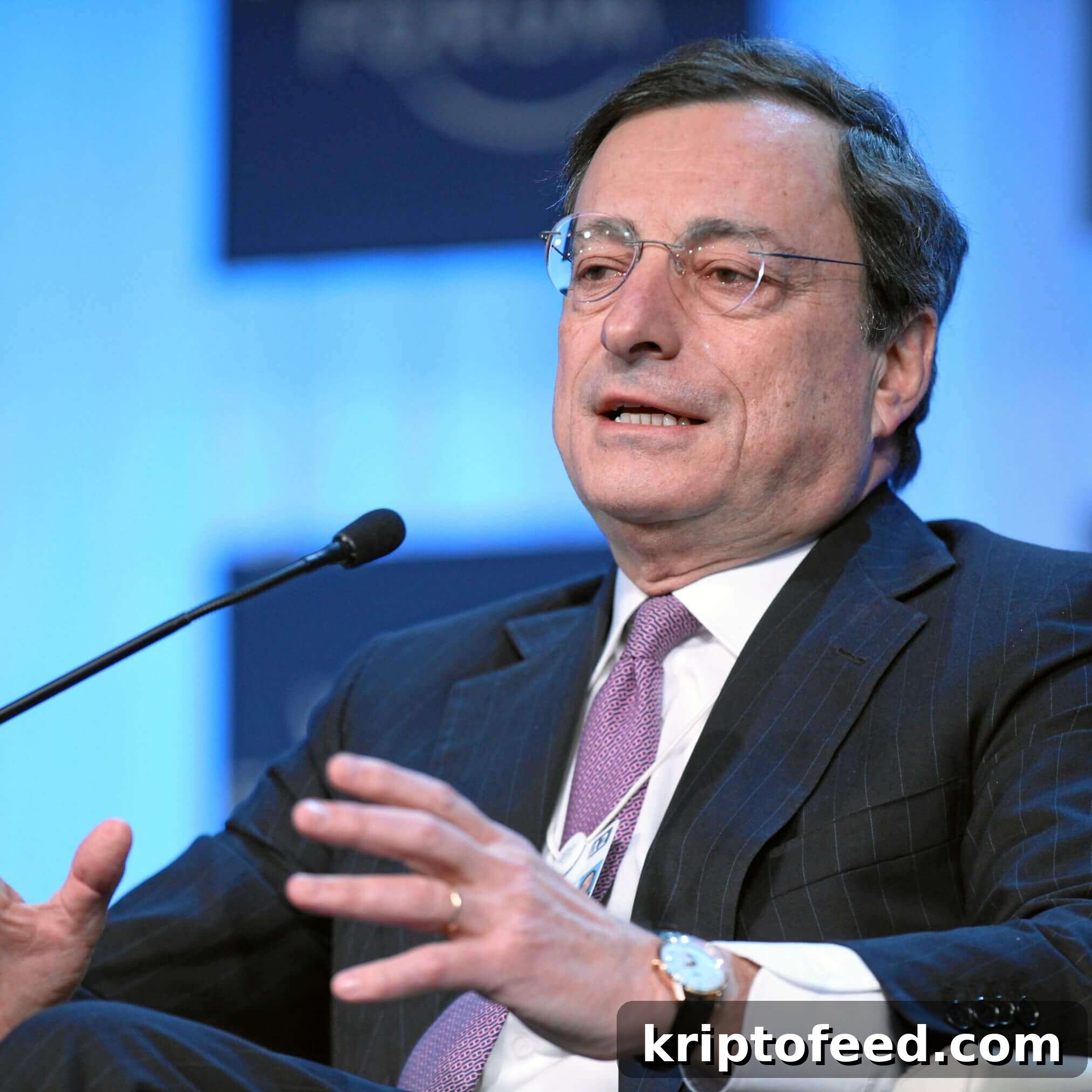
ECB President Mario Draghi used the European Parliament meeting as an opportunity to address digital currencies. He noted that, despite growing public interest, the European Union has not shown strong enthusiasm for cryptocurrencies such as Bitcoin.

Draghi added that this stance might evolve as digital currencies become integrated into traditional financial systems. His remarks are notable, given that European authorities still regard Bitcoin and other cryptocurrencies as highly risky assets.
Establishing a monitoring framework
The ECB president emphasized that banks should anticipate and manage risks if they opt to include cryptocurrencies in their portfolios. He also pointed to the need for consistent oversight to limit the systemic and operational risks associated with crypto holdings.
Draghi has previously stated that the ECB lacks the authority to directly regulate Bitcoin, and his past comments reflect a cautious position. In October 2016 he observed that the cryptocurrency market was not yet mature enough to warrant ECB regulation. In a follow-up in November, he described Bitcoin as relatively limited and not posing a direct threat to central banks.
Overall, the ECB’s evolving language signals growing attention to how digital assets could intersect with mainstream finance. Market participants and regulators will likely continue monitoring developments—such as futures trading and institutional custody solutions—that could encourage European banks to hold cryptocurrencies while prompting the design of supervisory measures to manage associated risks.