
Key points
- ETH is down 5.5% and is now trading below $2,900.
- Major altcoins could see further losses in a bearish market environment.
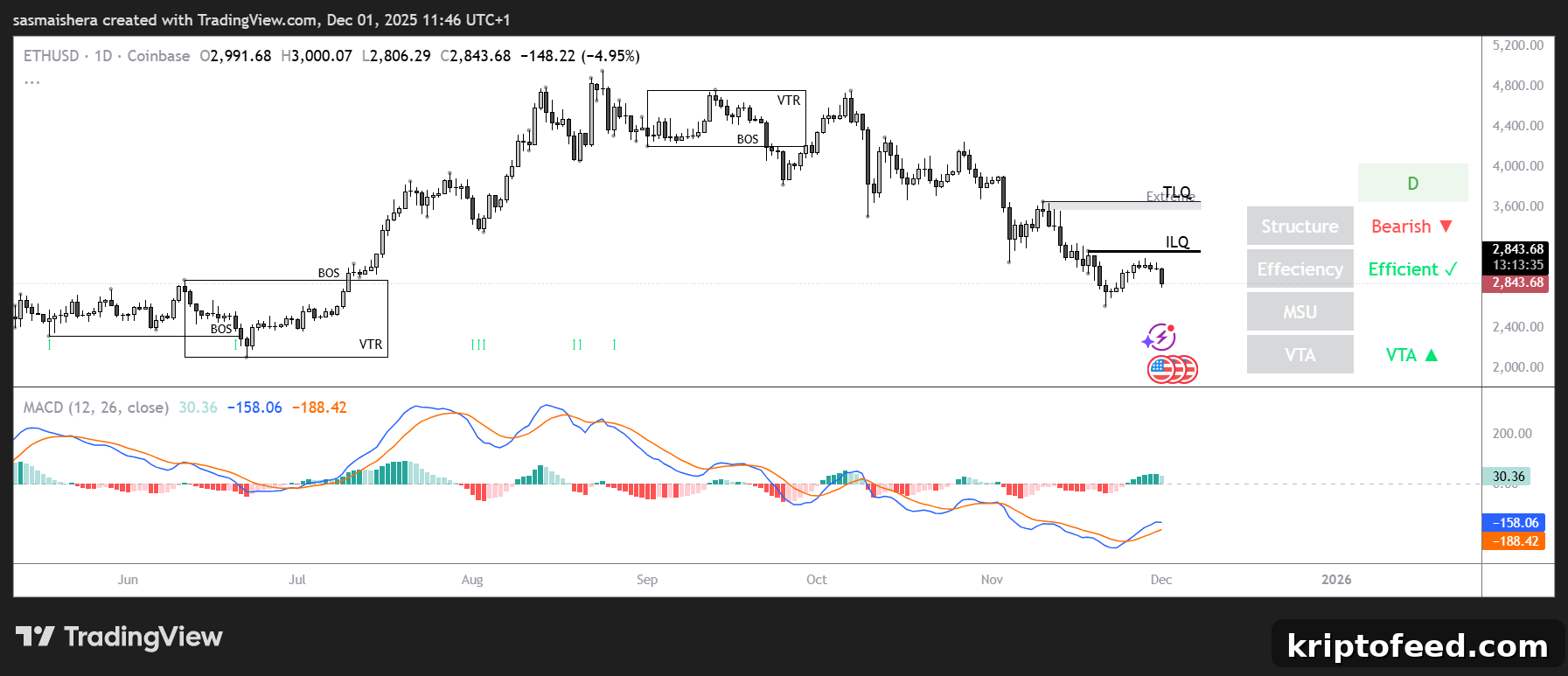
The cryptocurrency market is entering another downbeat month after Ether and other major coins posted weak performances in November. Ether briefly recovered last week, testing the psychological $3,000 level, but recent gains have been erased as selling pressure resumed.
Ether is currently trading near $2,800 after losing roughly 5.5% of its value over the past 24 hours. That decline contributed to more than $140 billion being wiped from the overall crypto market capitalization during the same period, leaving total market cap below $3 trillion.
The downturn also triggered leveraged liquidations exceeding $500 million within the last 24 hours, with Binance, Bybit and Hyperliquid accounting for about 90% of those liquidations.
Ether and other large-cap cryptocurrencies may face additional selling pressure in the short term. Yet upcoming monetary policy events could temporarily alter that outlook: the Federal Open Market Committee (FOMC) meeting next week could provide relief for crypto markets if the Fed signals or implements a rate reduction for the third time this year.
Ether could retest the $2,600 low
The daily ETH/USD chart remains bearish and effective as Ether has underperformed over recent sessions. The token has declined about 5.5% since Sunday and is trading around $2,840.
If the daily candle for ETH/USD closes below the November 21 low of $2,623, bears may push prices lower in the coming hours or days. The next significant support level sits near the June 22 low of $2,111.
Technical indicators continue to favor sellers. The 14-day RSI is near 34, signaling that bears are in control, while the MACD is approaching a potential bearish cross below its signal line, which would reinforce the negative outlook for Ethereum.
However, if buyers step back in following the recent market sell-off, Ether could challenge the downtrend and attempt a rebound toward the $3,000 psychological level. Any sustained recovery would likely depend on easing macro conditions and reduced rate-hike expectations from major central banks.