
The scheduled upgrade to Ethereum’s source code, planned for this week, has been postponed to avoid potential issues. The change — which could have resulted in a new hard fork of the original ETH chain (a major fork in the past produced Ethereum Classic) — will not take place this week. The announcement triggered a small drop in the price of ether, which has been declining for several days. Below we analyze the situation and explain more about one of Ethereum’s most significant software updates in recent years.

Developers proceed with caution
According to a statement published on the official Ethereum blog and later shared on social media, core Ethereum developers are reviewing several potential vulnerabilities before implementing the changes. These issues were identified by ChainSecurity, a company that specializes in blockchain security and smart contract audits. Developers will study ChainSecurity’s report and “update the community through social channels.” For now, the upgrade will not occur this week. The team has scheduled another meeting for Friday to make a final decision.
[SECURITY ALERT] #Constantinople upgrade is temporarily postponed out of caution following a consensus decision by #Ethereum developers, security professionals and other community members. More information and instructions are below. https://t.co/p2znO8HGxf
— Ethereum (@ethereum) January 15, 2019
What vulnerabilities were detected?
Security experts carried out a thorough review of the upgrade and found vulnerabilities related to how certain contracts operate. These findings were shared in the statement and are summarized below:
- Certain contracts already on the chain may use code patterns that would make them vulnerable to a reentrancy attack following the fork. Such recursive attacks typically occur when many calls are made before the system can complete a prior instruction.
- Those smart contracts would only become vulnerable after the upgrade.
- The proposed improvement EIP-1283 would lower the GAS cost for SSTORE operations.
For most users the changes will be transparent. However, node operators and Ethereum miners should pay attention to the implications. Owners of decentralized applications powered by ETH are urged to examine their code for potential vulnerabilities.
Ether price: bulls return with doubt
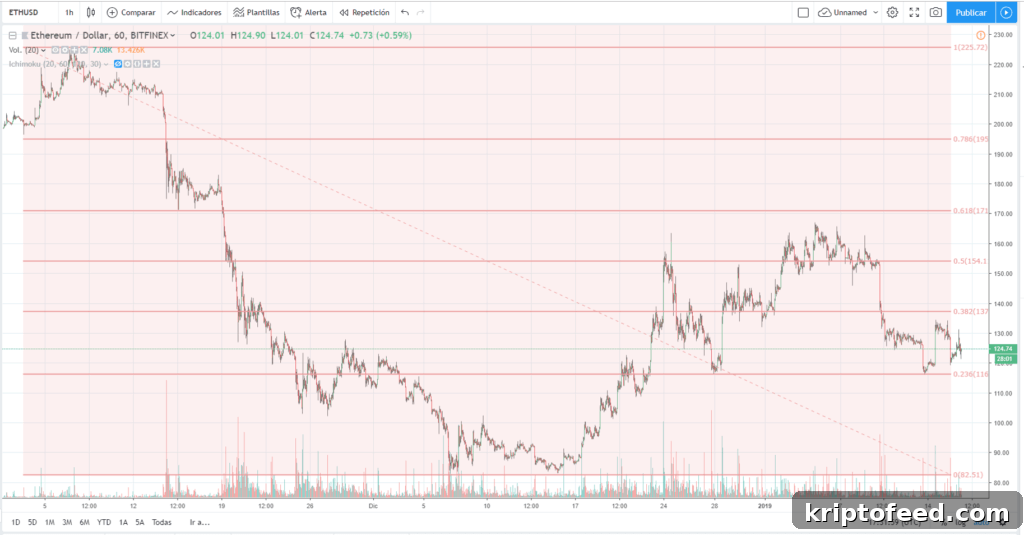
The bullish momentum was short-lived. After a significant rally—partly driven by the anticipated upgrade—ETH began to lose strength, slipping toward roughly $115, an important short-term support level. Still, ether remains well above its December lows, when it briefly fell to about $80 on some exchanges. Now, Ethereum faces strong resistance in the $137–$141 area. Can it break through that zone before any potential fork?
Some social media users criticized Ethereum’s planning and the short notice of the announcement. What do you think? Let us know your thoughts in the comments section.